

AHA Cleanser: What It Actually Does and Whether You Need One

In short: An AHA cleanser cleans and chemically exfoliates in one step, dissolving the bonds that hold dead cells at the surface instead of scrubbing them off. Done well it replaces a separate exfoliation step. Done badly — high acid load on a harsh sulfate base — it is one of the fastest ways to damage a barrier. The formula matters more than the category.
What an AHA cleanser does that a regular one cannot
A standard cleanser removes what sits on the skin: makeup, sebum, sunscreen, airborne particulates. It cleans, and that is all it is designed to do.
An AHA cleanser does that and also loosens the bonds between dead cells in the outermost layer, so they release more readily. When natural turnover slows — in cold weather, with hormonal shifts, with age — those cells linger. The result is a surface that looks flat, feels rough, and resists whatever you apply on top of it. That last point is the one people underestimate: a serum can only work on skin that will let it in.
The acids do their work while the cleanser is on the skin, then rinse away. That is what keeps the exposure gentle compared with a leave-on acid.
The three AHAs worth knowing
Molecular weight determines how quickly an acid penetrates, and therefore how strong and how irritating it is. Keep this comparison — it explains most acid labels you will ever read.
| Acid | Behavior | Best suited to |
|---|---|---|
| Glycolic | Smallest molecule, penetrates fastest. The most studied AHA and the most effective on dullness and rough texture. Photosensitizing. | Resilient skin, visible texture concerns — with daily SPF |
| Lactic | Slightly larger, so gentler. Also a humectant: it draws water into skin while it exfoliates. | Dry or dehydrated skin that cannot afford to be stripped |
| Mandelic | Largest molecule, slowest and gentlest. Mildly antibacterial. | Sensitive, reactive or congestion-prone skin |
Why three acids beat one strong one
Each acid works at a slightly different depth and pace. Glycolic addresses the very surface quickly. Lactic sits in the middle and brings hydration with it. Mandelic works slowly, extending the action without adding to the irritation.
Combined, they produce layered exfoliation that no single acid replicates — and the total acid load can stay low enough for regular use. This is why a well-balanced triple-acid formula tends to cause fewer problems than a high-percentage single-acid product: the work is distributed rather than concentrated in one place.
What to look for in an AHA cleanser
- Let it sit before you rinse. A cleanser rinsed off the second it touches your face delivers almost no acid benefit. Massage it in and let it stay on the skin briefly — that pause is when the acids do their work.
- Soothing ingredients alongside the acids. Allantoin, calendula and zinc PCA are not filler. They offset the acids' potential to irritate, which is what makes a formula suitable for regular rather than occasional use.
- A sulfate-free base. Acids on a harsh surfactant base compound each other. The cleansing agents should be mild enough that the acids are doing the resurfacing, not the detergent.
- No grains. If a product exfoliates chemically and mechanically at once, you are getting two forms of stress in one step. Pick one.
- An appropriate pH. AHAs need a mildly acidic environment to stay active. A formula that is too alkaline will not exfoliate effectively no matter what the label claims.
Do you actually need one?
- Yes, if skin looks flat or dull — especially after a seasonal transition, when turnover tends to slow.
- Yes, if texture is uneven or pores look congested and standard cleansing is not touching it. More on that in how to improve skin texture.
- Yes, if products stopped absorbing the way they used to. That is usually a surface problem, not a serum problem.
- Yes, if you want fewer steps — folding exfoliation into the cleanse removes a product from the routine rather than adding one.
- No, if your skin is currently broken out, stinging or compromised. Repair first: how to strengthen your skin barrier. Exfoliating a damaged barrier makes it worse, not smoother.
If you do start, introduce it once a day and build to twice only if your skin stays calm. Because cleansing is the step everything else is built on, it is worth getting right first — the case for that is in why cleansing sets the tone for your routine.
How we approach this at Clique Beauty
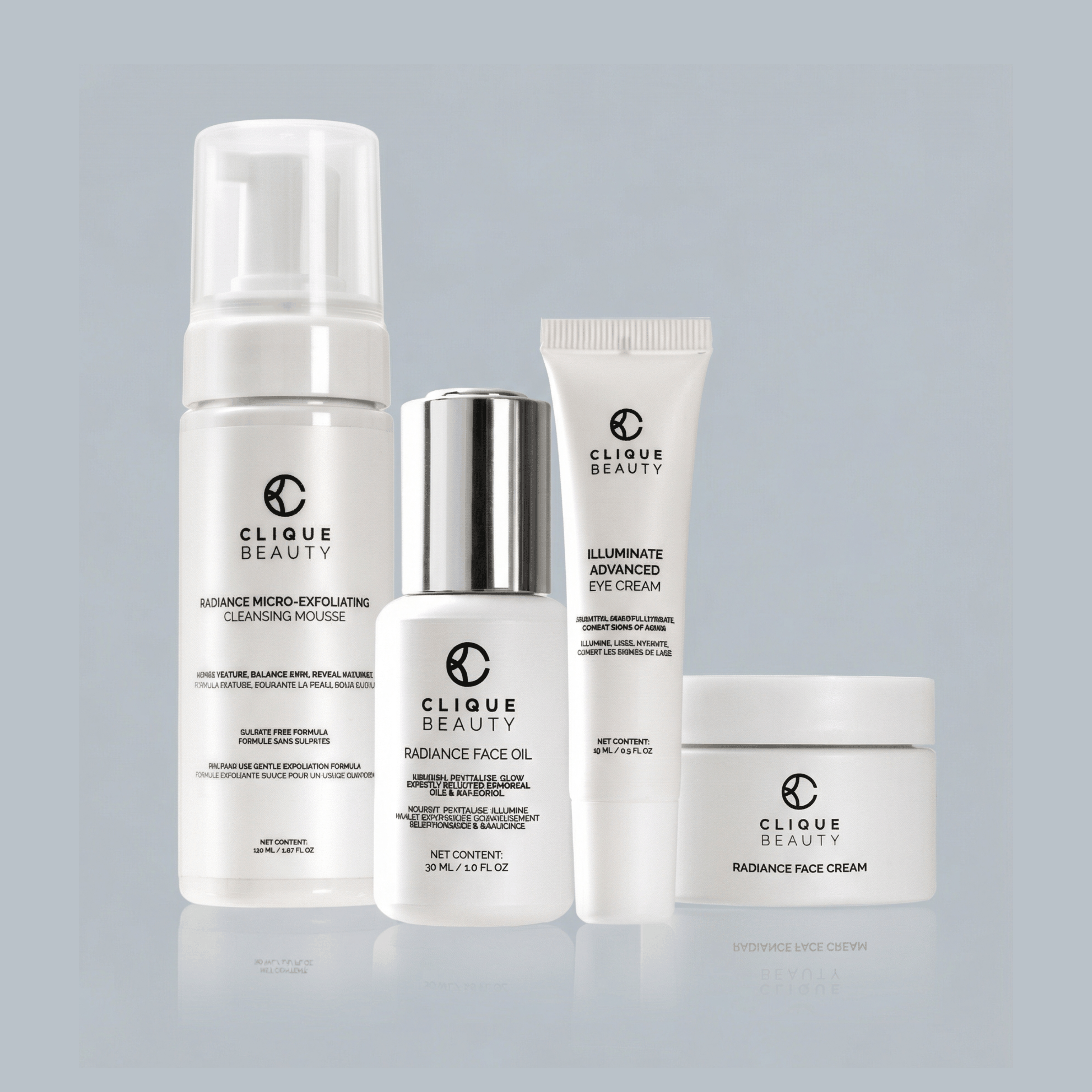
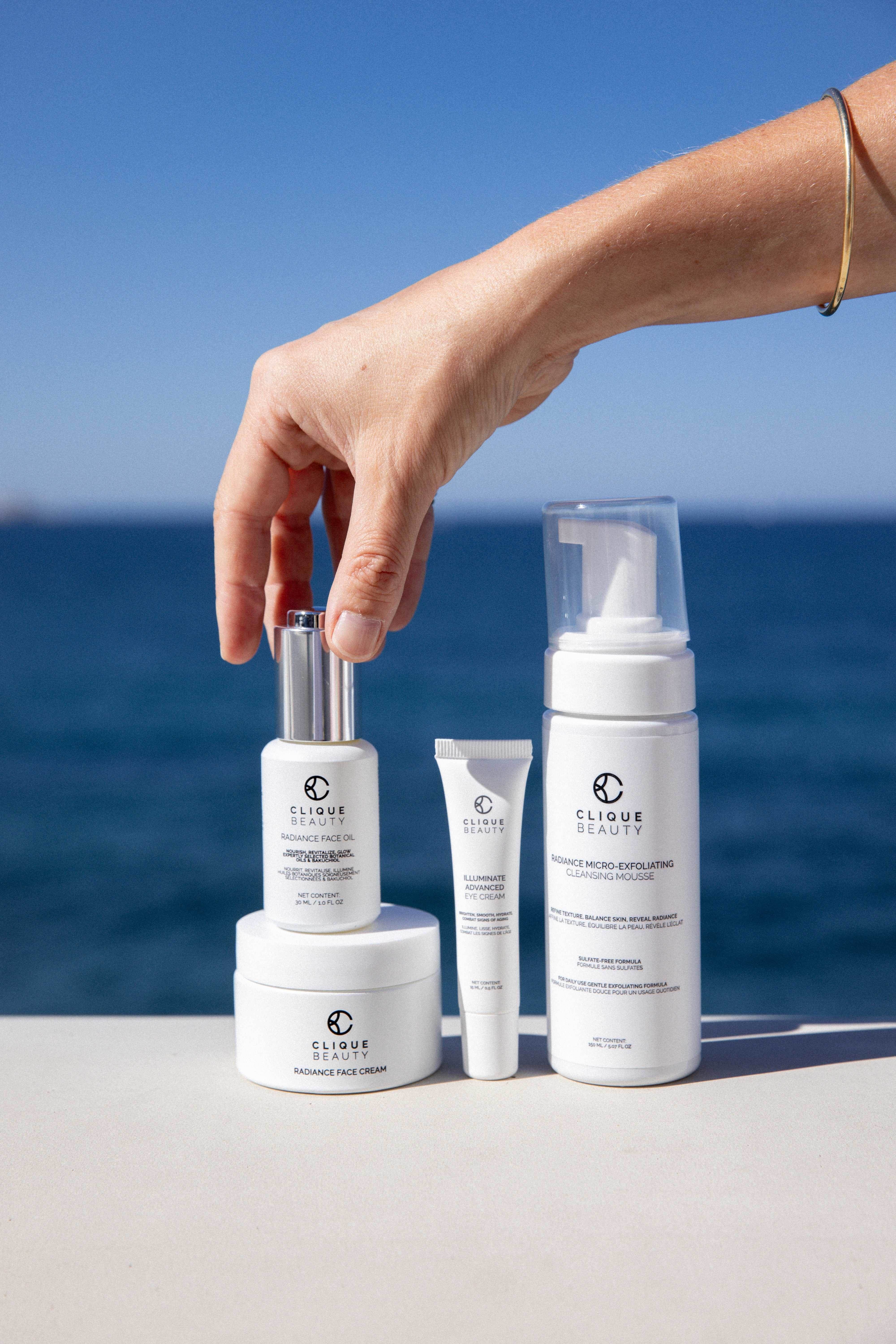
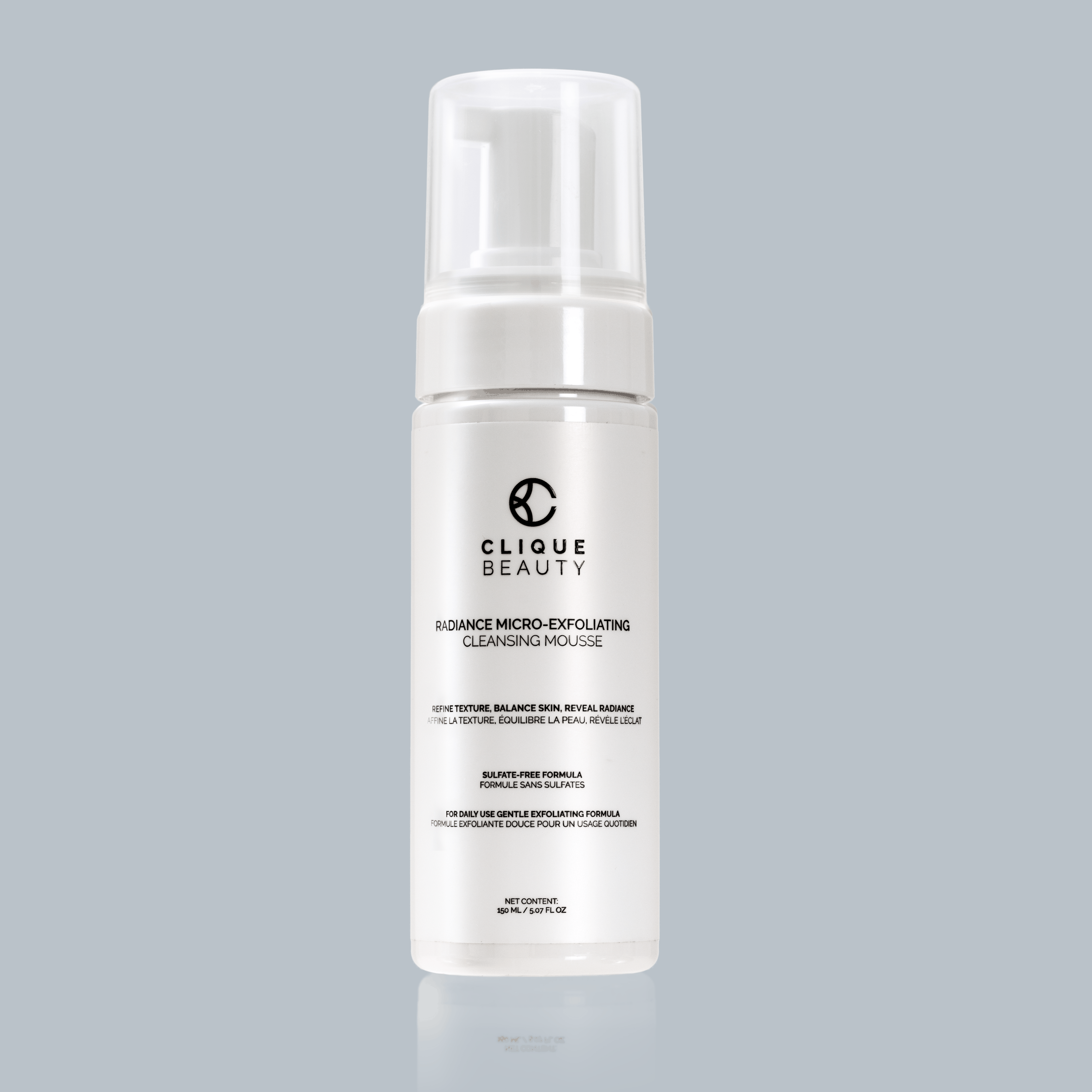
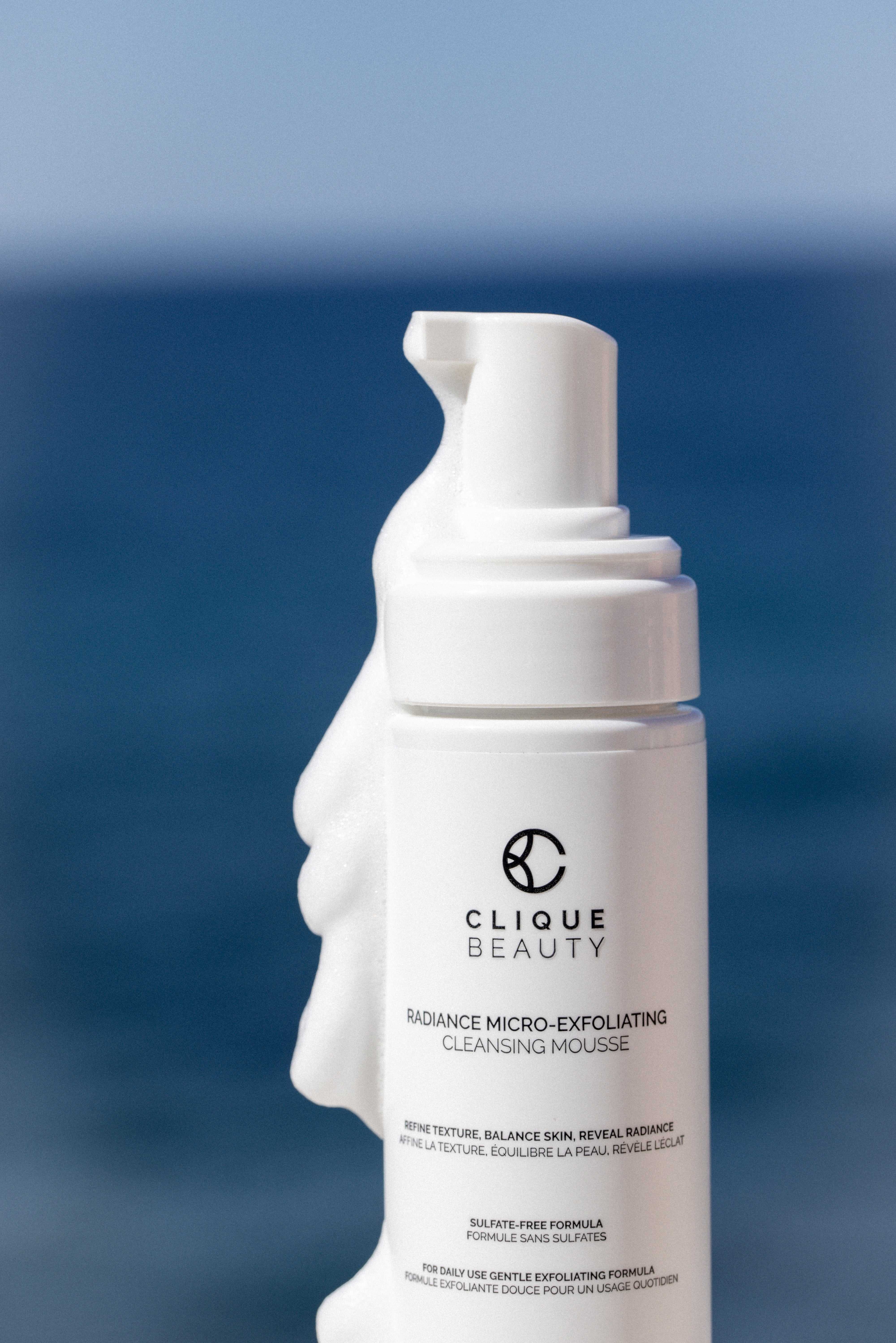
Our Radiance Micro-Exfoliating Cleansing Mousse is built on the triple-acid principle: a Triple AHA Complex of glycolic, lactic and mandelic acids, kept at a low enough total load for regular use. An 8-Fruit Enzyme Complex — lime, grapefruit, strawberry, mango, passion fruit, apricot, peach, guava and raspberry — adds natural enzymes and antioxidants alongside them.
Zinc PCA moderates sebum without stripping, while allantoin and calendula keep the formula comfortable. The base is sulfate-free, using disodium cocoyl glutamate and sodium cocoamphoacetate instead, and there are no grains: the resurfacing is entirely chemical, so nothing is being scraped off skin that did not need it.
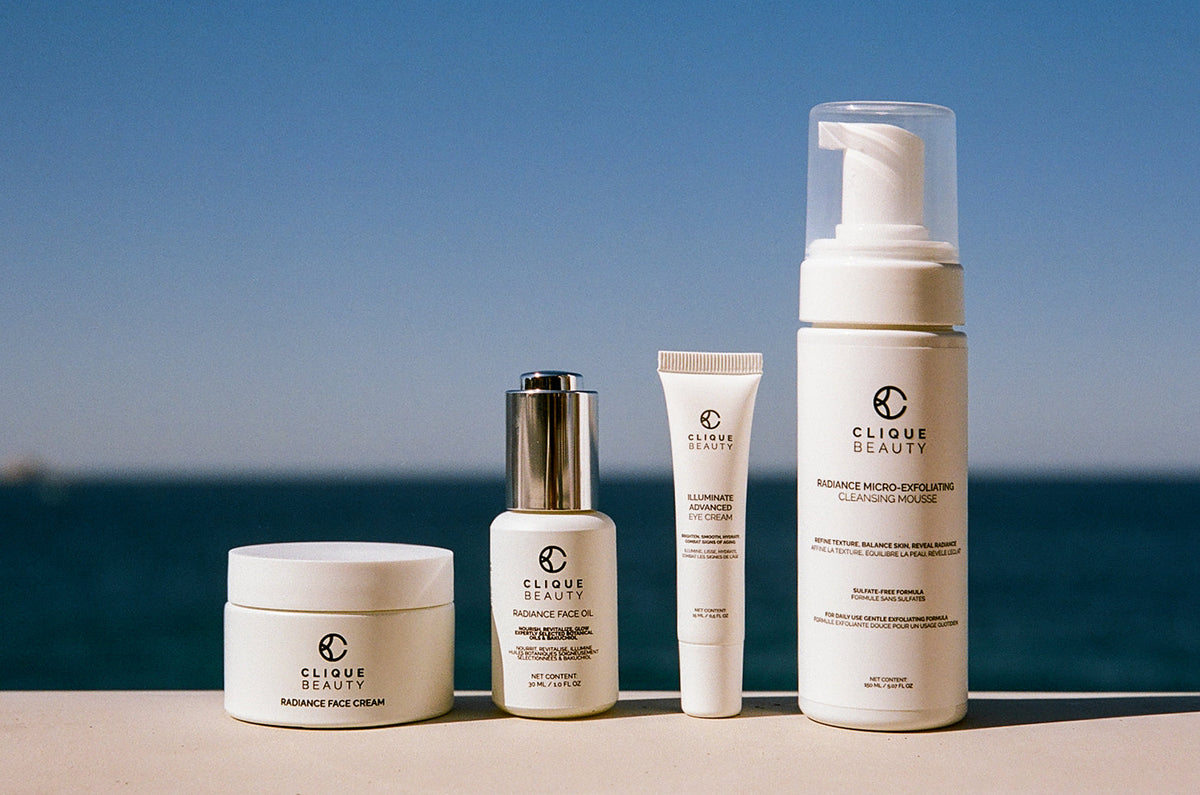
It is the first step of the range and the one that determines how well everything after it performs — including our Radiance Face Cream, which measured a +42% increase in hydration in clinical testing.* It is formulated in France, texture and scent included: an exfoliating cleanser only works if it is used regularly, and a cleanse that feels like something is a cleanse you come back to.
FAQ
Can you use an AHA cleanser every day?
Most skin can, once daily, if the formula is sulfate-free and the acid load is mild. Start with evenings only and add a second use if your skin stays comfortable.
Do you need to use SPF with an AHA cleanser?
Yes. Glycolic acid is photosensitizing, and even though a cleanser rinses off, exfoliated skin is more vulnerable to UV. Daily sunscreen is not optional with any acid.
Can you use an AHA cleanser with retinol?
Cautiously. Use them on alternating evenings rather than the same one, and skip both entirely if skin starts to sting or flake.
*Clinically measured increase in skin hydration. Individual results vary.

Comments