

Caffeine in Eye Cream: Does It Really Work on Dark Circles?
In short: Topical caffeine constricts the superficial blood vessels under the eye and mildly supports fluid clearance, which is why it helps with morning puffiness and with dark circles that are vascular in origin. It does nothing for circles caused by pigment, shadow or shifted fat pads. Knowing which kind you have is the whole answer.
Why the eye area behaves differently
The periorbital area — the skin immediately around the eye — is among the thinnest on the body, and the tissue beneath it is loosely structured. That combination means two things: fluid collects there easily, and whatever sits underneath the skin shows through it. Both facts explain far more about under-eye appearance than any single ingredient does.
It also means the eye area responds to a different set of levers than the rest of the face. We go further into that in why the eye area needs its own strategy.
What causes under-eye puffiness
- Overnight fluid redistribution. Lying flat lets fluid settle around the face rather than draining downward. Morning puffiness is usually normal physiology, not a skin problem.
- Allergies and inflammation. Histamine dilates blood vessels and makes them more permeable, so fluid moves into the tissue.
- Sodium and hydration. High salt intake encourages fluid retention throughout the body, the eye area included.
- Structural change. The fat pads supporting the eye shift with age while the skin above them thins, making the same volume of fluid look more obvious.
What topical caffeine actually does
Caffeine is a methylxanthine with documented vasoconstrictive and anti-inflammatory activity in topical use. Three mechanisms are relevant here.
- It narrows superficial blood vessels. Less blood pooling directly under thin skin means less of that blue-grey cast.
- It supports fluid clearance. The effect is mild, but with consistent application it helps the tissue release retained fluid rather than hold it.
- It contributes antioxidant activity. A secondary benefit for skin that is thin and frequently exposed.
What caffeine cannot do is reach past the surface. It will not lift a fat pad, repigment hollow shadow, or undo skin laxity. Being clear about that is not modesty, it is the difference between a product that works and a product you feel misled by.
Which kind of dark circle do you have?
This is the part worth keeping. Press gently under the eye and pull the skin taut in front of a mirror — how the color behaves tells you what you are dealing with.
| What you see | Likely cause | Does caffeine help? |
|---|---|---|
| Blue or purple cast, fades when skin is stretched | Vascular — blood showing through thin skin | Yes, this is its best case |
| Brown or tan tone, unchanged when stretched | Pigmentation, often genetic or sun-related | No — niacinamide and daily SPF are the lever |
| Dark only in certain light, disappears when you tilt your head back | Structural shadow from volume loss | No — skincare cannot change contour |
| Puffiness worst on waking, settling as the day goes on | Fluid retention | Yes, alongside sleeping slightly elevated |
| Crepey, dry-looking skin that makes everything look darker | Dehydration in thin skin | Indirectly — hydration does the real work here |
What to look for in a caffeine eye cream
- Concentration. Around 1% is where the evidence for topical caffeine is most solid. Below that, a caffeine mention on the label is mostly decorative.
- Ingredients that cover the other causes. Caffeine addresses one mechanism. Add a humectant such as sodium hyaluronate for hydration, emollients for the dryness that exaggerates everything, and niacinamide for tone — the mechanism behind that is in what niacinamide actually does.
- Fragrance left out of this one step. The eye contour is the first area of the face to react to anything at all, which makes a fragrance-free eye formula a sound piece of targeted formulation — and rarer than you would think.
- Dermatological and ophthalmological testing. Applied this close to the eye, both matter. The first confirms skin tolerance, the second confirms safety near the eye itself.
How we approach this at Clique Beauty
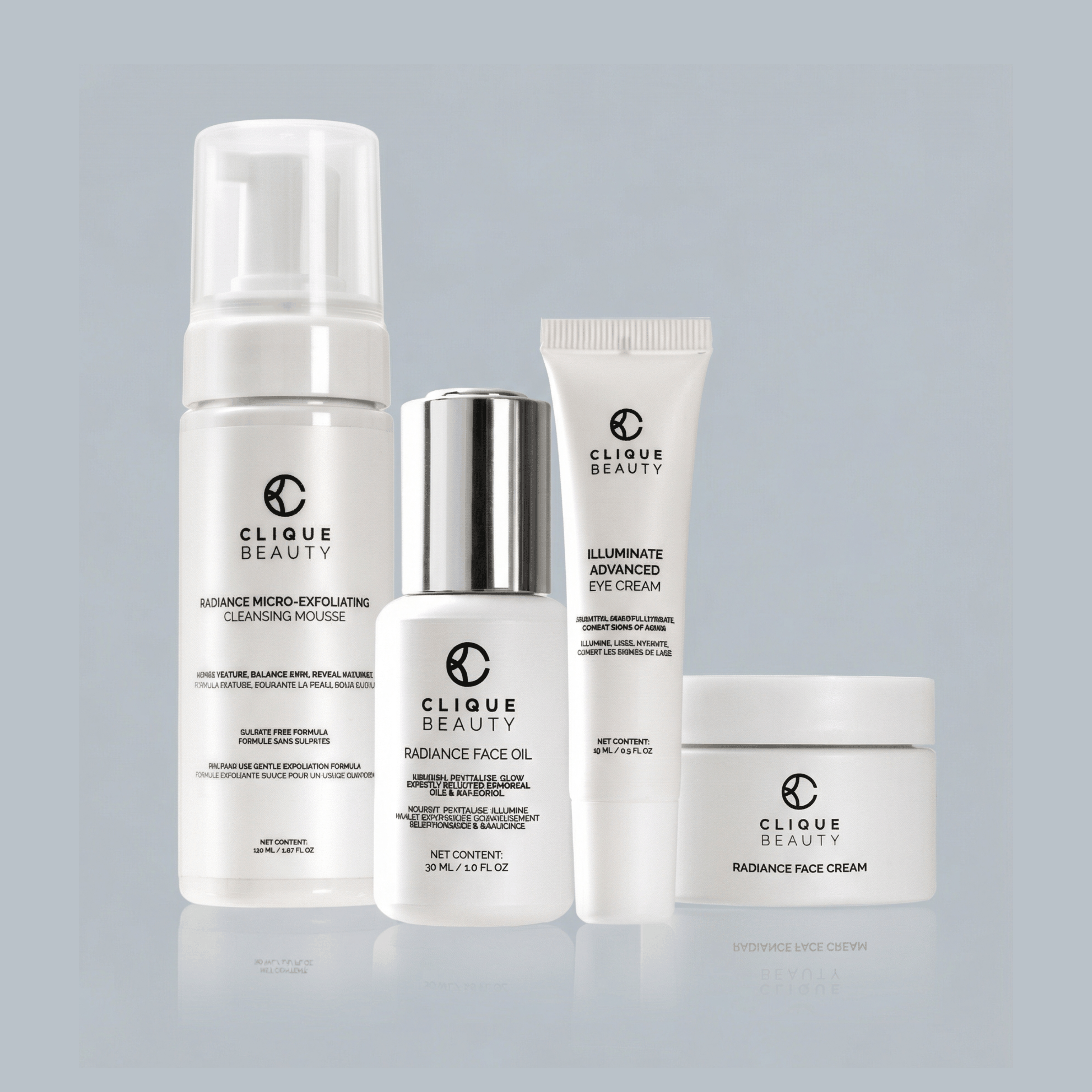
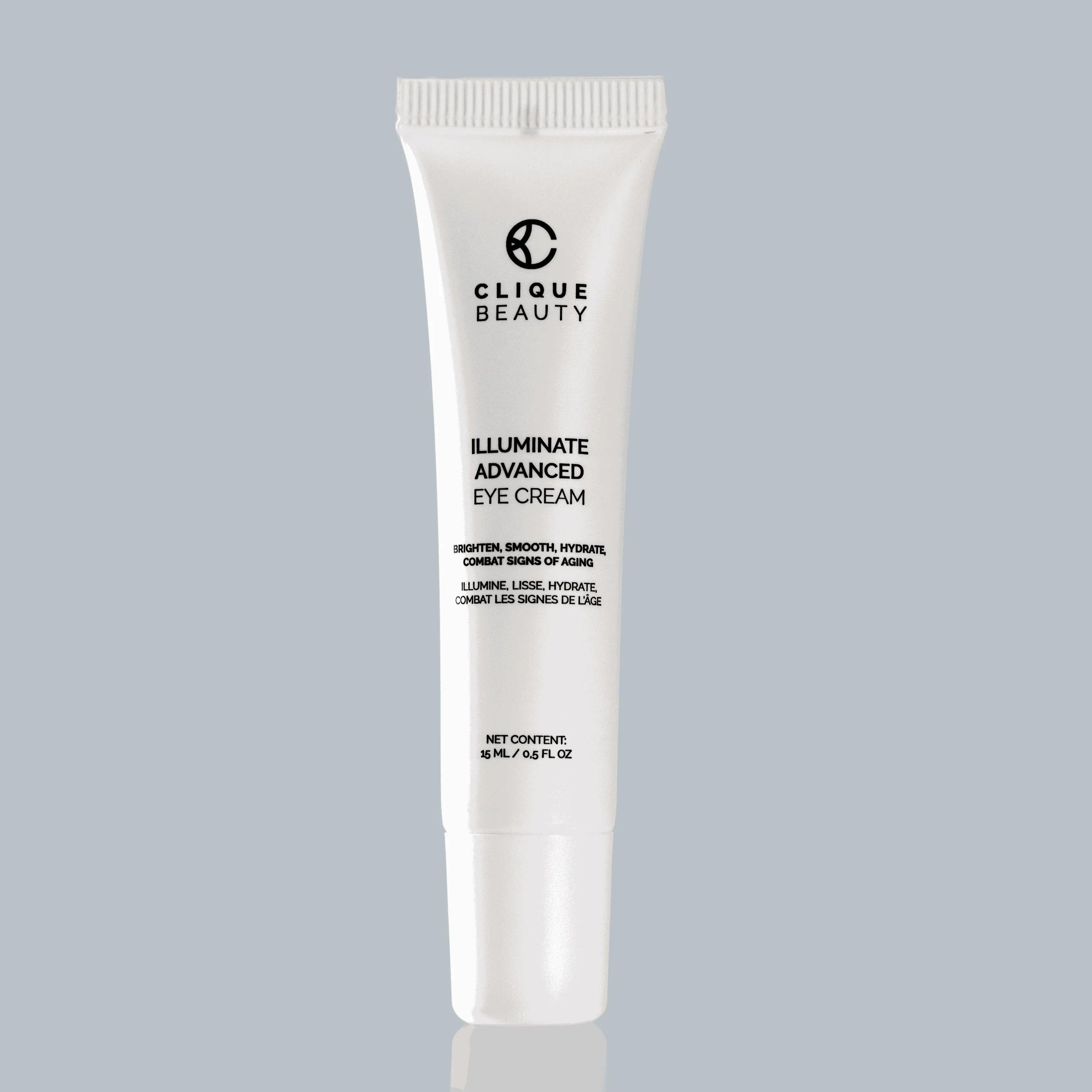
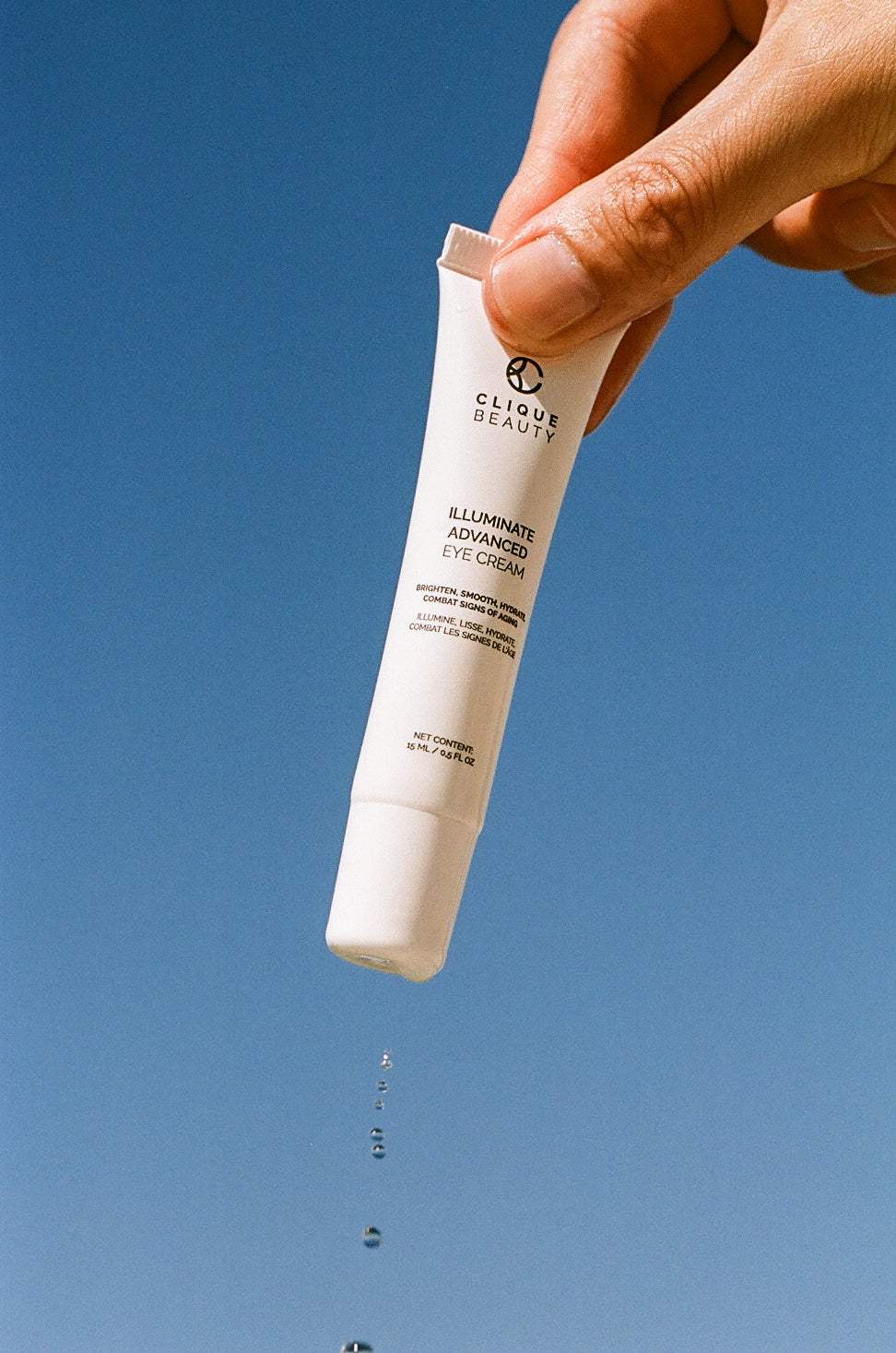
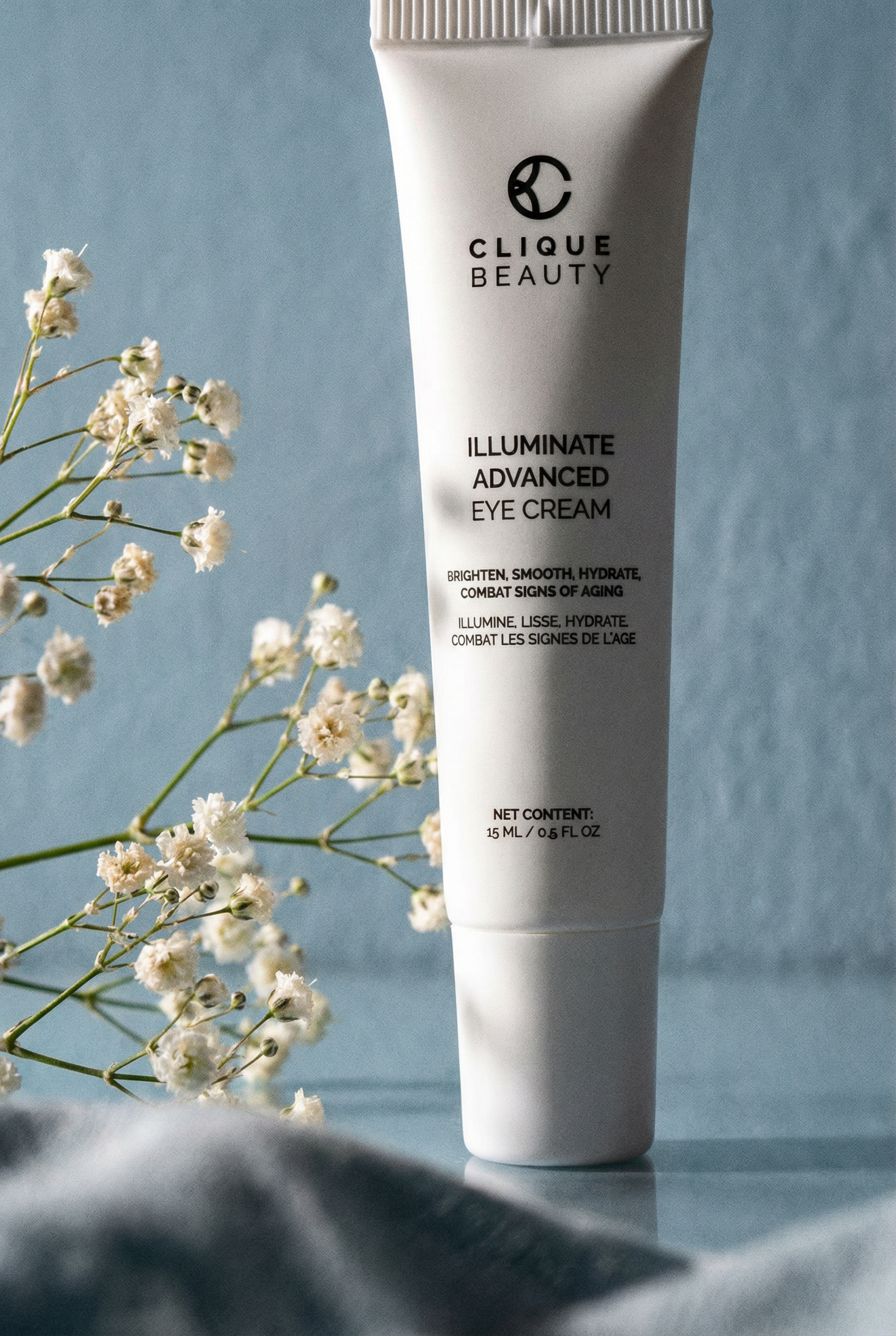
Our Illuminate Advanced Eye Cream uses caffeine at 1% — the level where the evidence is strongest — with niacinamide at 5% for tone and barrier support, sodium hyaluronate for hydration, squalane and avocado oil as emollients, tocopherol as an antioxidant, and chamomile flower water for comfort in a zone that reacts easily.
It is formulated without fragrance, with no Parfum on the ingredient list. That is a decision specific to this step rather than a rule across the range: the eye contour reacts before the rest of the face does, so we dispense it from fragrance. The cream is both dermatologically and ophthalmologically tested, and measured a +37% increase in hydration in clinical testing.*
What it does not claim is to erase circles that come from genetics or from structural change. It is built for the part of the problem skincare can actually reach: temporary puffiness, a vascular cast, and thin skin that needs hydrating. If you are still deciding whether the step is worth it, we made the honest case in is eye cream really necessary.
FAQ
Does caffeine really reduce dark circles?
It helps the vascular kind — the blue-grey cast from blood pooling under thin skin — by constricting those vessels. It does not affect brown pigmentation or shadow caused by volume loss.
How much caffeine should an eye cream contain?
About 1% is the concentration supported by the available evidence. Higher is not automatically better, and the rest of the formula matters just as much.
Can you use a caffeine eye cream every day?
Yes, morning and evening. Caffeine is not exfoliating or photosensitizing, and the benefits on puffiness depend on consistent use rather than occasional application.
*Clinically measured increase in skin hydration. Individual results vary.


Comments