

Is Eye Cream Necessary? An Honest Answer and a Clear Rule
In short: an eye cream is optional for most people, but it is not a marketing invention. The skin around the eye is thinner, has fewer oil glands and reacts sooner than the rest of the face, so the differences that matter are texture, formulation and dose. If your face moisturizer is gentle and the area never feels tight or looks puffy, extending it upward is enough. If it does, a targeted formula is the shorter route.
So do you actually need one?
The honest answer is that not everyone does, and some people clearly do. The category exists for real reasons, but plenty of products sold as eye cream are simply smaller, pricier versions of a face moisturizer. So the useful question is not whether eye cream is necessary in general. It is whether the specific formula in front of you does something your face cream does not.
Three things genuinely justify a separate product: a lighter texture that will not congest the area, a formula stripped back to what this zone tolerates, and actives dosed for skin this thin. A formula that offers none of the three is a duplicate, and you can spend the money elsewhere.
Eye cream vs. face cream: what actually differs
This is the comparison worth saving. It works on any eye product, ours included.
| Criterion | A dedicated eye formula | A face moisturizer |
|---|---|---|
| Texture | Light and fast-absorbing, to limit milia around the eye | Often richer; can sit on the surface of thin skin |
| Fragrance | Frequently left out, because this zone reacts before the rest of the face | Usually scented, as most leave-on face care is |
| Actives | Caffeine and niacinamide dosed for a small, delicate zone | Dosed for the face as a whole |
| Dose control | Small format, small amount, applied on purpose | Easy to over-apply near the lash line |
| What it targets | Puffiness, dryness and visible fatigue in one zone | Overall hydration and barrier support |
| Best case for using it | The eye area behaves differently from your cheeks | Your whole face, eye area included, is comfortable |
When an eye cream is worth it, and when it is not
Run through this list honestly. Four of these describe you, and the product earns its place. None of them do, and it does not.
- Worth it if you wake up puffy. Fluid settles around the eye overnight, and this is the concern a well-built eye formula addresses most directly.
- Worth it if the area feels tight or looks crepey. Fewer oil glands means less natural lubrication, so this zone dehydrates before the rest of the face does.
- Worth it if your face cream stings there. Denatured alcohol and essential oils tend to show up around the eye before anywhere else. A formula built without them removes the variable.
- Worth it if you use acids or retinol on your face. Those doses are calibrated for thicker skin, and the eye area is where over-exfoliation becomes visible first.
- Skip it if your face moisturizer is gentle and the area is comfortable. Bring it up to the orbital bone with a light hand and stop there.
- Skip it if it would become a step you resent. A routine you actually follow beats a longer one you abandon — the case for that is in minimal skincare.
What to look for on the label
Caffeine. One of the better-studied topical ingredients for this zone. It supports microcirculation, which is why it is associated with a less puffy, less tired look in the morning. We went through the evidence in does caffeine in eye cream actually work.
Emollients close to your own sebum. Squalane and avocado oil give thin skin the lipid support it needs without the heaviness that encourages milia.
Niacinamide. It supports the barrier and helps limit water loss, which is exactly the weak point of skin with few oil glands.
Fragrance left out of this one step. On an eye formula specifically, that is a sound targeted decision — and it is rarer than you would expect.
How we approach this at Clique Beauty
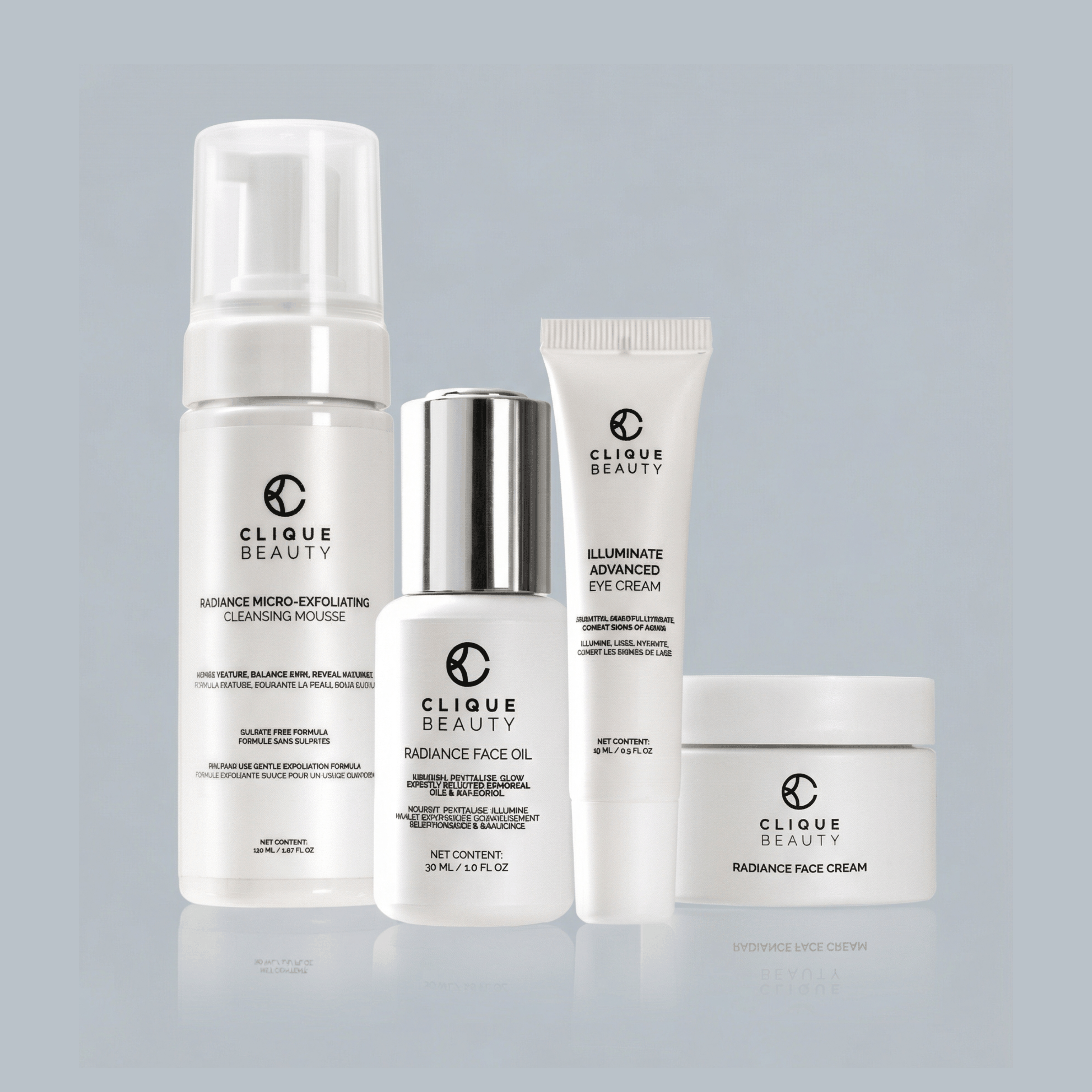
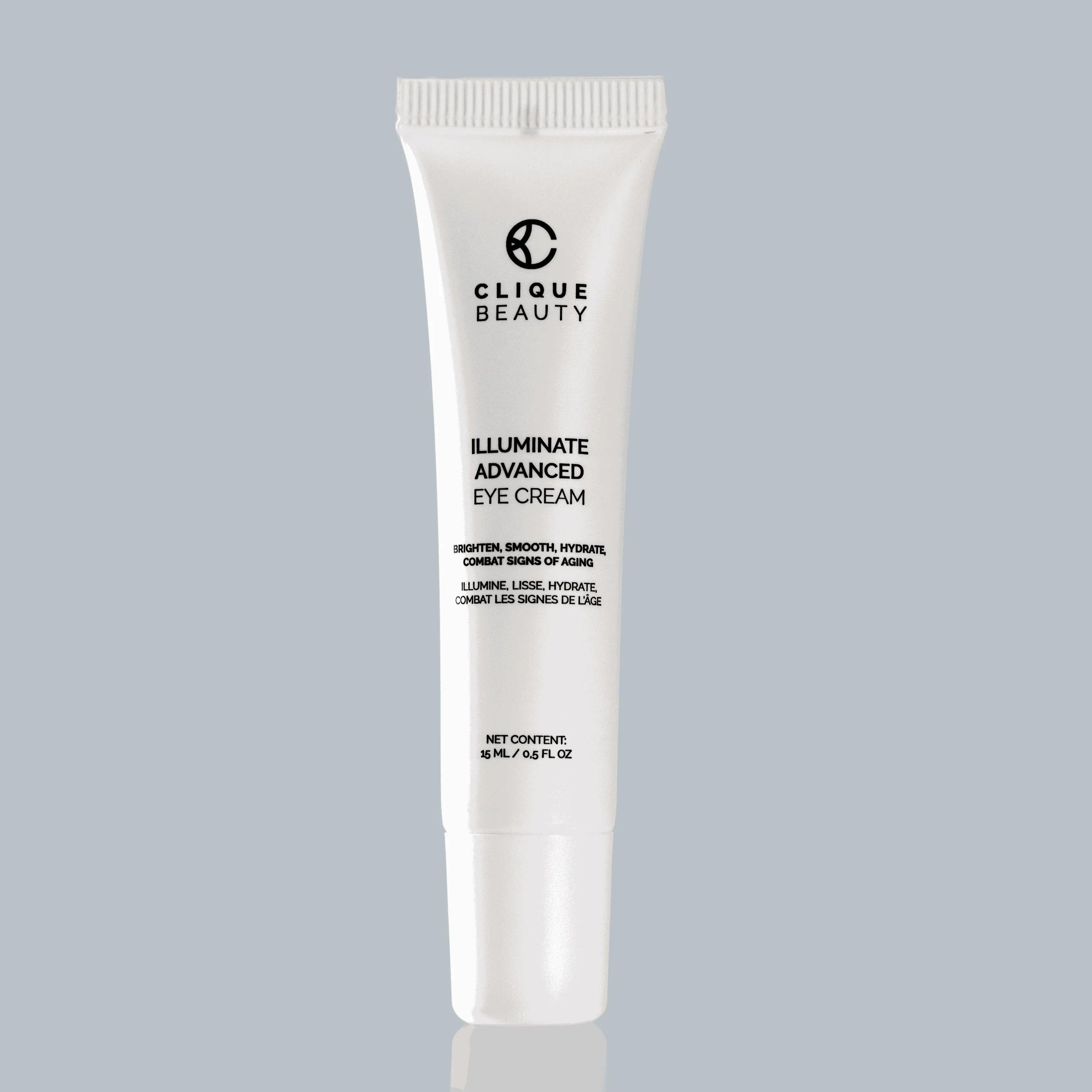
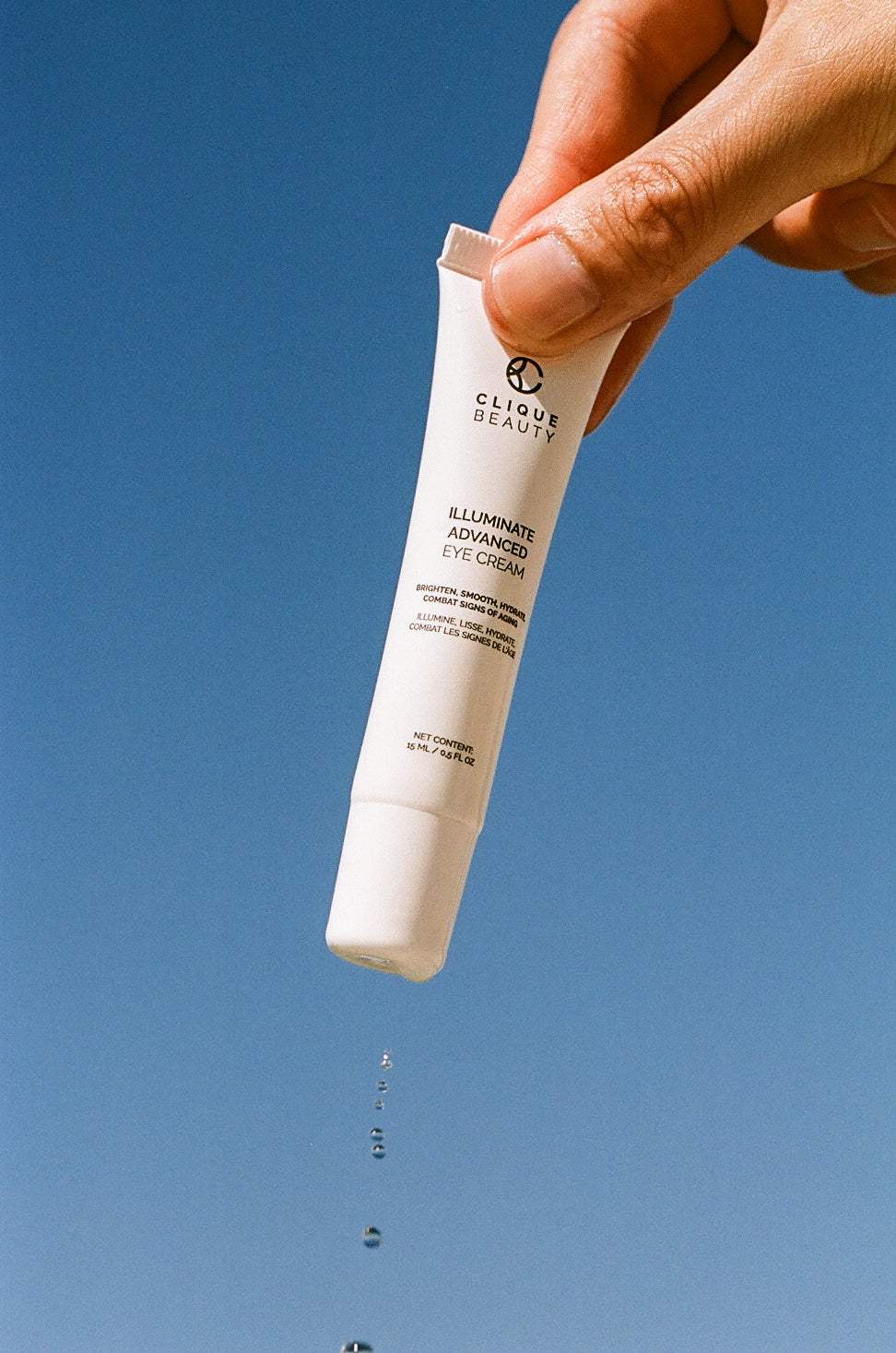
Our Illuminate Advanced Eye Cream was built against those criteria rather than around them. Caffeine at 1% and niacinamide at 5% are the only official percentages in our range, and they sit in a light base of squalane, avocado oil, chamomile flower water and sodium hyaluronate. It measured a +37% increase in hydration in clinical testing.*
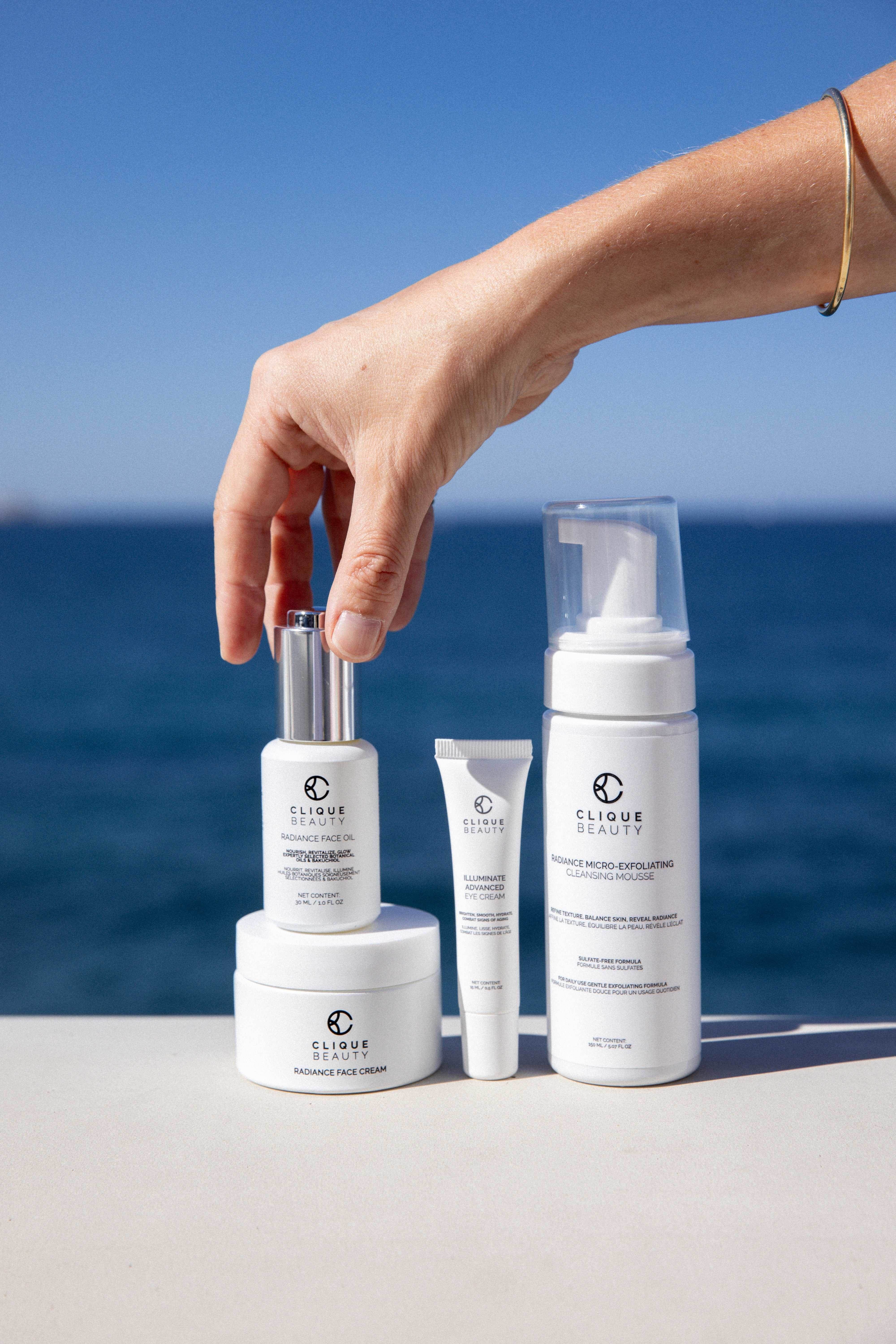
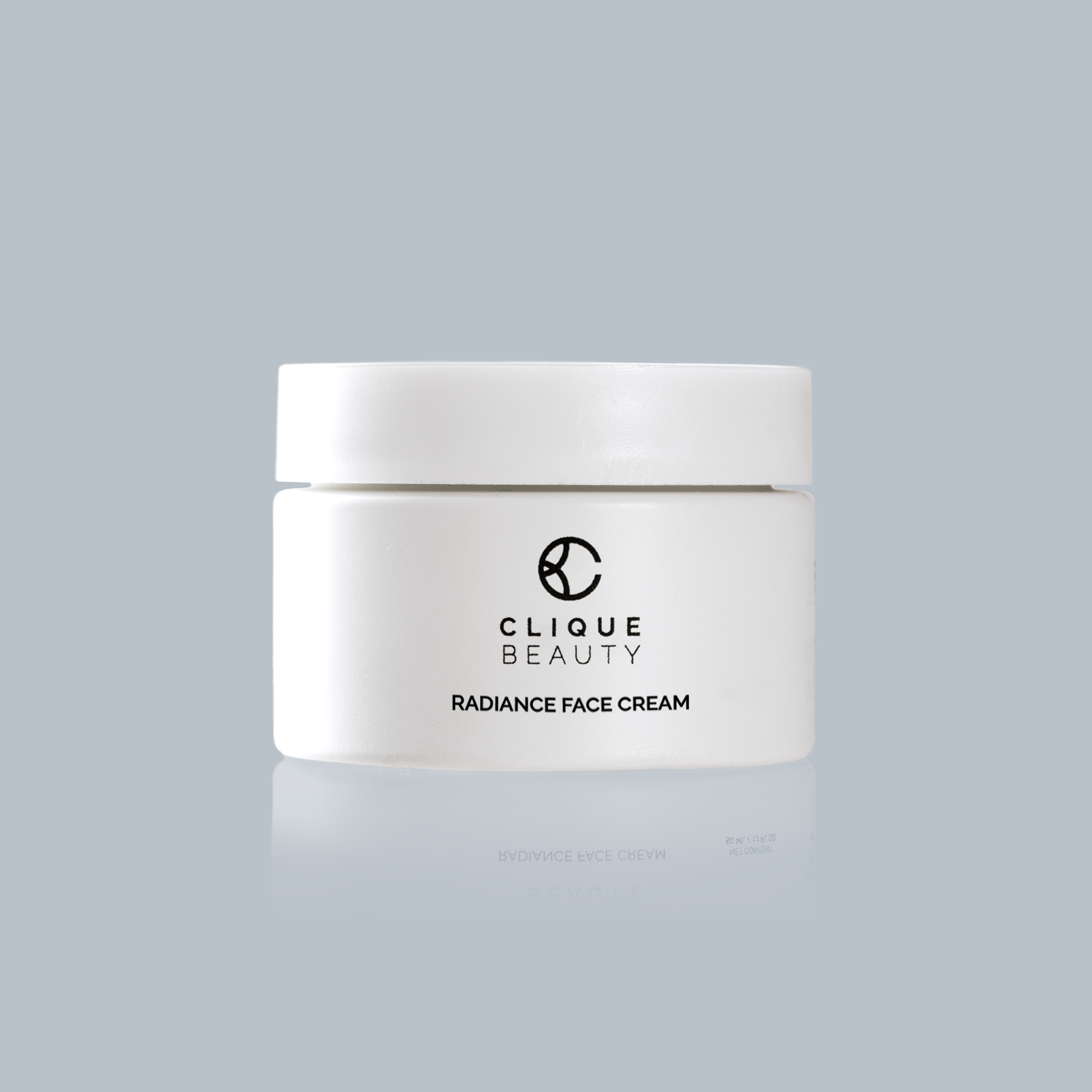
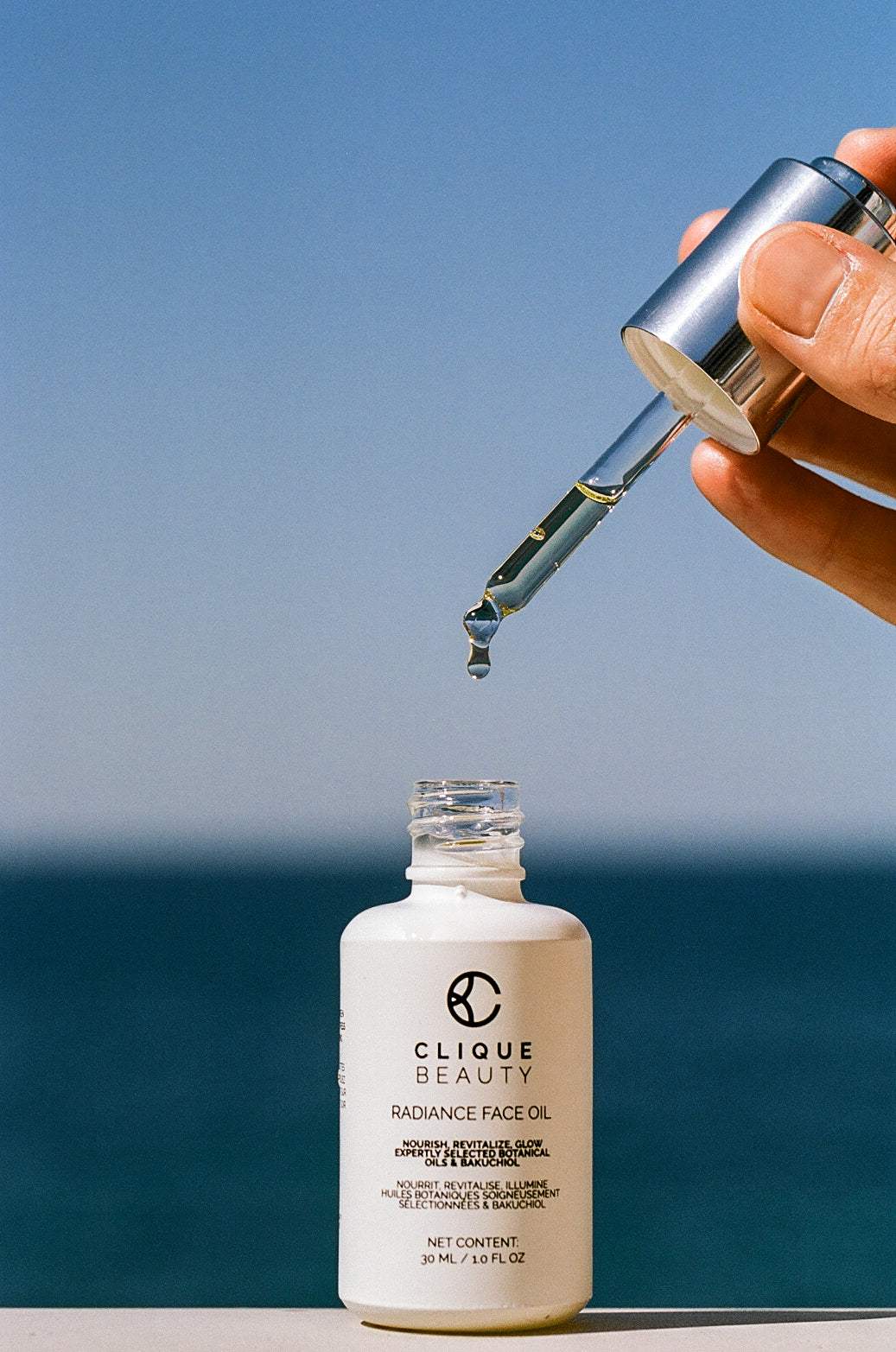
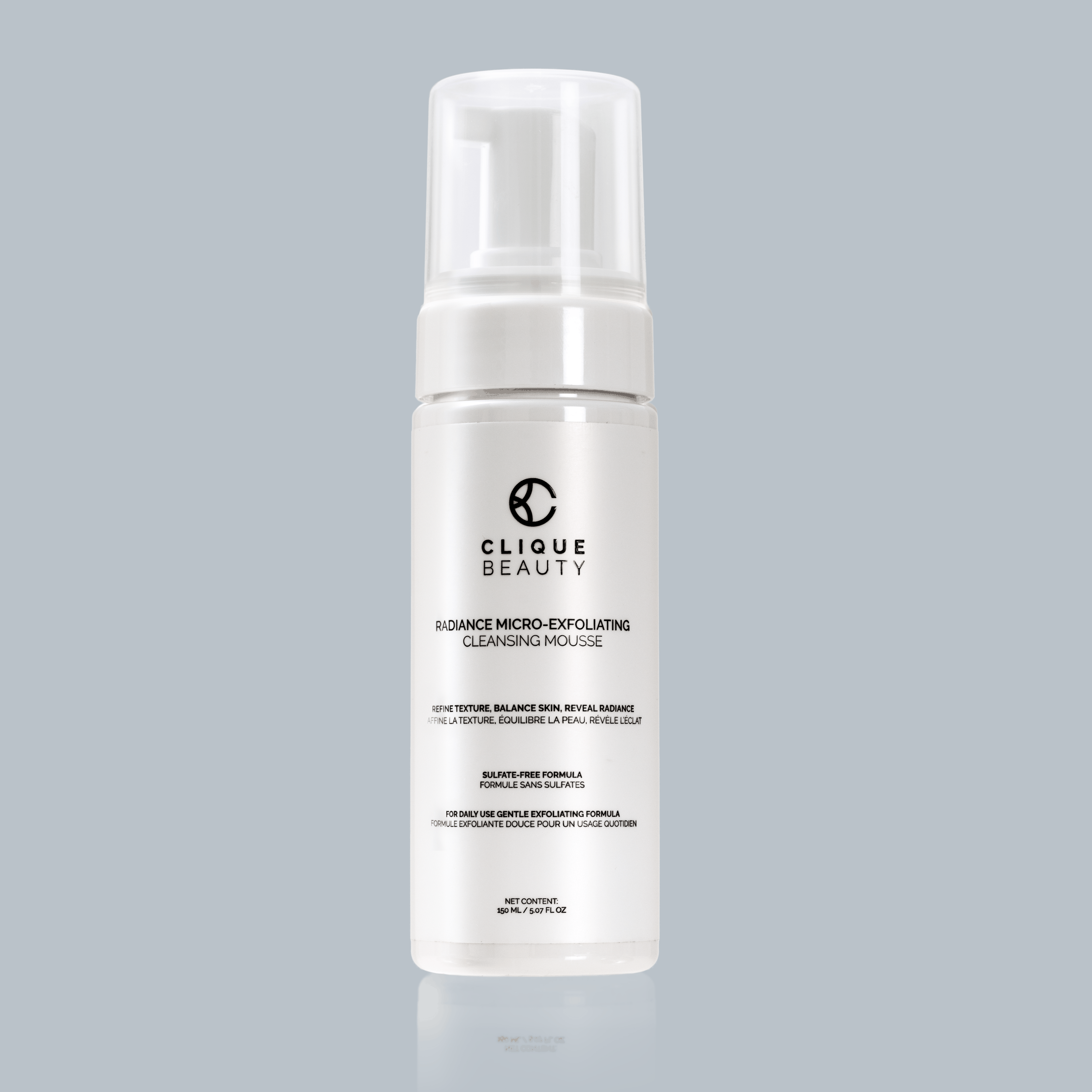
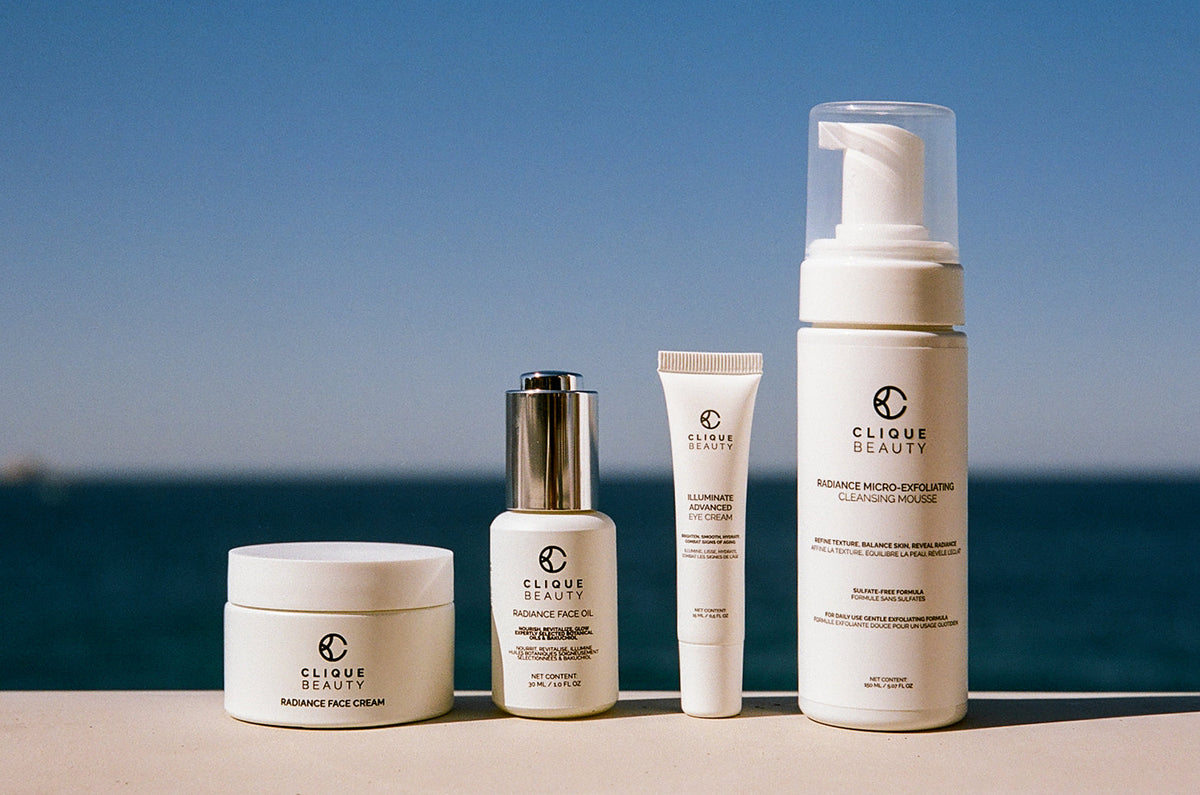
It is formulated without fragrance, and that is a decision about this step rather than a rule across the range. Our Radiance Face Cream, the cleansing mousse and the face oil are perfumed, deliberately: they are formulated in France, where perfumery and cosmetic science come out of the same schools, and a routine you enjoy is a routine you keep. The eye contour is simply the zone that reacts first, so we hold this one formula to the shortest list it can work with.
We recommend a product when it does something a simpler routine cannot. For a comfortable eye area, a good face cream is enough. For a puffy, dry or easily irritated one, this is the shorter path.
How to apply it so it actually works
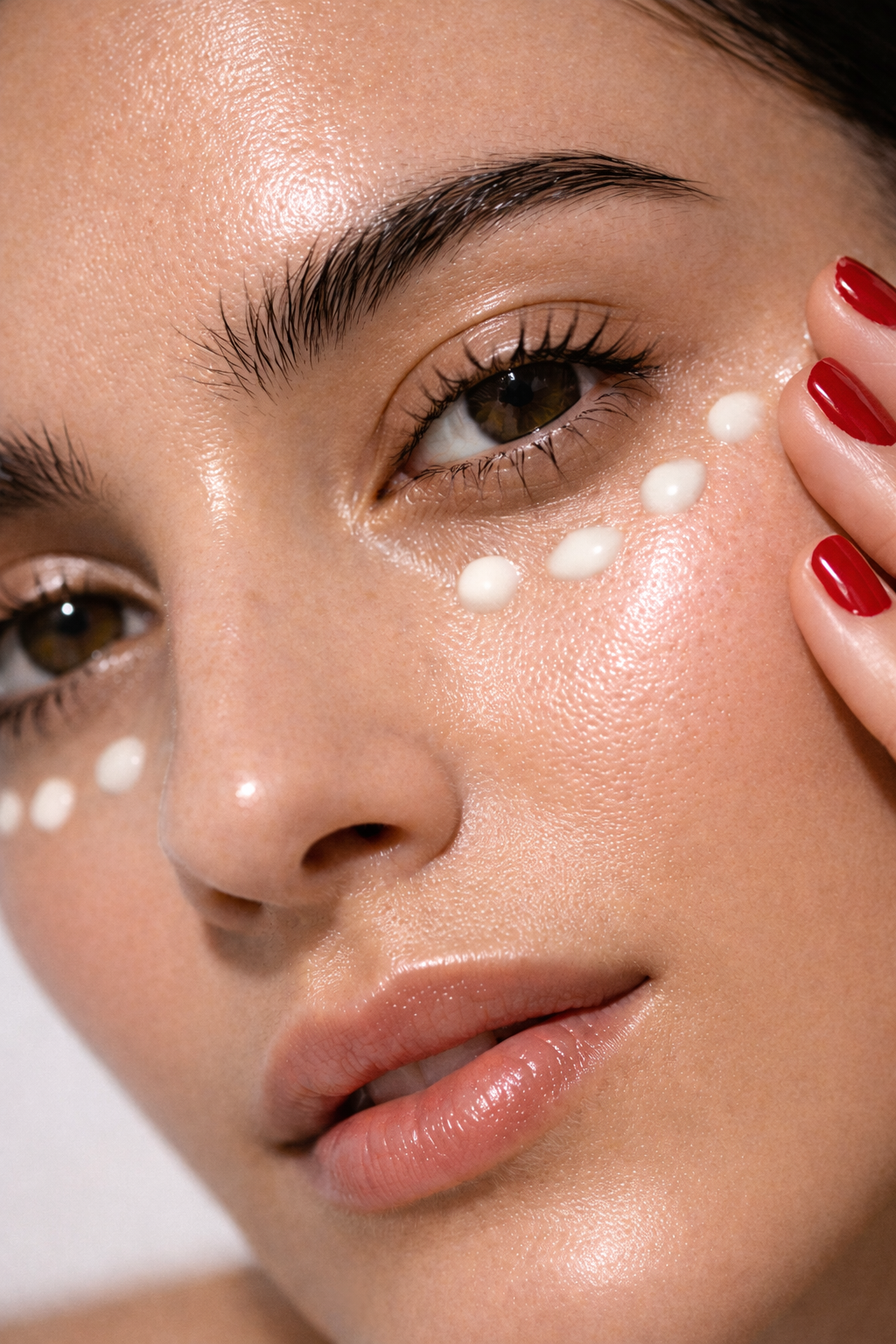
Use less than instinct suggests, roughly the size of a grain of rice for both eyes. Place it along the orbital bone — the bony ridge you can feel around the socket — not on the lid or the lash line, since the formula migrates upward on its own with warmth and blinking.
Tap it in with your ring finger, which applies the least pressure of any finger, and never rub or drag. Morning application is the one that addresses overnight puffiness; evening use is optional and depends on tolerance. The anatomy behind all of this, and the full gesture, is in why the eye area needs its own strategy.
FAQ
Can I just use my face moisturizer around my eyes?
Yes, if it is gentle, light and does not sting there. Apply it up to the orbital bone and no closer. Switch to a dedicated formula only if you see puffiness, dryness or irritation in that zone specifically.
At what age should I start using eye cream?
Age is the wrong trigger. Start when the eye area behaves differently from the rest of your face — puffiness, tightness, fine crepiness or reactivity — whether that happens in your twenties or much later.
Does eye cream get rid of dark circles?
Partly, and it depends on the cause. Circles from fluid and poor microcirculation respond to caffeine and hydration. Circles caused by pigmentation or by the natural hollow under the eye are structural, and no topical formula erases them.
*Clinically measured increase in skin hydration. Individual results vary.

Comments