

Niacinamide for Skin: What It Actually Does and Who Needs It

In short: Niacinamide is a form of vitamin B3. Applied topically it supports the skin barrier, helps even tone, moderates oil and calms visible redness — which is why it appears in so many formulas. It is stable, well tolerated across most skin types, and it works alongside vitamin C rather than against it. What it asks for is consistency, not a higher percentage.
What is niacinamide, exactly?
Niacinamide is a water-soluble form of vitamin B3 with a well-documented role in cellular metabolism. In skincare it behaves as what formulators call a multifunctional active: instead of doing one thing forcefully, it does several things moderately. That is unusual, and it is the reason the ingredient shows up in toners, moisturizers and eye creams alike.
It is also one of the easier actives to live with. It does not require an adjustment period, it is not photosensitizing, and it sits comfortably in both morning and evening routines. For most people the real question is not whether niacinamide suits their skin, but what they are reasonably asking it to do.
What does niacinamide actually do?
Several mechanisms are well documented. The table below separates what the research supports from what a label often implies — worth keeping if you are comparing products.
| Concern | What niacinamide does | What to realistically expect |
|---|---|---|
| Weakened barrier | Supports the skin's own ceramide production and reduces water loss through the surface | Skin feels less tight and reacts less often |
| Uneven tone, dark marks | Interrupts the transfer of melanin to surface skin cells | Marks look less defined. It does not lighten skin overall |
| Visible pores, rough texture | Moderates sebum output and supports surface renewal | Pores look less pronounced. Their actual size does not change |
| Oiliness and shine | Reduces sebum excretion | Less midday shine, better makeup wear |
| Redness, reactivity | Documented anti-inflammatory activity | Calmer-looking skin, fewer flare responses |
Who gets the most out of it?
- Compromised or reactive skin. Because it supports lipid production rather than forcing turnover, niacinamide is one of the few actives you can keep using while skin recovers. More on that sequence in how to strengthen your skin barrier.
- Oily and combination skin. The sebum-moderating effect is the reason niacinamide often works where a heavier moisturizer does not.
- Post-acne marks and sun-related discoloration. Slower than an acid, but far better tolerated over the long run.
- The eye area. Thin, easily irritated skin benefits from an active that evens tone without exfoliating. See why the eye area needs its own strategy.
- Anyone cutting a routine down. One ingredient covering barrier, tone and oil means fewer steps, not more.
Does niacinamide cancel out vitamin C?
No. The idea comes from mid-century laboratory work in which pure ascorbic acid and niacinamide were combined under heat, producing a compound that can cause temporary flushing. Those are not the conditions of a finished cosmetic formula, and modern formulation science has largely set the concern aside.
Stabilized derivatives are even less of an issue. Ascorbyl glucoside in particular pairs comfortably with niacinamide in the same product. The longer version is in niacinamide and vitamin C: can you use them together.
How much niacinamide do you actually need?
More is not better. Beyond a moderate level the benefit flattens while the chance of temporary flushing in very reactive skin rises. The percentage on the front of a bottle is a weaker signal than most people assume.
What matters more is the company it keeps. Niacinamide performs best supported by lipids and humectants that hold the result in place. A well-built moisturizer with niacinamide in a lipid base will usually do more for you than a high-percentage watery serum applied to skin that is already stripped.
Where it fits in your routine
- Morning. After cleansing, in a moisturizer or serum, before SPF. No sun-sensitivity trade-off.
- Evening. Fine on its own, and fine on nights you are not using acids or retinoids.
- With exfoliants. Alternate rather than stack. Niacinamide is the recovery ingredient, not another stressor to pile on.
- With an oil. Apply niacinamide first in a water-based texture, oil last. Order matters more than people expect — see how to layer a face oil and a moisturizer.
How we approach this at Clique Beauty
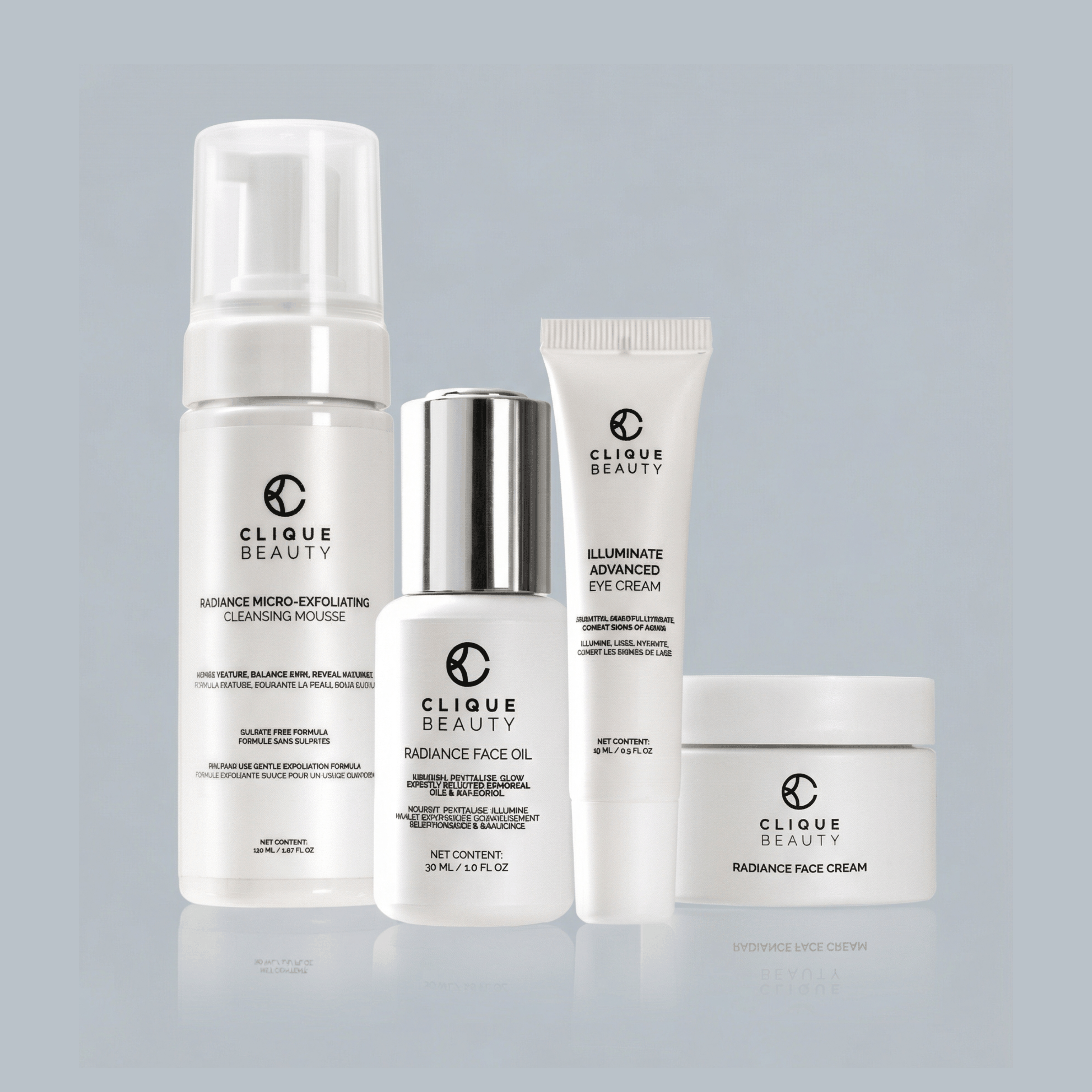
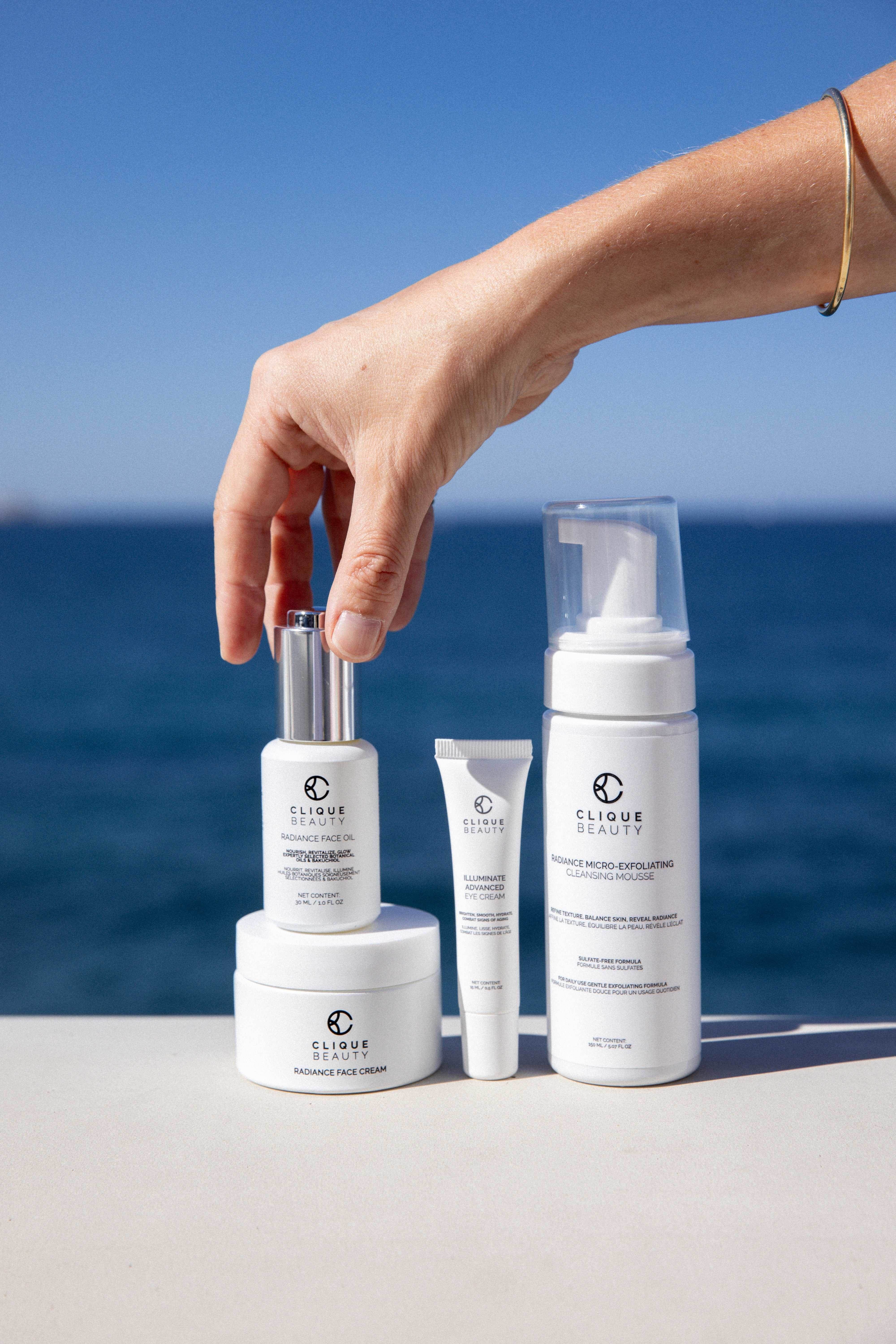
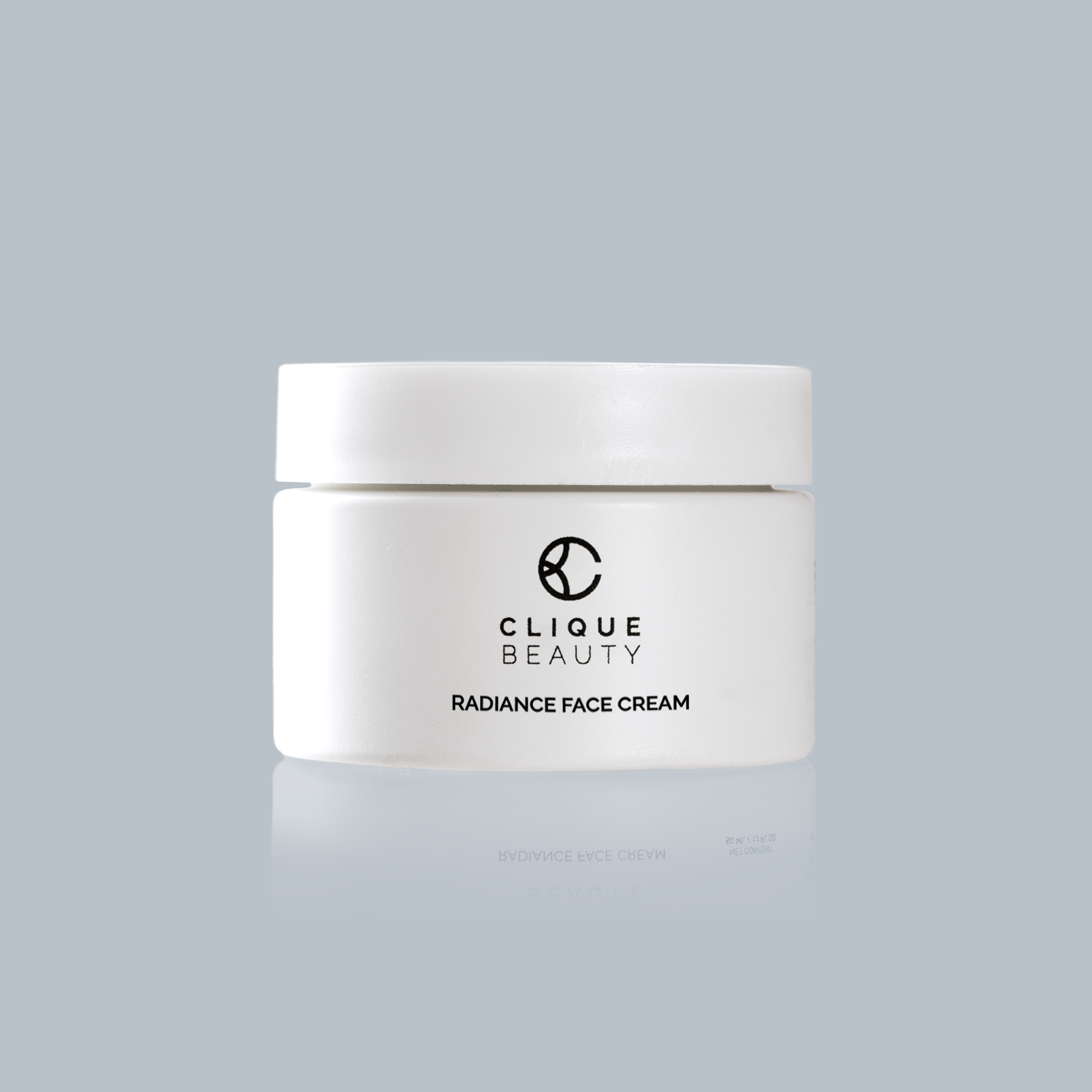
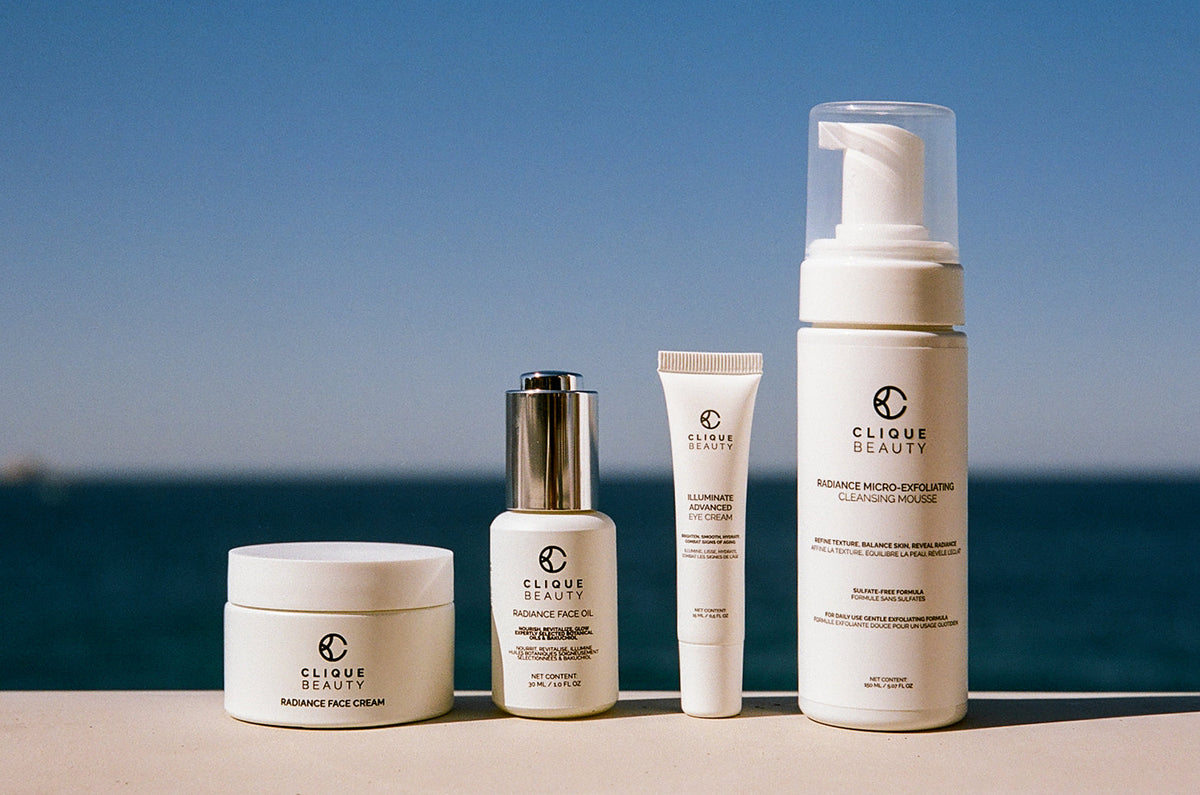
Our Radiance Face Cream uses niacinamide as a daily, everyday-tolerance active rather than a headline percentage. It works alongside stabilized vitamin C (ascorbyl glucoside), sodium hyaluronate and a lipid base of organic shea butter, organic jojoba and squalane, plus seven alpine botanicals — lady's mantle, mallow, lemon balm, peppermint, yarrow, speedwell and cowslip — for comfort. The formula measured a +42% increase in hydration in clinical testing.*
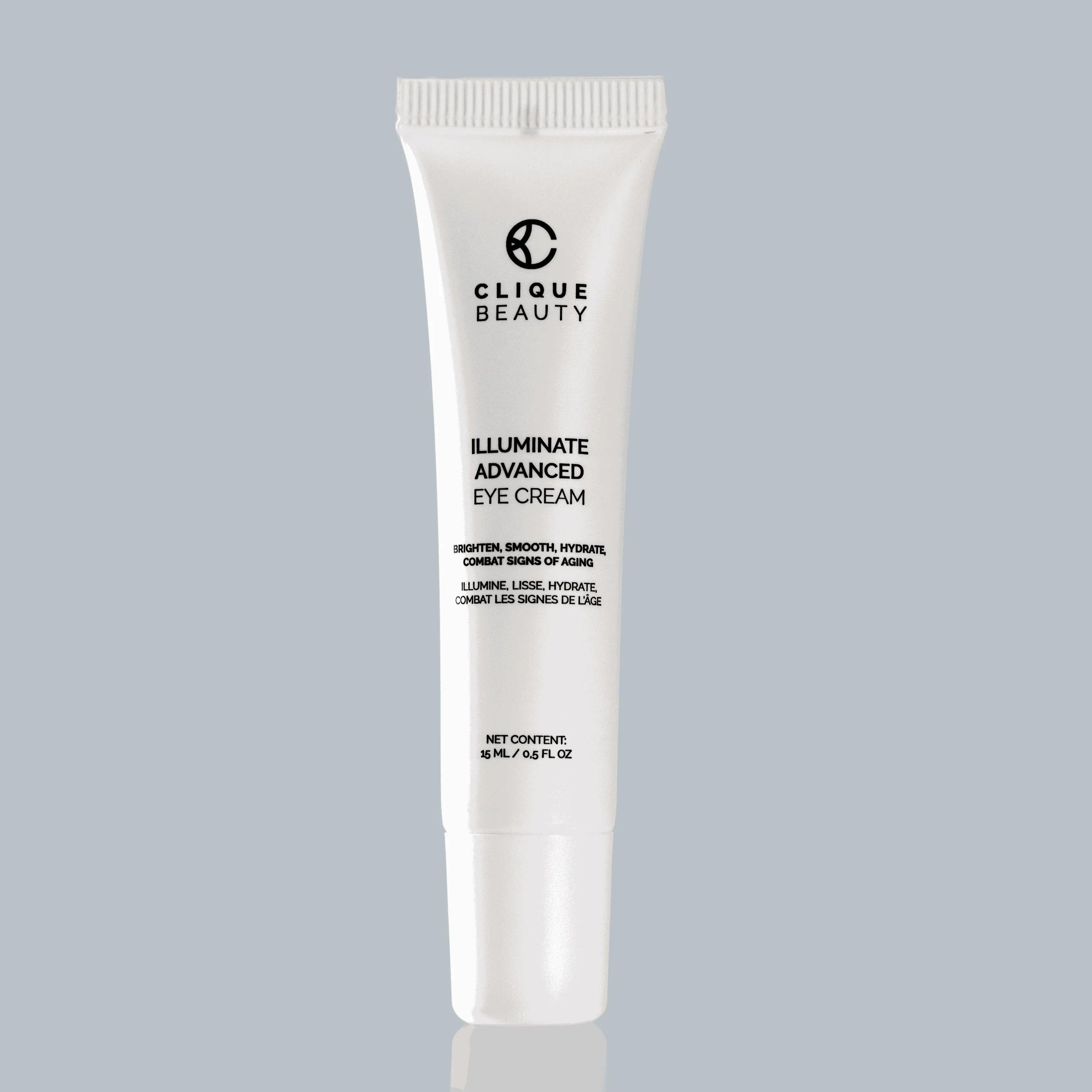
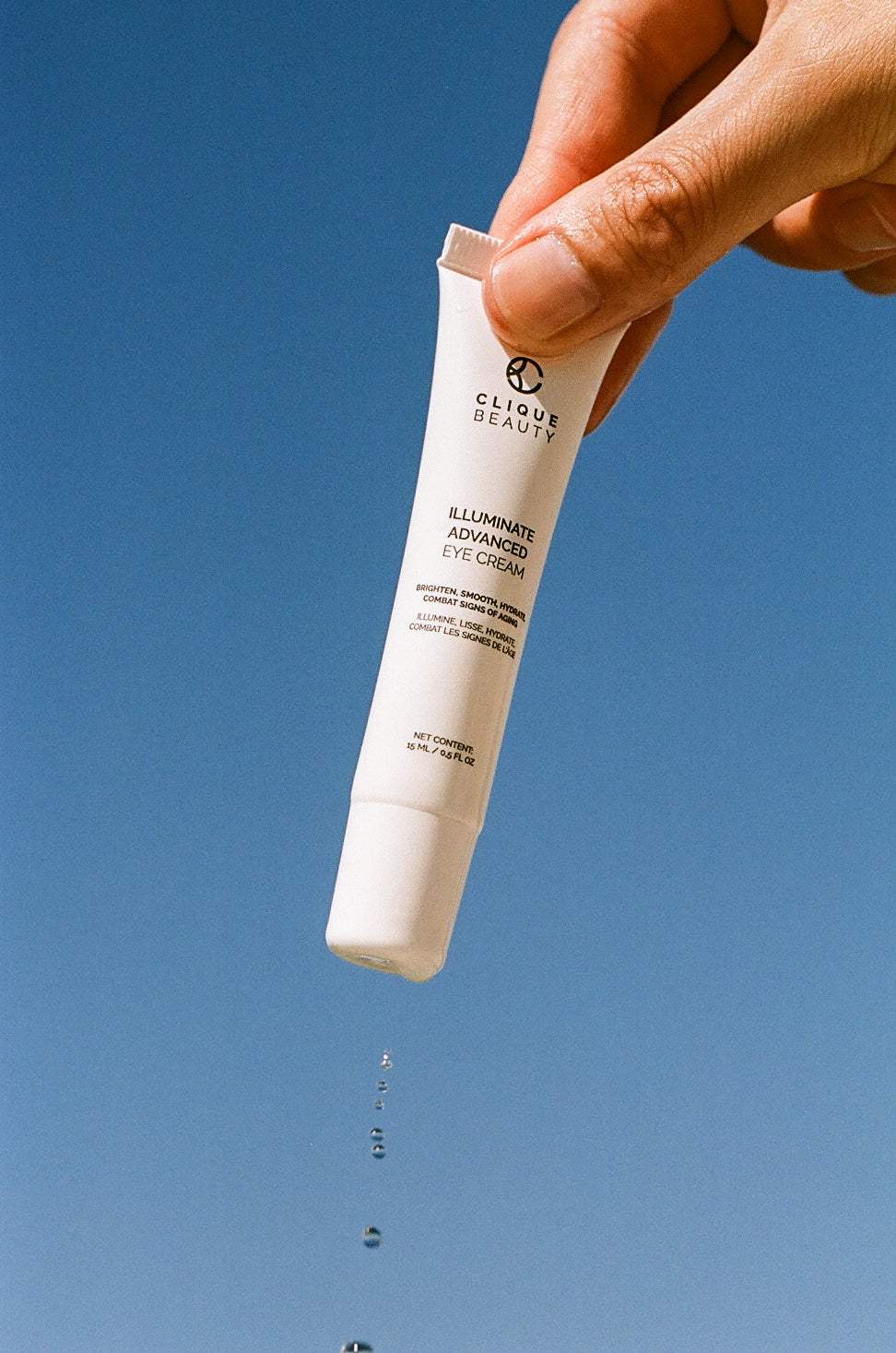
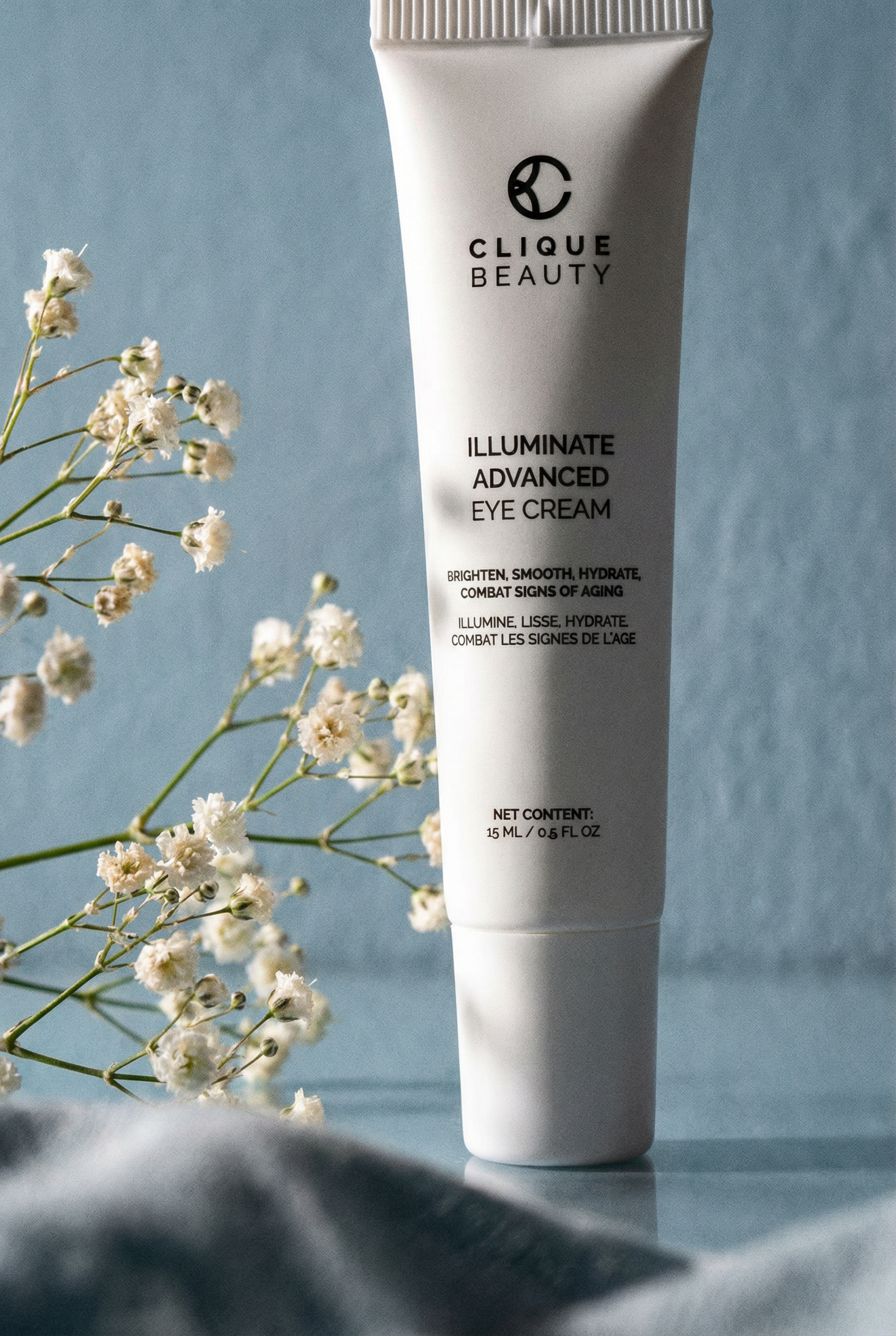
Around the eye we go higher. Our Illuminate Advanced Eye Cream contains niacinamide at 5% with caffeine at 1%, squalane, avocado oil, sodium hyaluronate, tocopherol and chamomile flower water. It is formulated without fragrance, a decision specific to that step: the eye contour is the first area of the face to react to anything. It measured a +37% increase in hydration in clinical testing.*
In both, niacinamide is there because it earns its place in the formula — purposeful actives, fewer steps, visible results without aggression.
FAQ
Can you use niacinamide every day?
Yes. It is stable, non-photosensitizing and well tolerated morning and evening. Daily use is how the tone and texture benefits accumulate in the first place.
What percentage of niacinamide should I look for?
A moderate level in a well-supported formula beats a high number in a bare one. Around the eye area a higher level, such as 5%, is common because that skin is thin and tone-sensitive.
Does niacinamide help with dark spots?
It helps them look less defined by limiting how much pigment reaches surface skin cells. It works gradually and pairs well with sun protection, which is what prevents new marks forming. More on that in what actually works on hyperpigmentation.
*Clinically measured increase in skin hydration. Individual results vary.
Comments