

How to Layer a Face Oil and a Moisturizer — and Why the Order Matters
In short: Apply the face oil first, then the moisturizer. A lightweight botanical oil conditions the surface without blocking anything, and the cream that follows carries the humectants and closes the routine. The reverse order — cream underneath, oil on top — only makes sense with thick, purely occlusive balms.
Why does layering order matter at all?
Skincare layering follows two simple principles: molecular size and water content. Products that are water-based or built on small molecules go on early, where they can reach the skin. Heavier, oil-based formulas go on later, where their job is to sit on the surface and hold everything in.
The complication is that a face oil and a moisturizer both sit near the end of a routine, and the usual "thinnest to thickest" shortcut does not settle which of the two comes first. A modern facial oil is often lighter than the cream that follows it, which is exactly why the received wisdom is wrong so often.
What a face oil does that a moisturizer does not
A moisturizer works on three levels at once. Humectants such as sodium hyaluronate or glycerin attract water into the skin. Emollients such as squalane or shea butter fill the gaps between skin cells and improve texture. Occlusive components form a surface layer that slows evaporation. A well-built cream contains all three.
A face oil is primarily an emollient, and only partly an occlusive. It softens, nourishes and conditions. What it does not do is hydrate in the way a humectant does, because oil and water do not mix. This is the distinction that drives the whole question of order.
The order that works: oil first, then cream
For most skin types and most modern formulas, the face oil goes on first.
This feels backwards to a lot of people, because "oil seals everything in" is repeated everywhere. That logic holds for thick, purely occlusive products such as heavy balms and petrolatum. It does not hold for the light, fast-absorbing botanical oils used in facial oil formulas today.
Applied first on slightly damp skin, a lightweight oil conditions the surface and softens it without forming a wall. The moisturizer that follows can still deliver its humectants where they are needed, and its own occlusive components close the routine properly. Reverse the two and you risk laying an oil film over a cream whose water-attracting ingredients have not yet done their work — building the barrier before the barrier work is done.
The full application sequence
This is the part worth saving. It works morning and night, with one difference at the end.
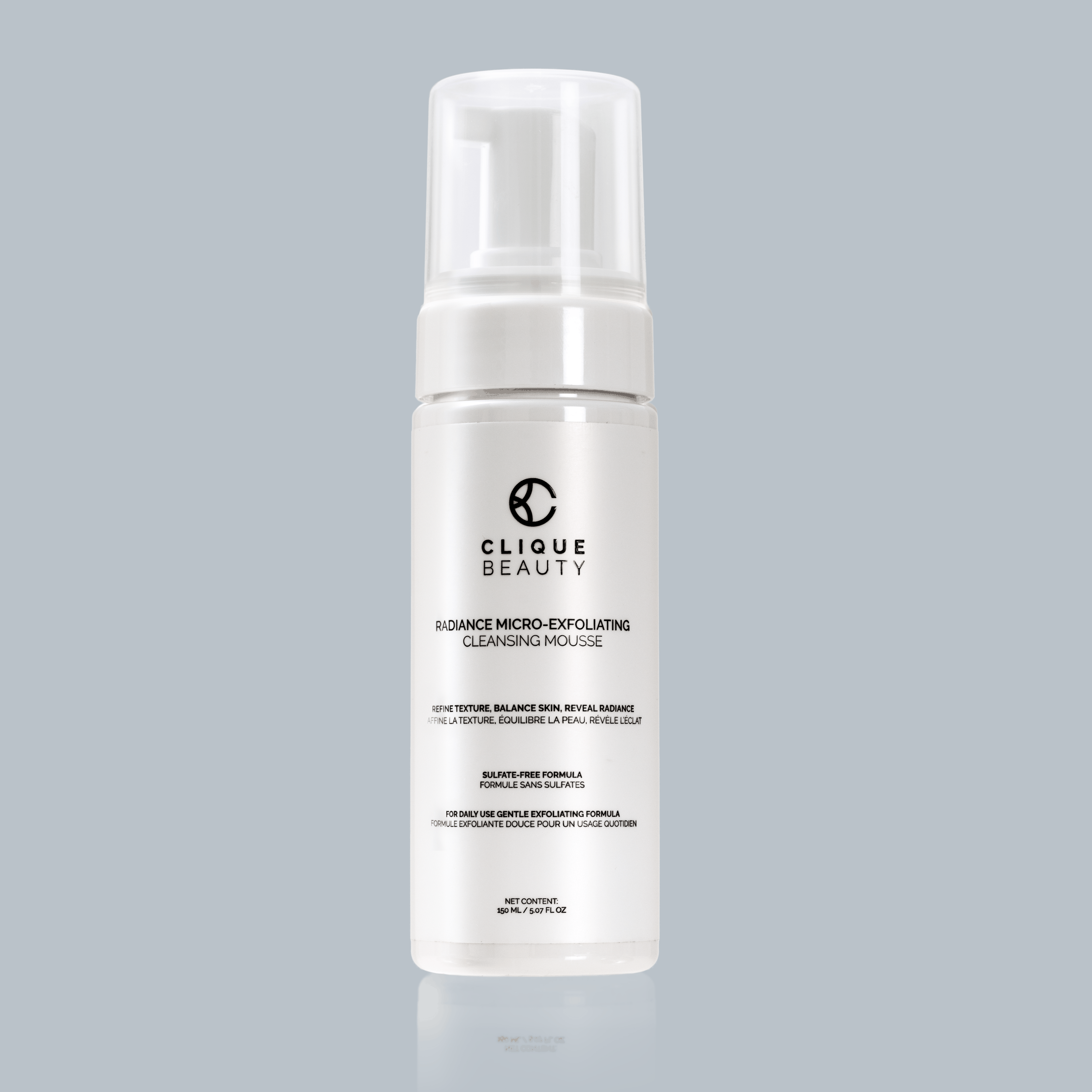
- Cleanse. Lukewarm water, a gentle formula. If your cleanser leaves skin squeaking, that is the first thing to change.
- Leave skin slightly damp. Pat, do not rub, and move on while a thin film of water is still there.
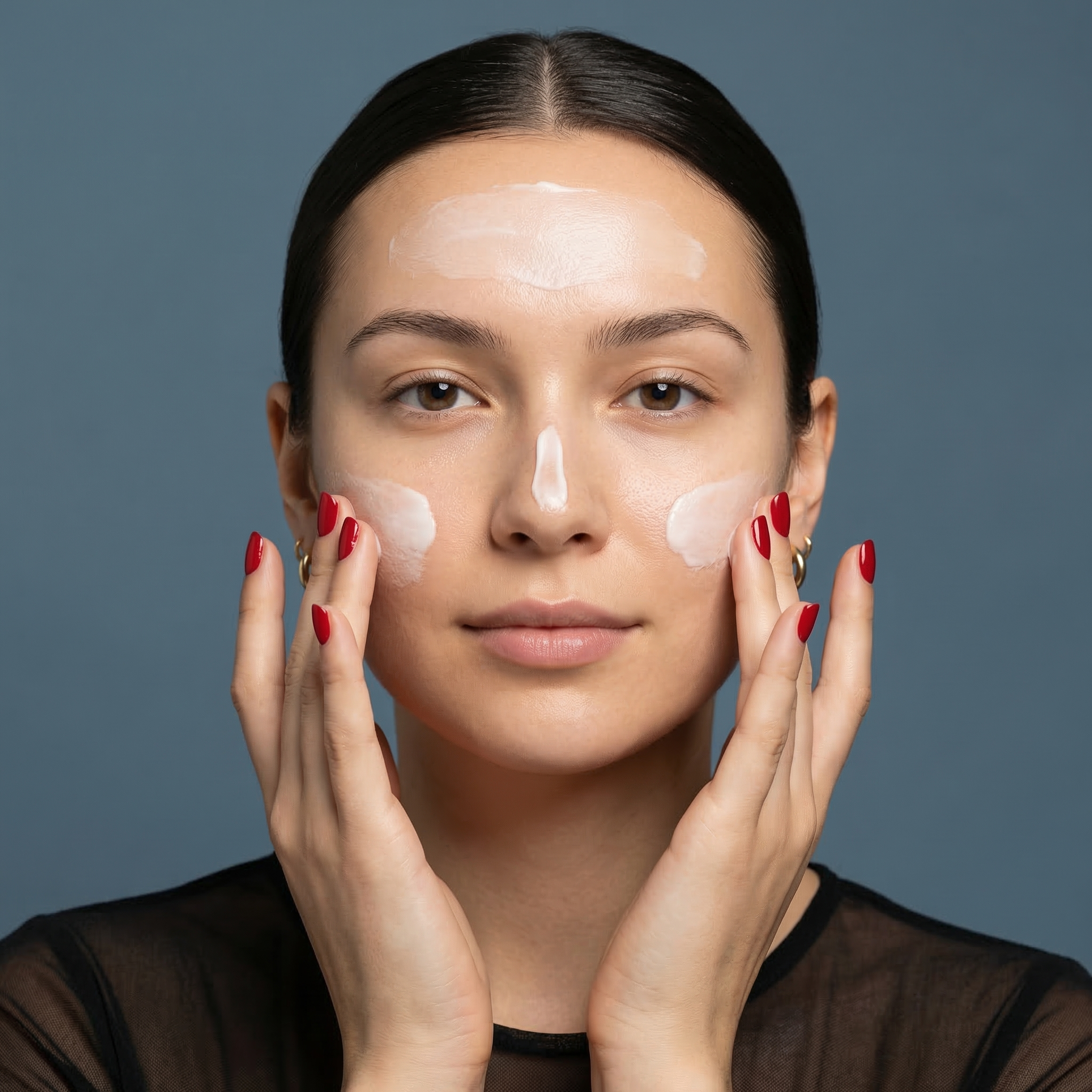
- Face oil — three to four drops. Warm them between your palms, then press into the skin rather than rubbing. Wait until the surface no longer feels wet before moving on.
- Face cream. Upward strokes, over the oil, including the neck. Warm it between your fingers first so it spreads evenly.
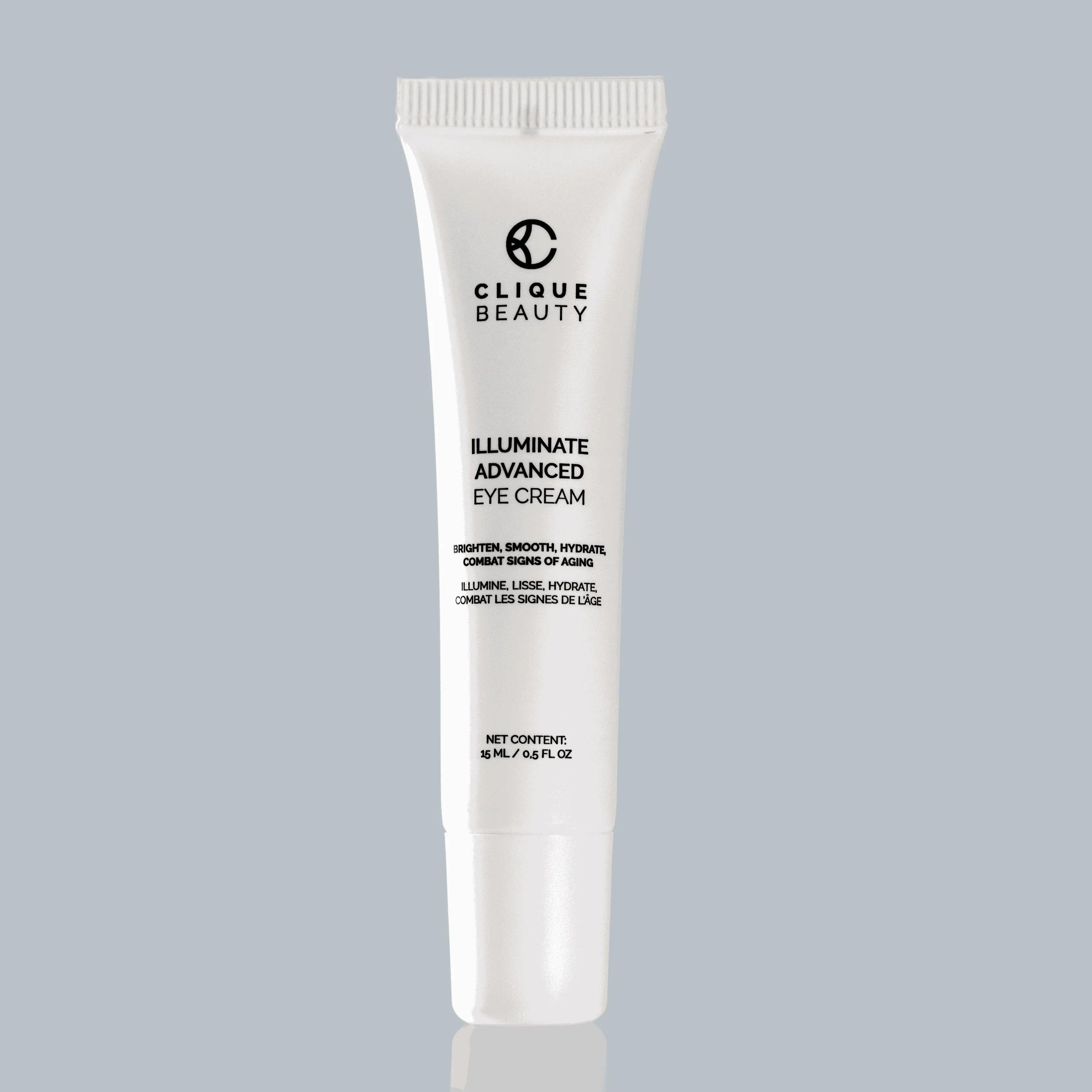
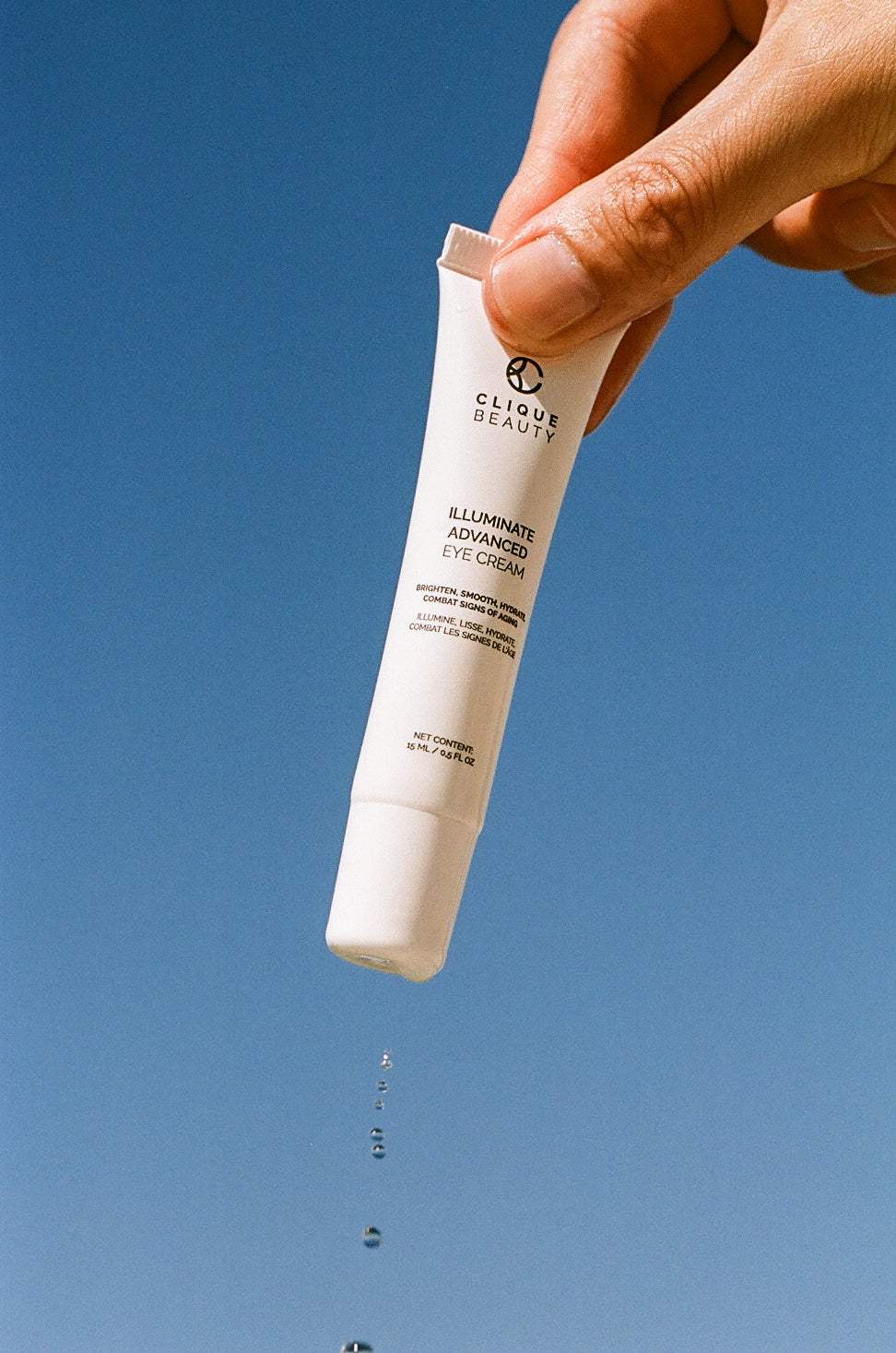
- Eye product, if you use one. Tap gently along the orbital bone; do not drag.
- SPF — morning only. Always the final step, applied once the cream has settled.
At night, stop at step five. In the morning, sunscreen is non-negotiable if your routine includes exfoliating acids at any point.
When a face oil on its own is enough
On evenings when skin feels balanced — not tight, not flaking, not reactive — an oil applied alone is often sufficient. Its emollient properties condition the skin overnight without the extra weight of a cream, and the reduced friction of a one-step evening makes the routine easier to keep. The principle is to use the minimum necessary product, applied with attention, rather than the maximum available. That reasoning is developed further in why a face oil can be the most efficient step in your routine.
The exception: if skin is dehydrated rather than simply lacking lipids, oil alone will not fix it, because there is no water in the bottle. Dehydration and dryness need different answers.
How we approach this at Clique Beauty
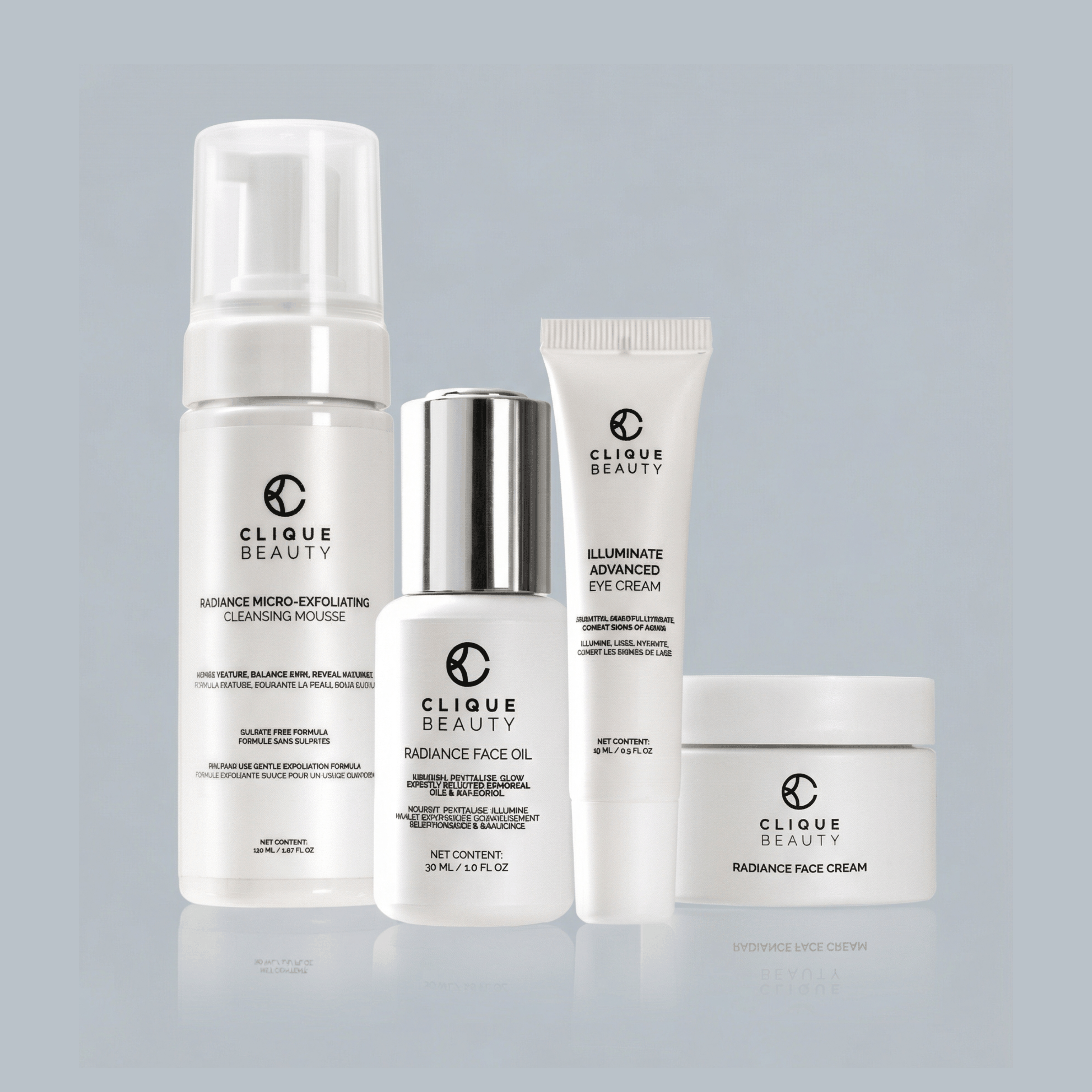
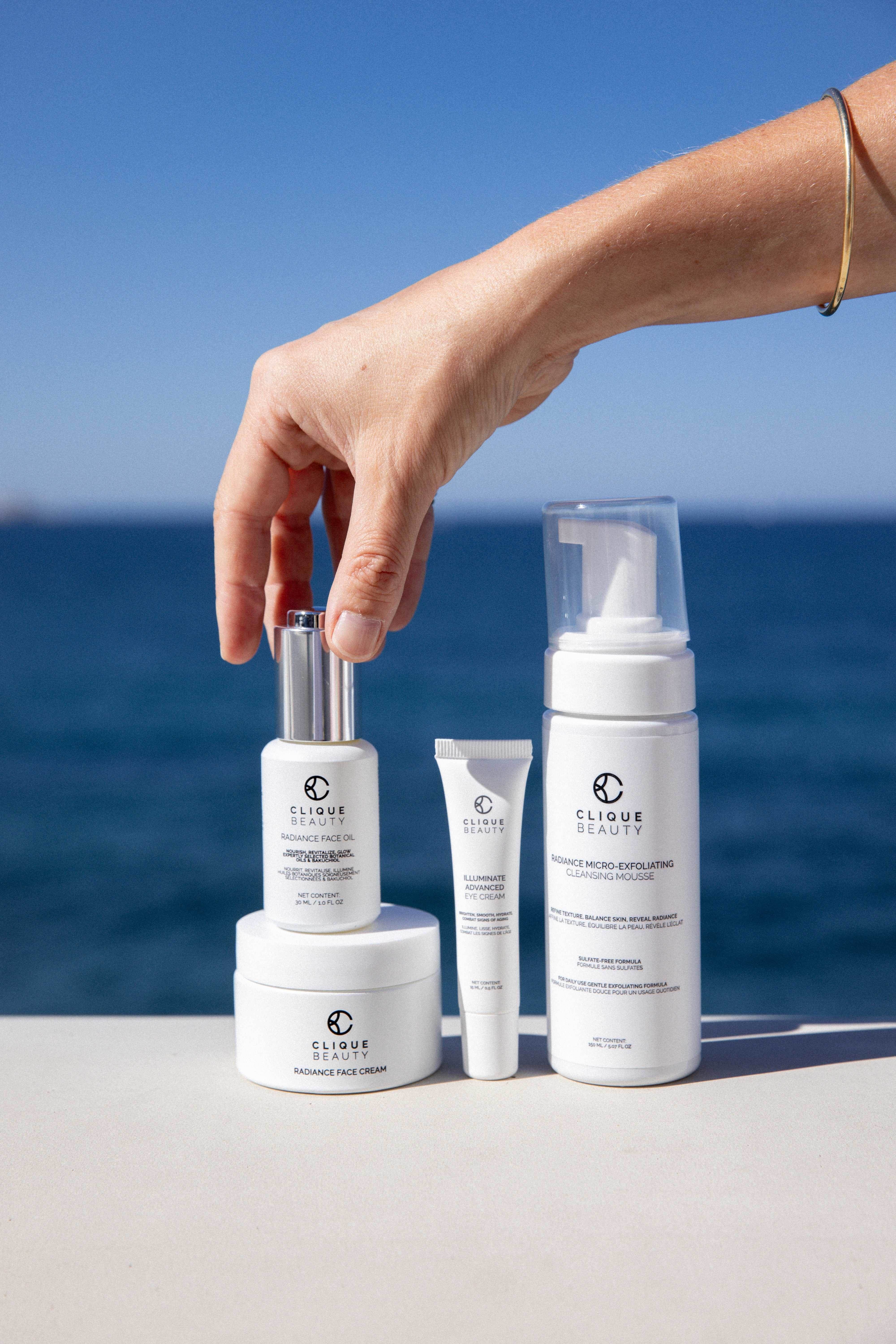
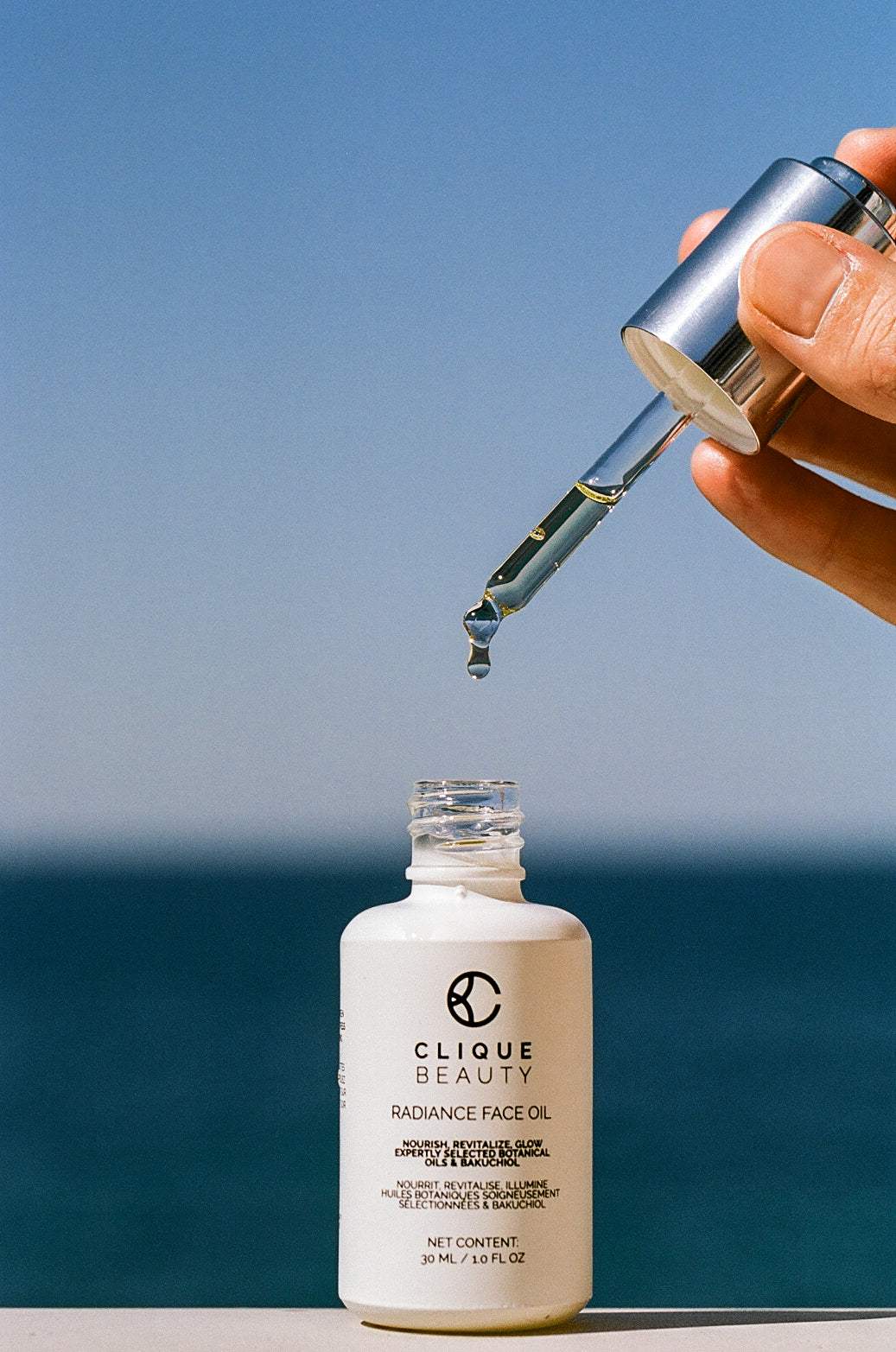
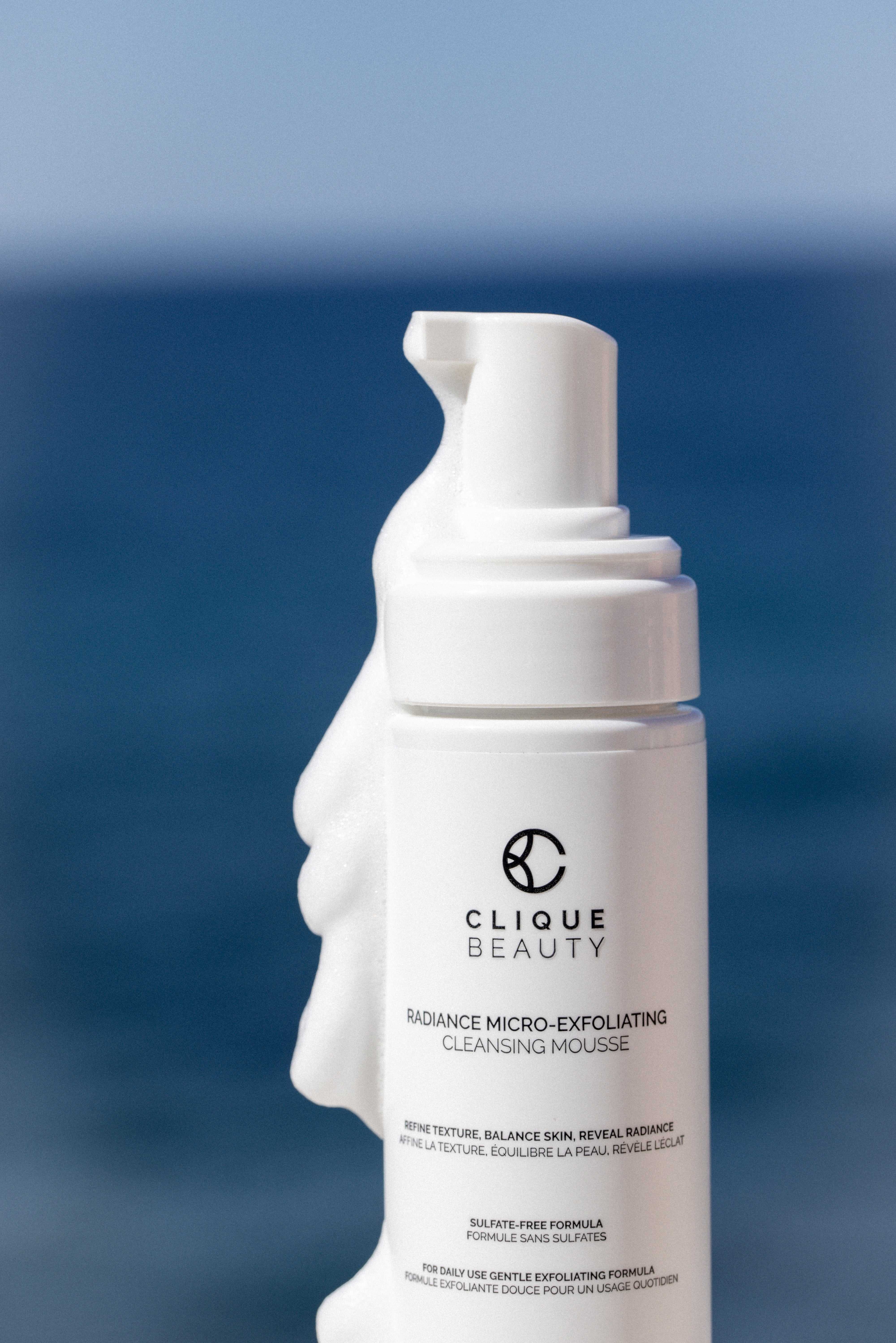
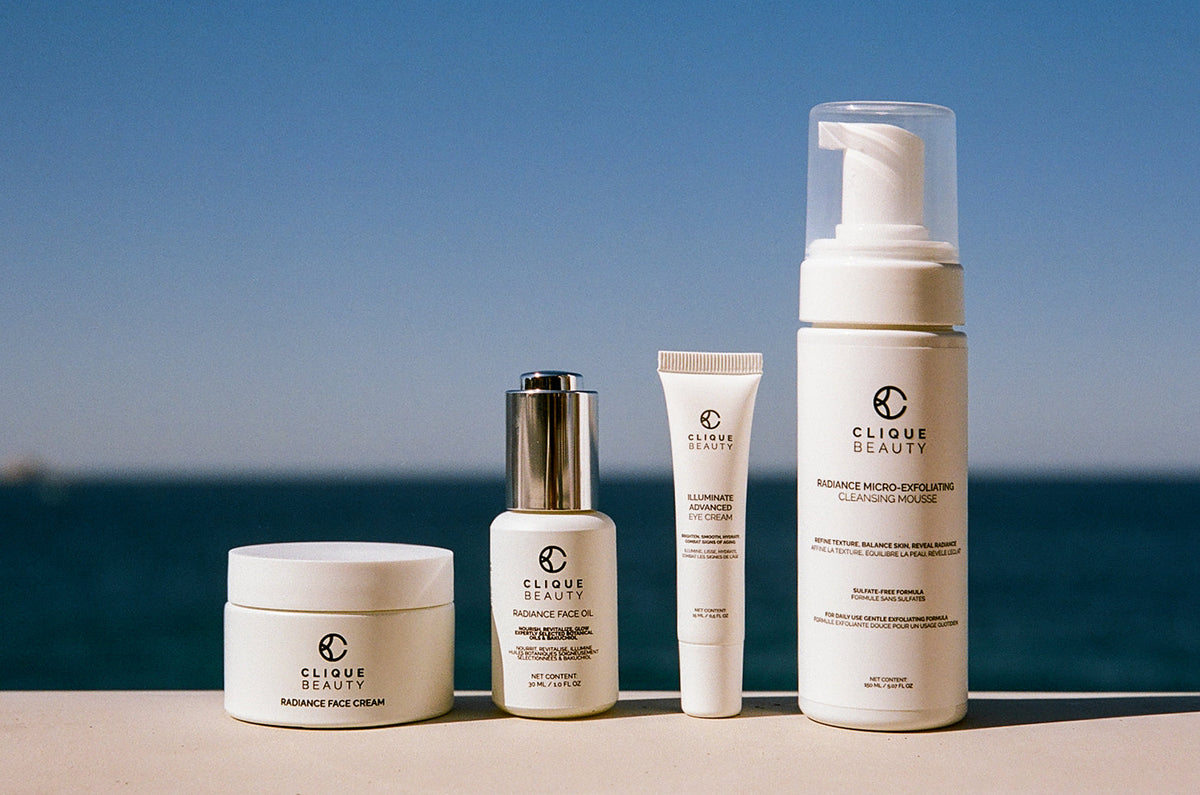
Our Radiance Face Oil and Radiance Face Cream are formulated to be used together, in that order. The oil blends thirteen botanical oils — among them sunflower, sesame, jojoba, grape seed, safflower, argan, hazelnut, nigella, evening primrose, plum and rosehip — with bakuchiol, a plant-derived alternative to retinol, tocopherol, and bitter cherry flower extract. Hazelnut oil gives it a dry-touch finish that absorbs quickly, which is precisely what allows it to go on first without sitting between the skin and the cream.
The cream then follows: niacinamide supports barrier function, sodium hyaluronate brings the humectant hydration the oil cannot, organic shea butter and squalane provide emollient and occlusive coverage, and ascorbyl glucoside adds stabilized vitamin C. Seven alpine botanicals round it out.
Together they cover nourishment, hydration and barrier support without either product competing with the other. Both are scented, and that is part of the design: a two-step evening is only worth building if you look forward to it enough to repeat it. Formulated in France, Shaped in the USA.
What makes layering feel heavy — and how to avoid it
If oil and cream together feel greasy, the problem is almost always quantity or timing rather than the products themselves. Three to four drops of oil is a full face; six is a mask. Moving straight to the cream while the oil is still wet on the surface leaves a slick that never settles. And a heavy occlusive oil is the wrong tool for a daytime routine under makeup — look for a dry-touch finish instead. If you want the wider order of operations across a whole routine, start with choosing the right cream and build outward from there.
FAQ
Do you put face oil on before or after moisturizer?
Before, for lightweight botanical oils — which is most facial oils sold today. Apply the oil to damp skin, let it settle, then apply the moisturizer over it. Only thick occlusive balms go last.
Can I just use a face oil instead of a moisturizer?
Sometimes. If your skin lacks lipids but is not dehydrated, an oil alone works, especially at night. If skin feels tight and looks dull, you need the water a cream provides.
How many drops of face oil should I use?
Three to four for the whole face. Warm them between your palms and press in rather than rubbing. If skin looks shiny rather than soft, you used too much.


Comments