

How to Choose a Hydrating Face Cream: What Actually Matters

In short: A hydrating face cream works when it does three things at once — pulls water into the skin, replaces the lipids skin has lost, and slows evaporation. Most creams do one of the three well and call it hydration. Learn to spot a humectant, an emollient and an occlusive on the label, then match the texture to how your skin behaves rather than to the season.
What does "hydrating" actually mean on a face cream?
Hydration is water. Moisturization is the work of keeping that water where it belongs. The two words get used interchangeably on packaging, which is why a cream can be labeled hydrating and still leave skin tight by midday: it delivered water to a surface with no way of holding on to it. If that is your experience, the diagnosis usually sits upstream — we take it apart in why your skin feels dry even when you moisturize.
So the useful question, standing in front of two jars, is not "is this hydrating?" It is "does this formula do all three jobs, or only one?"
The three jobs a face cream has to do
- Attract water — humectants. Sodium hyaluronate, glycerin, urea. They bind water and hold it at the surface of the skin, where it can actually be used.
- Refill the lipids — emollients. Squalane, jojoba oil, plant butters. They fill the microscopic gaps between skin cells. This is what turns rough into smooth.
- Slow the loss — occlusives. Shea butter and richer plant lipids form a light surface layer that reduces transepidermal water loss, the slow leak that undoes most routines.
- Support the skin's own retention — actives. Niacinamide is the best documented of these, and it works quietly in the background rather than delivering an immediate sensation.
A cream with no humectant feels rich and never quite comfortable. A cream with humectants alone hydrates briefly, then leaves.
How to read an ingredient list in under a minute
You do not need to decode a full INCI list. Three passes are enough.
- Scan the first six ingredients. Almost everything that determines texture and hydration sits in that group. If you cannot find one humectant and one lipid there, keep looking.
- Check whether percentages are actually published. A brand that gives you a figure has measured it. Vague phrasing such as "actives at effective concentrations" tells you nothing you can verify.
- Look for what could irritate you specifically. Denatured alcohol high in the list and essential oils are the two most common triggers on reactive skin, and the two worth checking for by name.
Which face cream for which skin: a decision guide
This is the part worth keeping. It is the shortest route from "my skin does this" to "buy the formula that does that."
| If your skin… | Prioritize | Skip |
|---|---|---|
| Feels tight within minutes of cleansing | A humectant plus a real lipid content — shea, squalane, jojoba | Gel creams with no lipid phase at all |
| Is shiny on the surface but tight underneath | A light emulsion with sodium hyaluronate and squalane | Heavy balms; they sit on top and change little |
| Flakes despite a daily moisturizer | Occlusive lipids and niacinamide — treat retention first | Adding new actives before skin is calm |
| Stings with products it used to tolerate | Short ingredient lists, no acids, no retinol for now | Denatured alcohol and essential oils |
| Is comfortable but dull and uneven | A stabilized vitamin C alongside the hydration | Stacking three brightening products at once |
| Is dry only in cold months | The same cream, with a few drops of face oil underneath | Rebuilding your whole routine every season |
What to ignore on the front of the jar
Texture claims — melting, cloud-light, weightless — describe the first ten seconds, not the performance. "Dermatologist tested" speaks to tolerance, which matters, but says nothing about hydration. And a long ingredient list is neither good nor bad in itself; what counts is whether the three functions are covered and whether anything in there is a known irritant for you.
One claim is genuinely useful: a measured hydration figure stated with its method. It tells you the formula went through instrumental testing rather than a consumer survey.
How we approach this at Clique Beauty
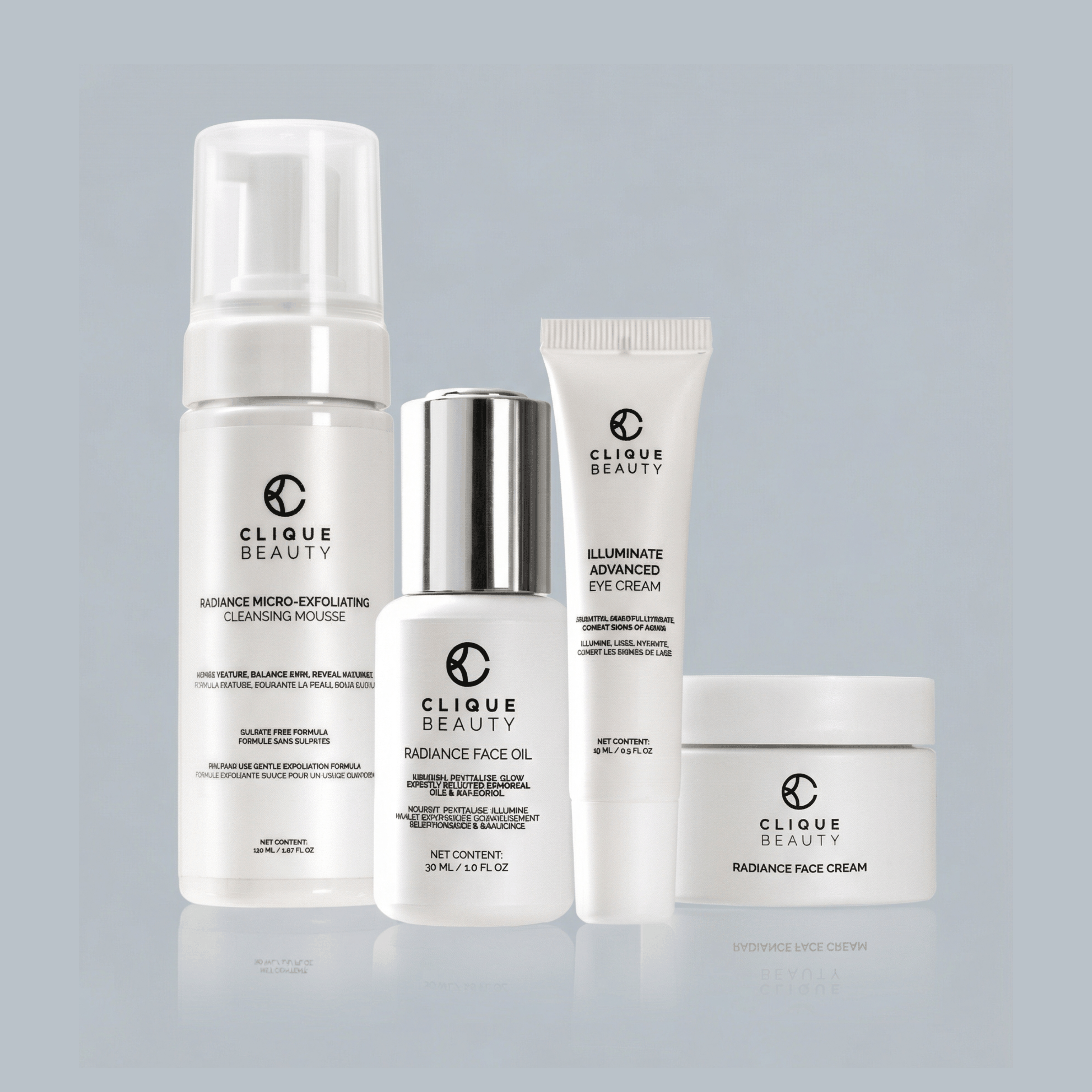
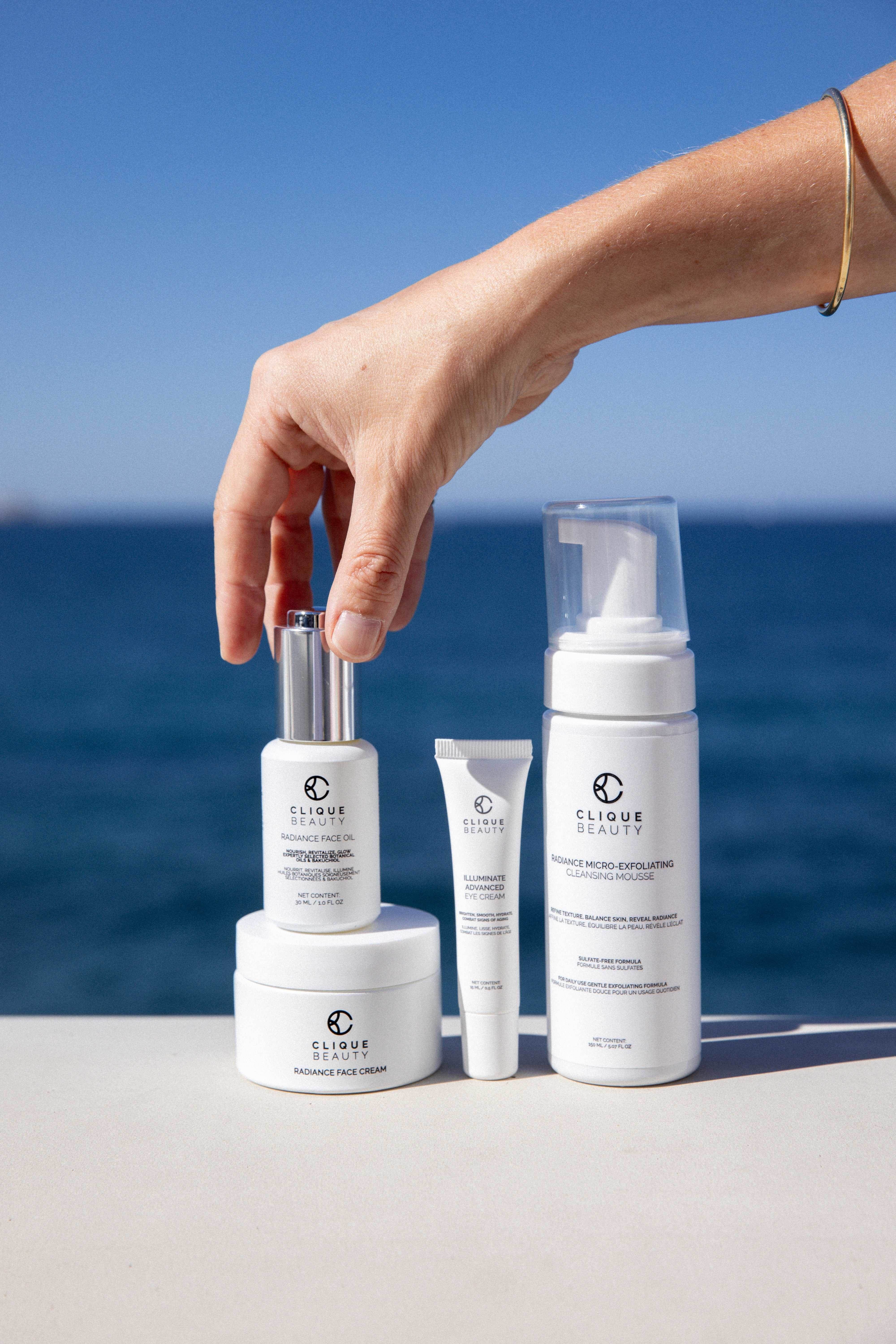
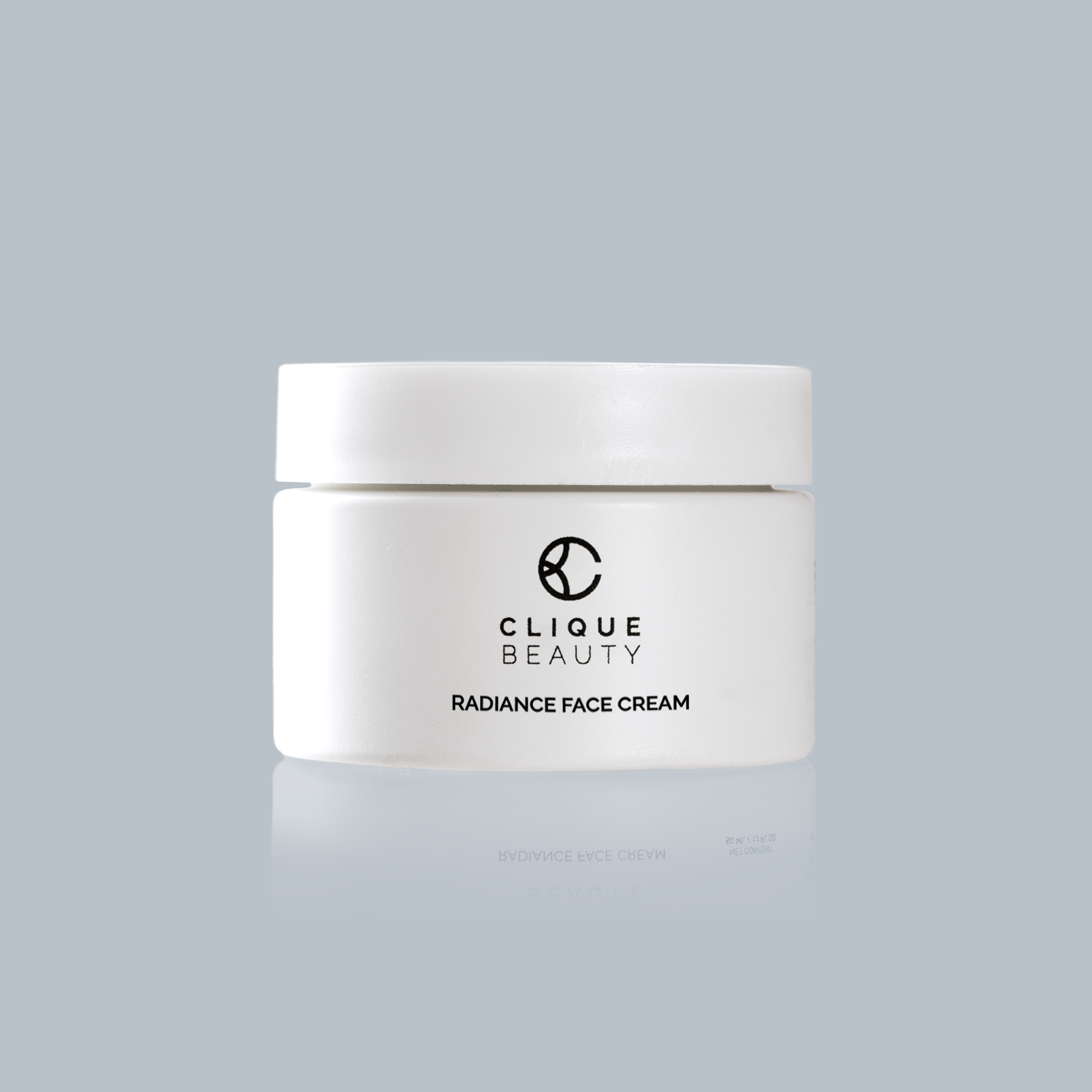
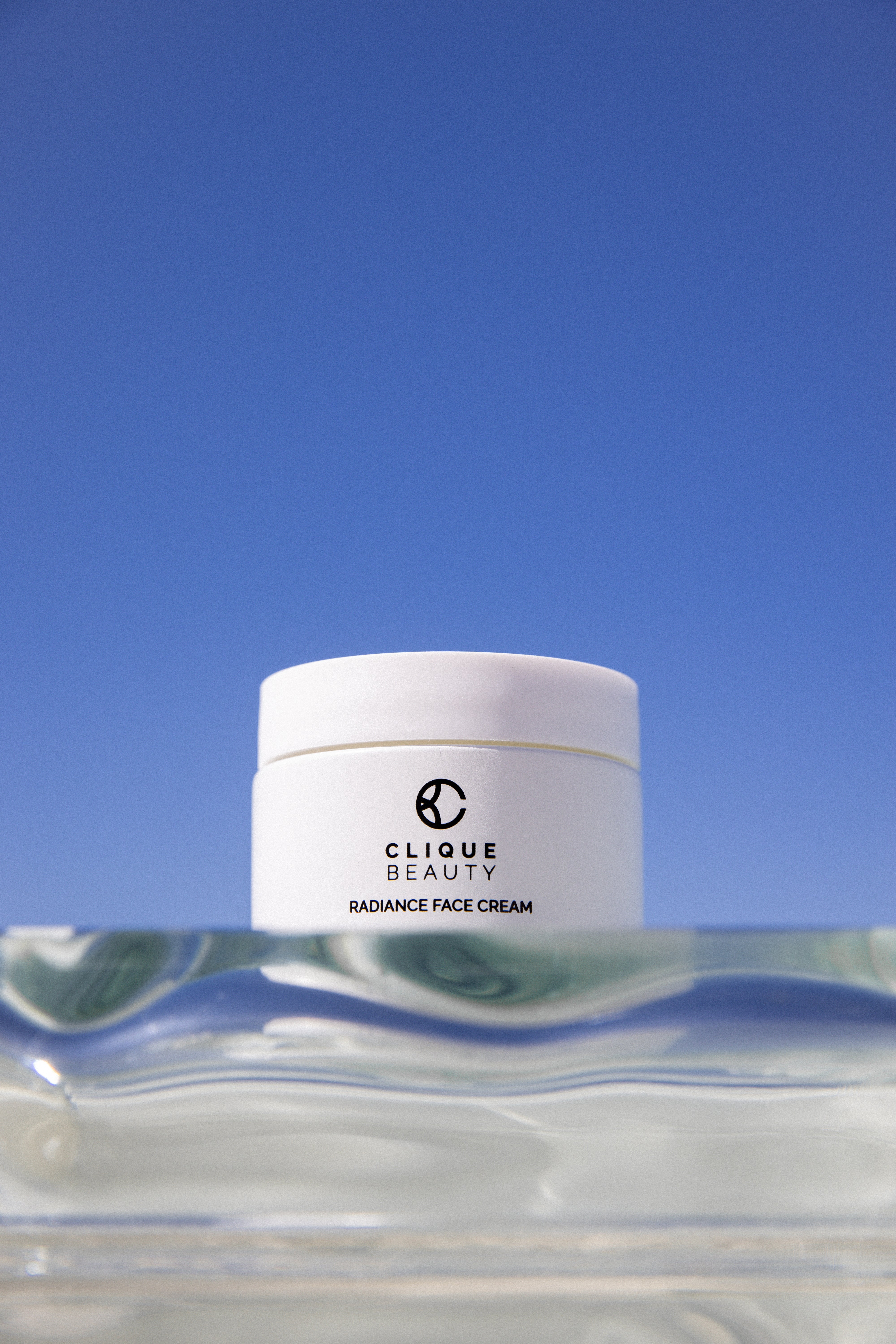
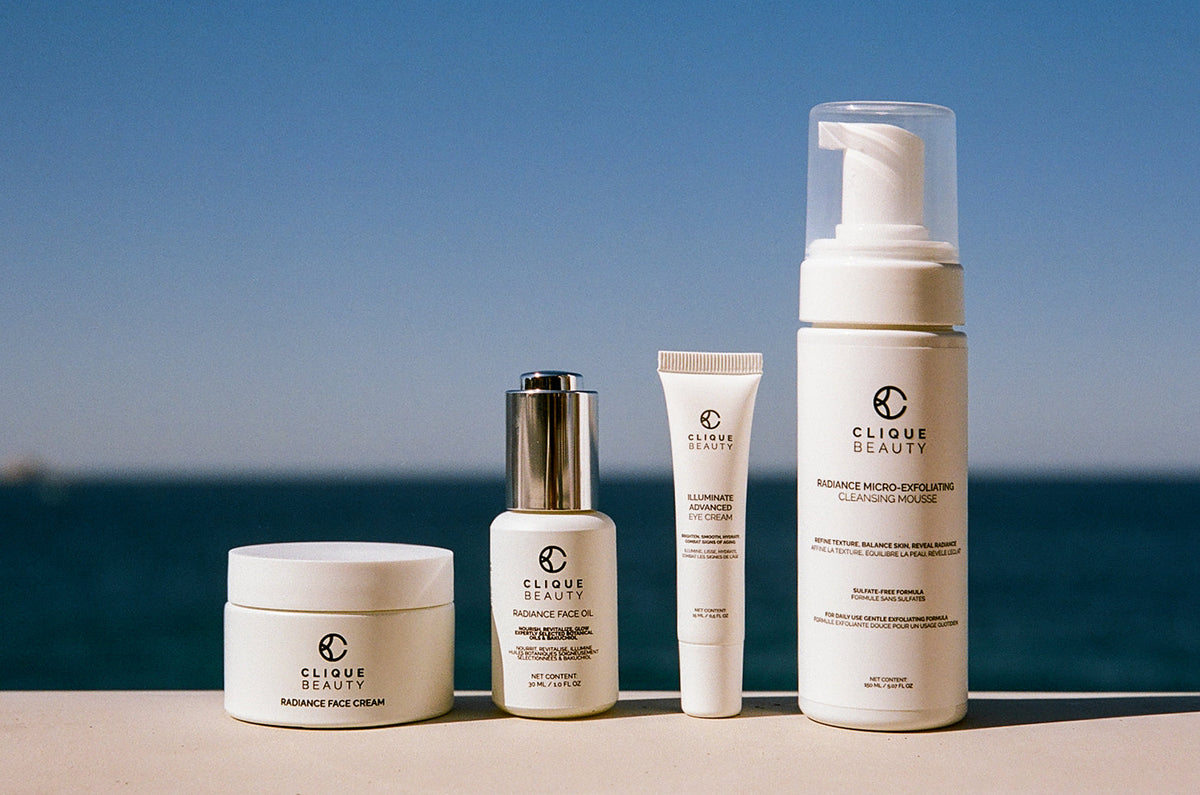
Our Radiance Face Cream was built around the three jobs rather than around one hero ingredient. Sodium hyaluronate attracts water. Organic jojoba oil and squalane refill the lipid layer. Organic shea butter slows the loss. Niacinamide supports the skin's own retention, and ascorbyl glucoside — a stabilized form of vitamin C — adds daily antioxidant work in a form gentle enough for morning and night.
Seven alpine botanicals complete the formula: lady's mantle, mallow, lemon balm, peppermint, yarrow, speedwell and cowslip. In clinical testing it measured a +42% increase in hydration.* It is formulated and perfumed in France, which is the part of a cream no ingredient list captures: hydration is a result of daily use, and how a texture feels and smells is what makes daily use effortless. Formulated in France, Shaped in the USA.
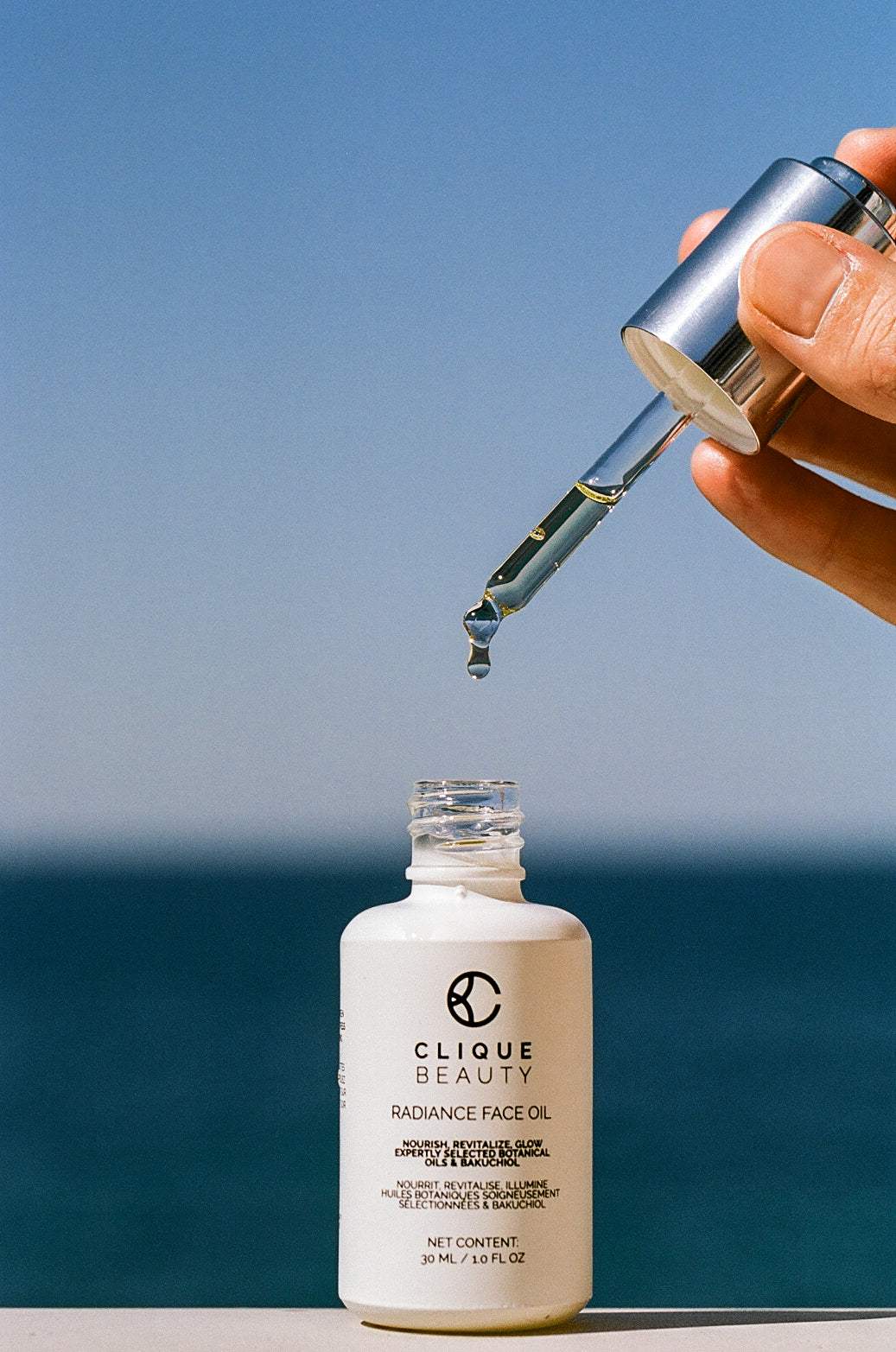
When cold, dry air asks for more, a few drops of our Radiance Face Oil under the cream is a more efficient answer than switching to a heavier moisturizer — which is also why a single well-chosen oil can replace several products.
How to apply it so it earns its place
Apply to slightly damp skin. After cleansing, pat rather than rub, and put the cream on while a small amount of water is still on the surface — that is what the humectants bind to. Warm the product between your fingers first; a cream applied cold to dry skin drags and absorbs unevenly.
Use the same quantity morning and night, and give a new formula an uninterrupted run before you judge it. Comfort tends to arrive first, texture next, tone last. Consistency does more than quantity here: two fingertips of the right cream, used daily, outperforms a thick layer used when you remember.
FAQ
What ingredients should I look for in a hydrating face cream?
One humectant such as sodium hyaluronate or glycerin, one emollient such as squalane, jojoba or shea butter, and something that supports retention, such as niacinamide. All three, not one.
Can oily skin use a hydrating face cream?
Yes, and it usually should. Oily skin can still be short of water. Choose a lighter emulsion with sodium hyaluronate and squalane rather than skipping moisturizer altogether — skipping it tends to make oiliness worse.
Is an expensive face cream better than a cheap one?
Not automatically. Price tracks packaging, texture work and testing more than it tracks hydration. Read the first six ingredients and check whether any performance figure was measured instrumentally.
*Clinically measured increase in skin hydration. Individual results vary.

Comments