

Why a Face Oil Can Be the Most Efficient Step in Your Routine
In short: A face oil is not a moisturizer and does not replace one for everybody. But for skin that is short of lipids rather than short of water, a single well-formulated oil can do the work of a serum and a night treatment at once. What makes that possible is not the blend alone — it is a dry-touch finish you will actually use every day.
Why face oils are still misunderstood
Too rich. Too shiny. Too much. Face oils carry a reputation built on the heavy, slow-absorbing formulas of two decades ago, and on the assumption that anyone with oily skin should avoid them. Both are out of date.
A modern facial oil is a concentrate of light, fast-absorbing plant lipids. Its job is not to sit on the face; it is to condition the surface, replace what a compromised lipid layer has lost, and deliver oil-soluble actives that do not survive well in a water-based formula. Whether that makes it efficient in your routine depends entirely on what your skin is actually missing.
Face oil vs face cream: what each one really does
Save this table. It answers the question most product pages avoid.
| Face oil | Face cream | |
|---|---|---|
| Primary function | Emollient, partly occlusive — softens and slows water loss | Humectant, emollient and occlusive together — brings water in and keeps it there |
| Water content | None. Oil and water do not mix | Water-based; that is where the hydration comes from |
| Best for | Skin that feels rough or lacks lipids; dry patches; cold, dry air | Skin that is dehydrated, or needs daily barrier support |
| Under makeup | Yes, if the finish is dry-touch | Yes |
| Can it replace the other? | Only if your skin is not dehydrated | Yes, for most skin, most of the time |
| Where it goes | First, on slightly damp skin | After the oil, as the closing step |
If you are unsure which column describes you, the diagnostic is in dry versus dehydrated skin.
What one concentrated step can actually replace
The efficiency argument is not that an oil does everything. It is that a good one collapses three separate purchases into one:
- A nourishing serum. The oil-soluble antioxidants and plant lipids that a serum delivers are what an oil is made of to begin with.
- A night treatment. Bakuchiol, a plant-derived alternative to retinol, is oil-soluble and belongs in this kind of formula rather than in a separate bottle.
- A rich winter cream, for some skin. If your skin lacks oil rather than water, a few drops under — or instead of — a heavier cream is the more precise answer.
What it does not replace is hydration. There is no water in the bottle, so a face oil cannot rehydrate skin that is genuinely short of it. That job belongs to a cream — the label-reading method for picking one is in how to choose a hydrating face cream.
Why texture decides whether you keep using it
An oil with a dry-touch, fast-absorbing finish fits into a morning routine, layers under makeup and does not leave a film on your pillow. An oil that stays wet on the skin gets used twice and then abandoned in a drawer.
This is not a detail of comfort, it is the whole argument. Results come from consistency, and consistency comes from a product that is pleasant enough to reach for on a rushed Tuesday. Sensoriality is not decoration; it is what keeps a routine alive. When routines get short — travel, deadlines, a bad week — versatility matters more than accumulation.
Who should not swap their cream for an oil
Honesty first. An oil-only routine is the wrong call if your skin feels tight rather than rough, if it looks dull with makeup clinging to it, or if it is oily on the surface and tight underneath — all signs of dehydration, which needs water, not lipids. It is also the wrong call on a compromised, stinging barrier, where the priority is subtraction rather than a new product.
How we approach this at Clique Beauty
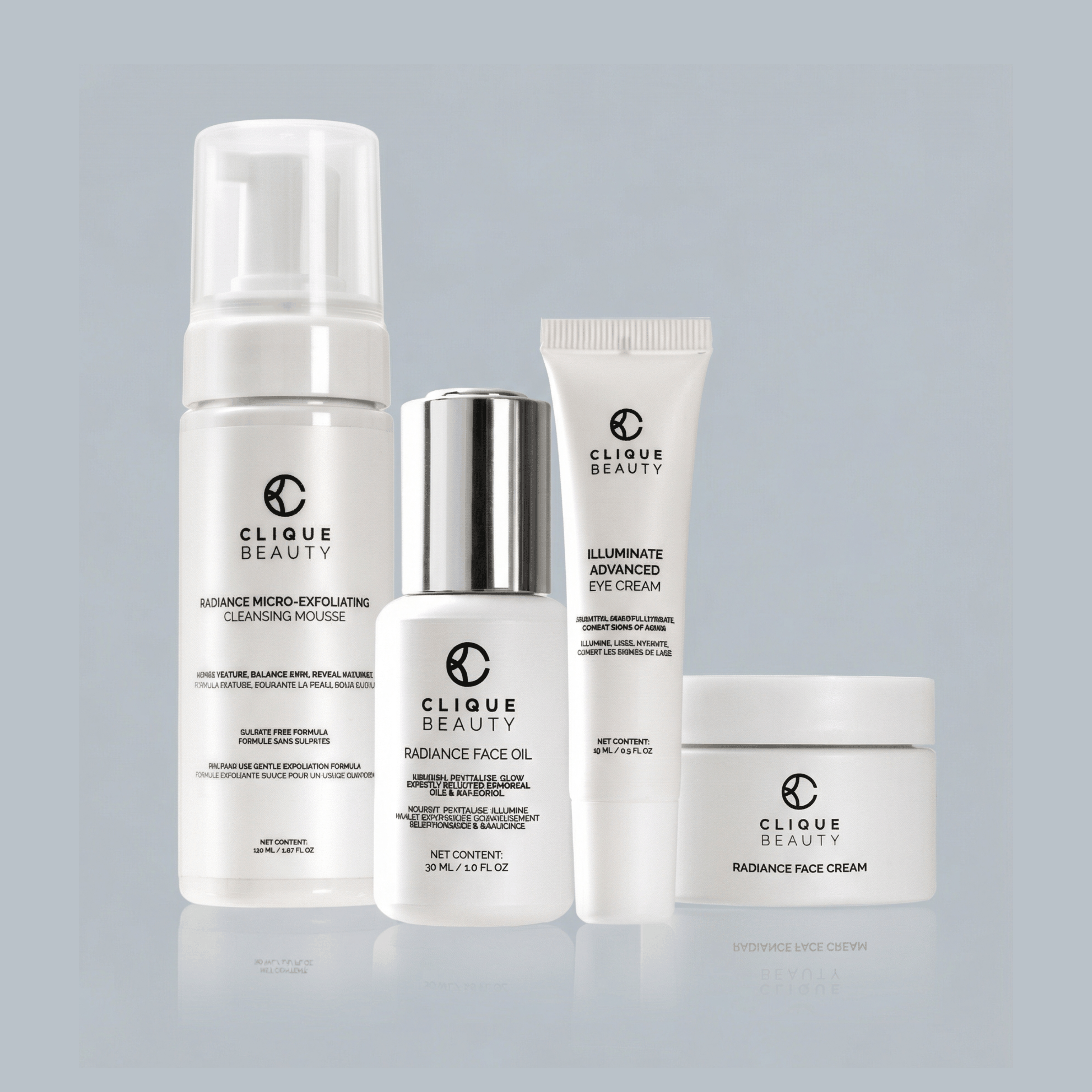
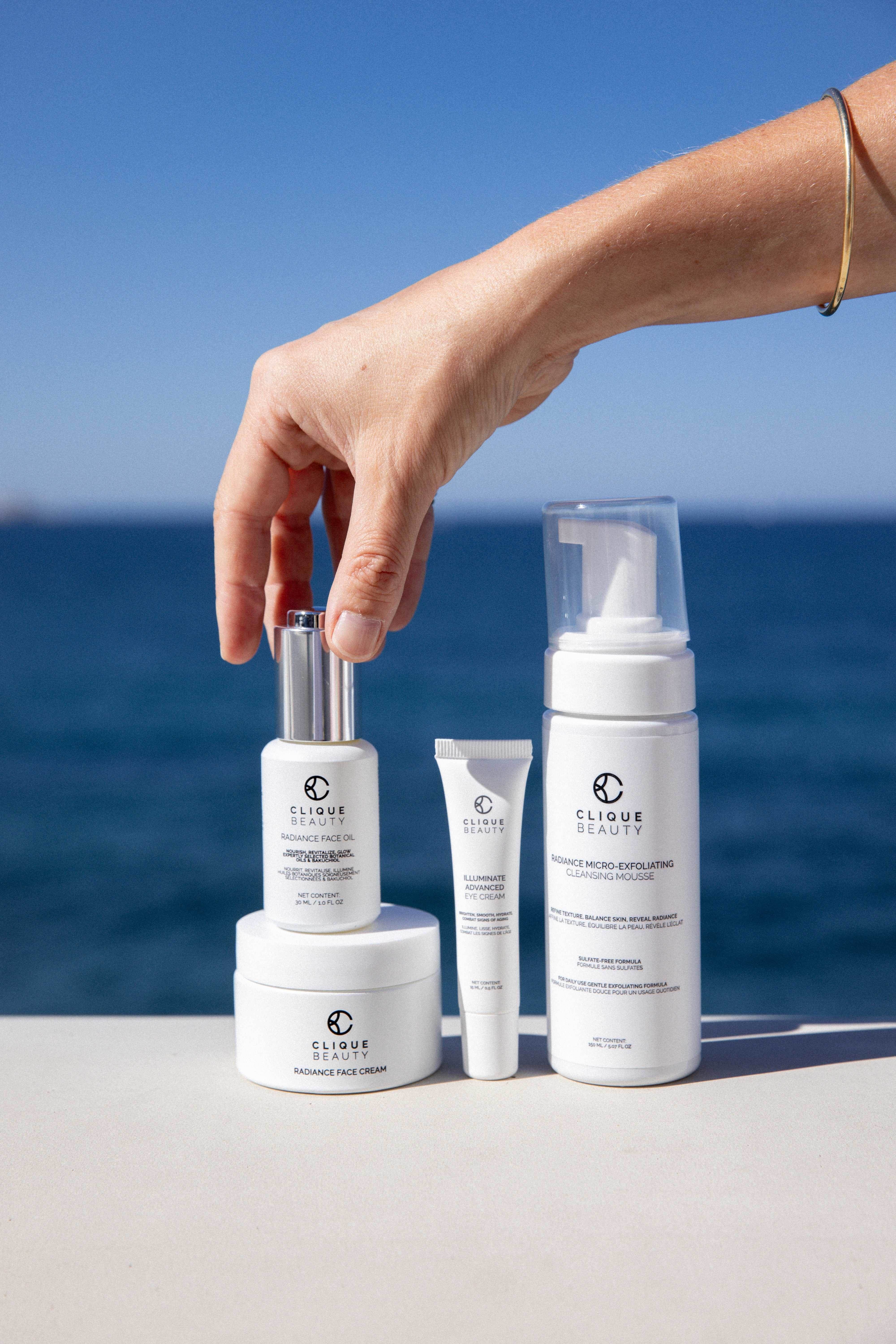
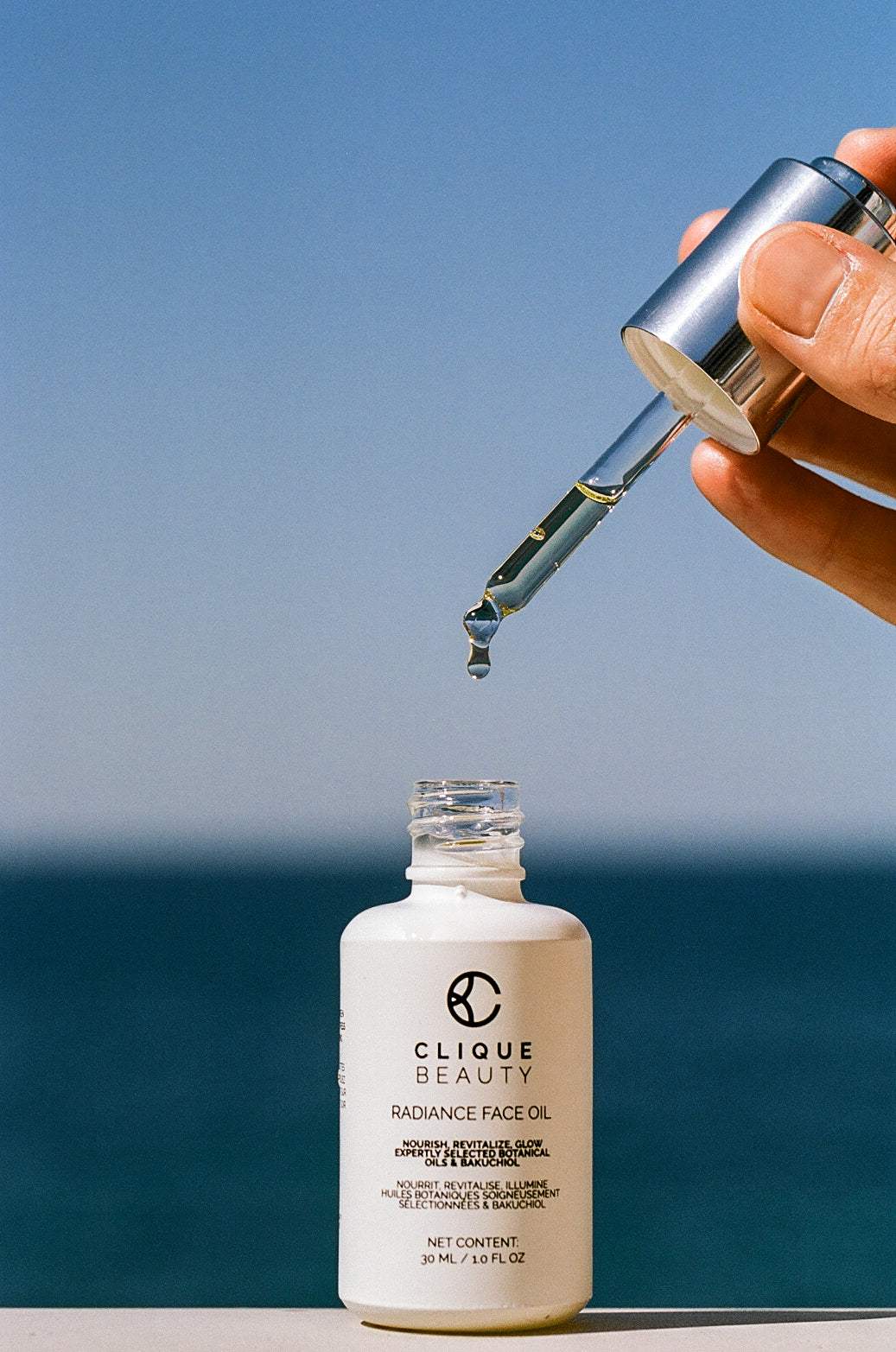
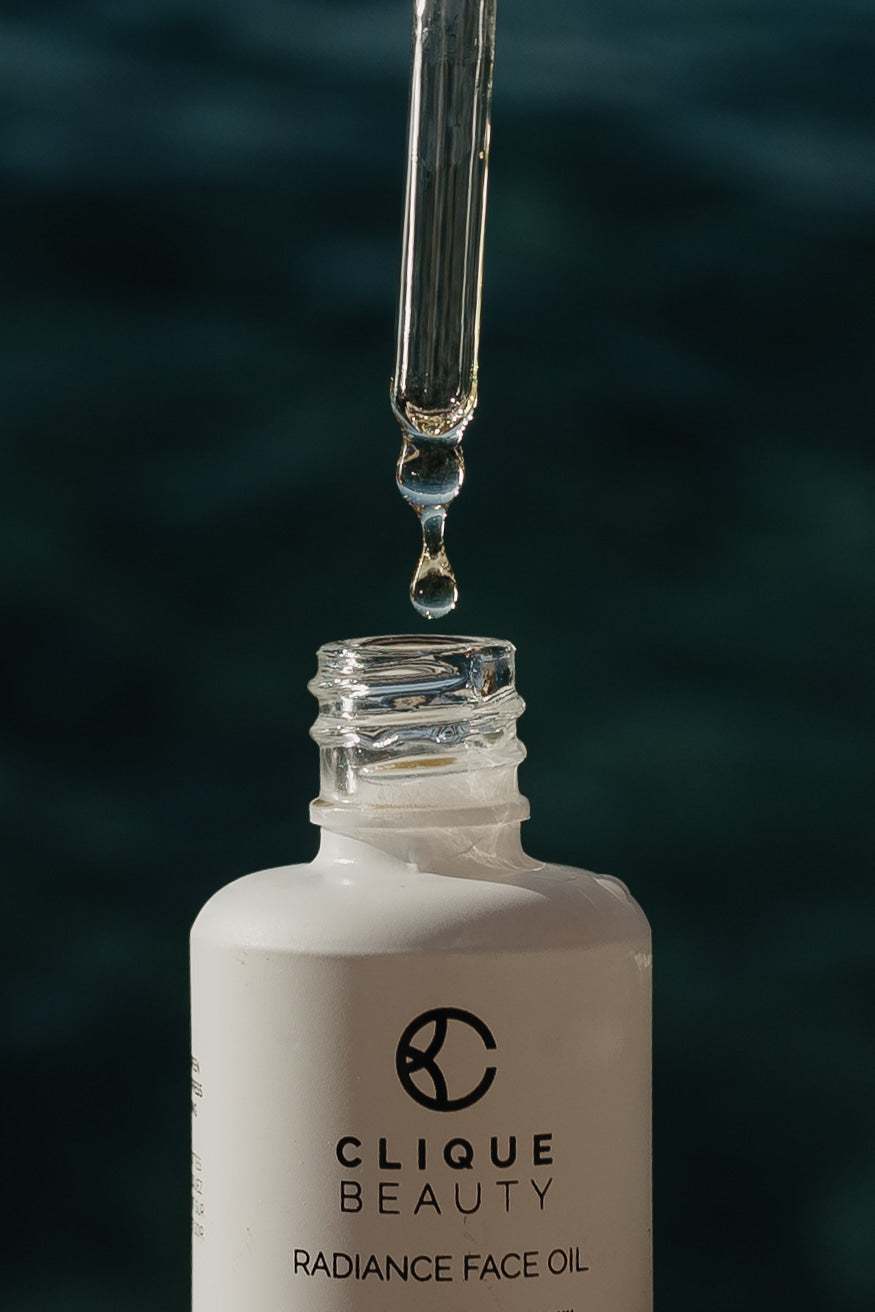
Our Radiance Face Oil blends thirteen botanical oils — sunflower, sesame, jojoba, grape seed, safflower, argan, hazelnut, nigella, evening primrose, plum, rosehip and wild rose among them — with bakuchiol, tocopherol, and Prunus Cerasus (bitter cherry) flower extract, an unusually rare inclusion. Nigella, better known as black seed, is the one most people have never met in a skincare formula and the one worth knowing. Hazelnut oil is what gives the blend its dry-touch finish: it absorbs quickly, which is what makes a morning application realistic rather than theoretical.
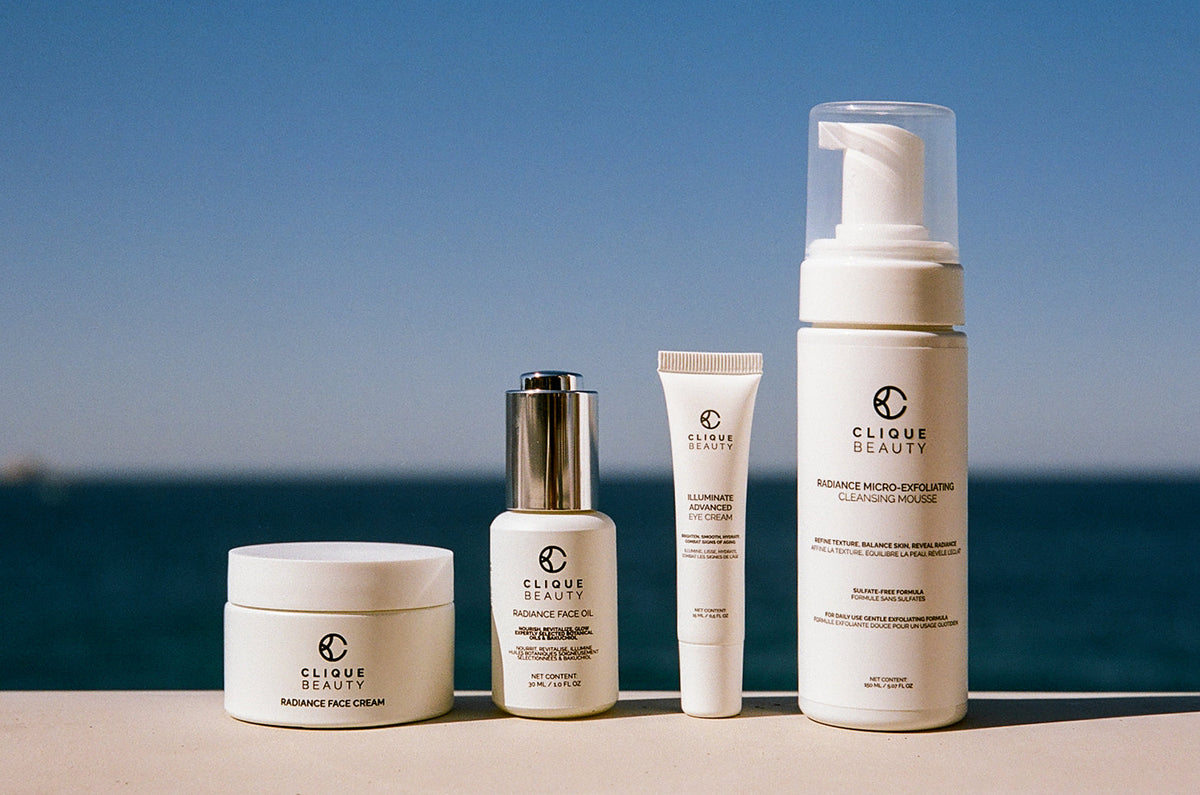
One clarification worth making, because the claim circulates widely: rosehip oil is not a source of vitamin C. Ascorbic acid is water-soluble and does not carry over into a pressed oil, however rich the fruit itself is. What this formula genuinely holds is tocopherol — vitamin E, a real antioxidant — plus the carotenoids and essential fatty acids of Rosa Canina and Rosa Rubiginosa. Our vitamin C sits elsewhere, as ascorbyl glucoside in the Radiance Face Cream.
It is designed to work either as a single concentrated step or underneath that cream, depending on what your skin needs that week. It is perfumed, in the country that invented modern perfumery — and given that this entire article is an argument about consistency, a formula you look forward to applying is not a side note. Formulated in France, Shaped in the USA.
How to get the most out of a single oil step
Three to four drops is a full face. Warm them between your palms, then press into slightly damp skin rather than rubbing — damp skin gives the oil something to spread over and helps it sink in evenly. Include the neck, and stop before skin looks shiny; if it does, you used too much.
If you decide to keep both products, the order is not interchangeable: oil goes first, cream second. And give any change an uninterrupted run before judging it. Skin feel improves first, texture follows.
FAQ
Can a face oil replace my moisturizer?
If your skin lacks lipids but is not dehydrated, yes — especially at night. If it feels tight and looks dull, you need the water content only a cream provides.
Is face oil bad for oily or acne-prone skin?
Not inherently. Light, fast-absorbing oils such as jojoba and hazelnut are close to the skin's own sebum. Heavier occlusive oils are the ones worth avoiding on congested skin.
When should I apply face oil, morning or night?
Both work. A dry-touch finish makes morning use realistic under makeup and SPF; at night an oil can stand alone when skin feels balanced.

Comments