

Bakuchiol vs. Retinol: How They Differ and How to Choose

In short: Bakuchiol is a plant-derived active often positioned as an alternative to retinol. It is not retinol, and it does not work through the same pathway — but research suggests it can improve the look of fine lines and uneven tone with markedly less dryness and stinging. The honest way to choose between them is by tolerance and life stage, not by which one sounds stronger.
What retinol does, and what it costs you
Retinol is a vitamin A derivative and one of the most extensively studied topical actives in existence. It works mainly by accelerating cellular turnover — the rate at which skin cells shed and regenerate — which gradually improves the appearance of uneven texture, dullness and fine lines.
The trade-offs are equally well documented. Retinol is photosensitizing, so it belongs in the evening and requires consistent sun protection. It commonly causes dryness, flaking and irritation during the adjustment phase, particularly at higher strengths. And it is contraindicated during pregnancy and while breastfeeding.
None of that makes retinol a bad ingredient. It makes it an ingredient with conditions attached — and those conditions are exactly why alternatives get looked at.
What is bakuchiol?
Bakuchiol is a compound extracted from the seeds and leaves of Psoralea corylifolia, a plant with a long history in Ayurvedic and traditional Chinese medicine. As a skincare active it has drawn attention because it appears to influence some of the same skin-renewal signaling as retinol, without the photosensitivity and without the same irritation profile.
Peer-reviewed work has compared the two directly. In a randomized comparison published in the British Journal of Dermatology, both actives improved the appearance of fine lines and pigmentation, while participants using bakuchiol reported noticeably less scaling and stinging.
It is worth being precise here, because a lot of marketing is not. Bakuchiol is not a botanical copy of retinol, and we would not claim it delivers an identical outcome. What the evidence supports is that it is a legitimate option in its own right — particularly for skin that does not tolerate vitamin A derivatives well.
Bakuchiol vs. retinol, side by side
This is the comparison worth saving. Everything below is about practical use, not about which ingredient wins.
| Retinol | Bakuchiol | |
|---|---|---|
| Origin | Vitamin A derivative | Plant-derived compound |
| Time of day | Evening only | Morning or evening |
| Adjustment phase | Common: dryness, flaking, sensitivity | Usually none reported |
| Photosensitizing | Yes — SPF non-negotiable | No, though SPF still matters |
| Pregnancy and breastfeeding | Contraindicated | Commonly chosen instead — confirm with your doctor |
| Best format | Encapsulated serum or cream | Oil-based, where it is stable and well carried |
| Stacks with acids | Poorly — alternate nights | More forgiving, but still introduce one active at a time |
How to decide which one you need
- You use retinol without any issue. Stay with it. Bakuchiol will not add much on top, and swapping for its own sake is not an upgrade.
- You have tried retinol and your skin never settled. Bakuchiol is the reasonable next step — and worth pairing with barrier repair rather than another active. Start with how to strengthen your skin barrier.
- You are pregnant or breastfeeding. Retinol is out. Bakuchiol is a common substitute, but clear it with your doctor first.
- You want one evening step, not three. An oil carrying bakuchiol replaces both a renewal active and a nourishing layer. That logic is unpacked in why a face oil can be the most efficient step.
- Your main concern is tone rather than texture. Niacinamide may be the better first move — see what niacinamide actually does.
What to check on a bakuchiol label
- The carrier. Bakuchiol is oil-soluble. In an oil-rich base it stays stable and spreads evenly, which is why most credible formulas are oils or oil-in-water creams.
- What surrounds it. An active is only as good as the formula holding it. Botanical oils close to your own sebum absorb without disrupting the barrier the active is meant to improve.
- The finish. A renewal active you apply every evening has to feel good going on. A dry-touch oil that absorbs quickly gets used; a heavy one gets left on the shelf, and nothing works from the shelf.
- Claims about speed. Any renewal active works gradually and with consistency. A formula promising an instant transformation is telling you something about its marketing, not its chemistry.
How we approach this at Clique Beauty
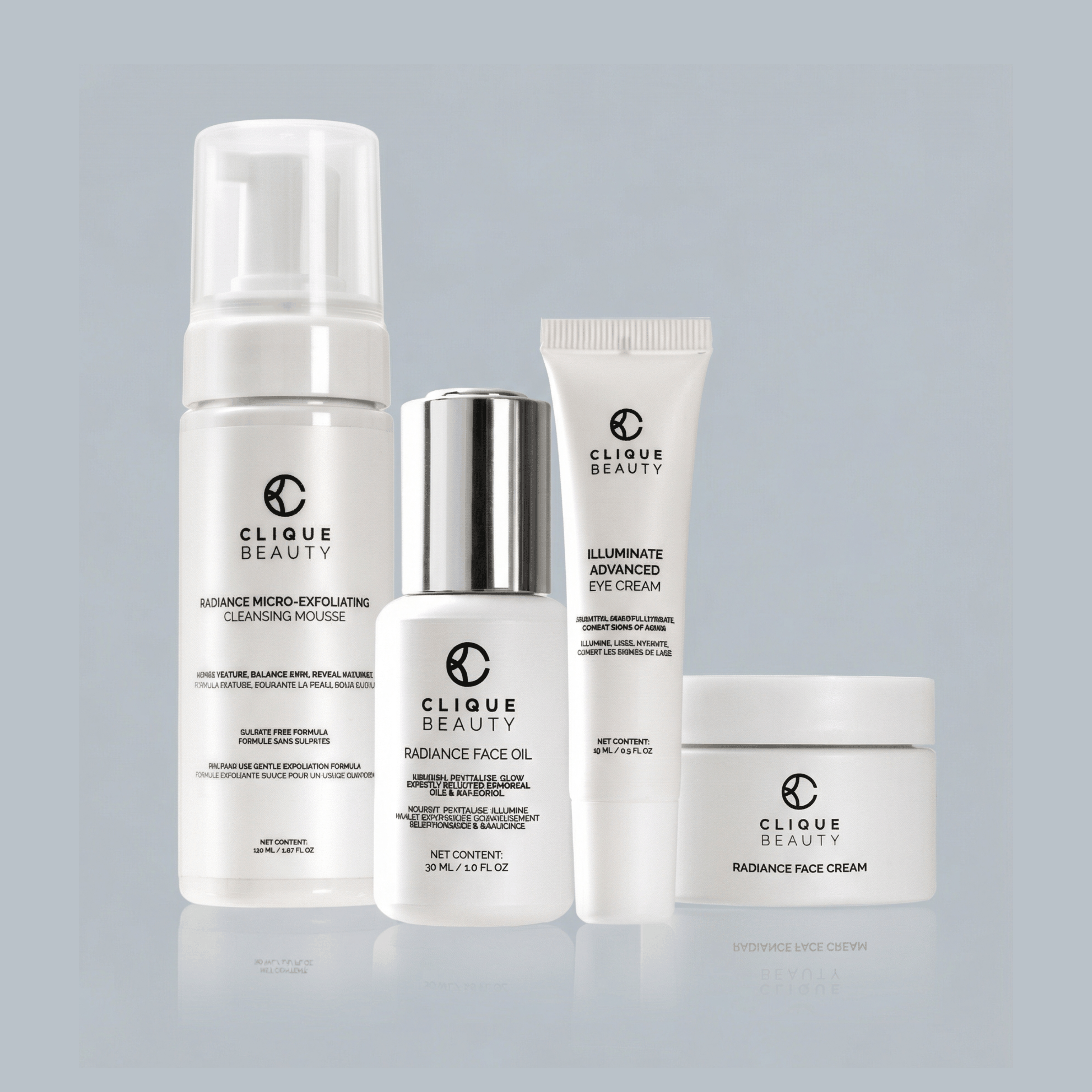
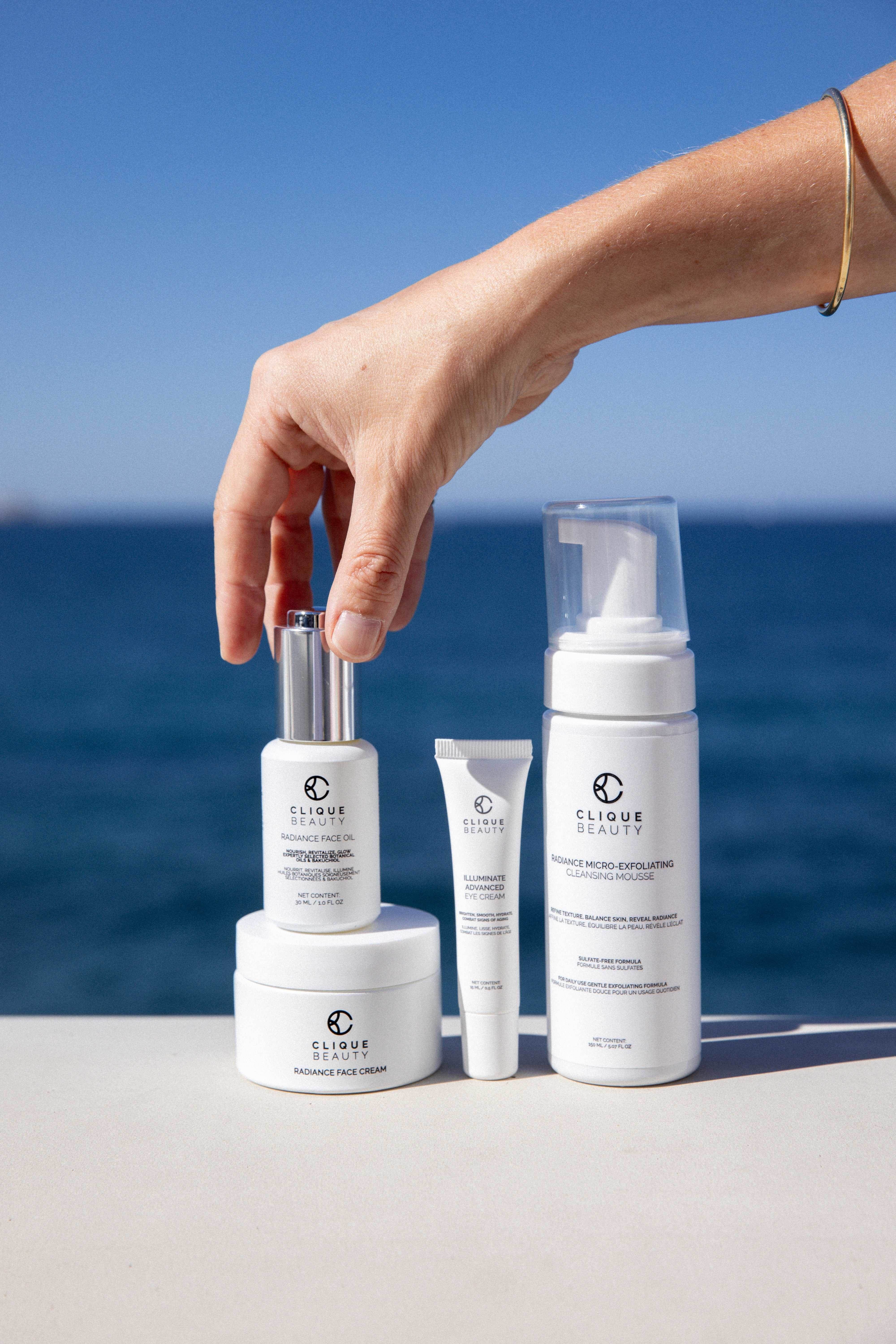
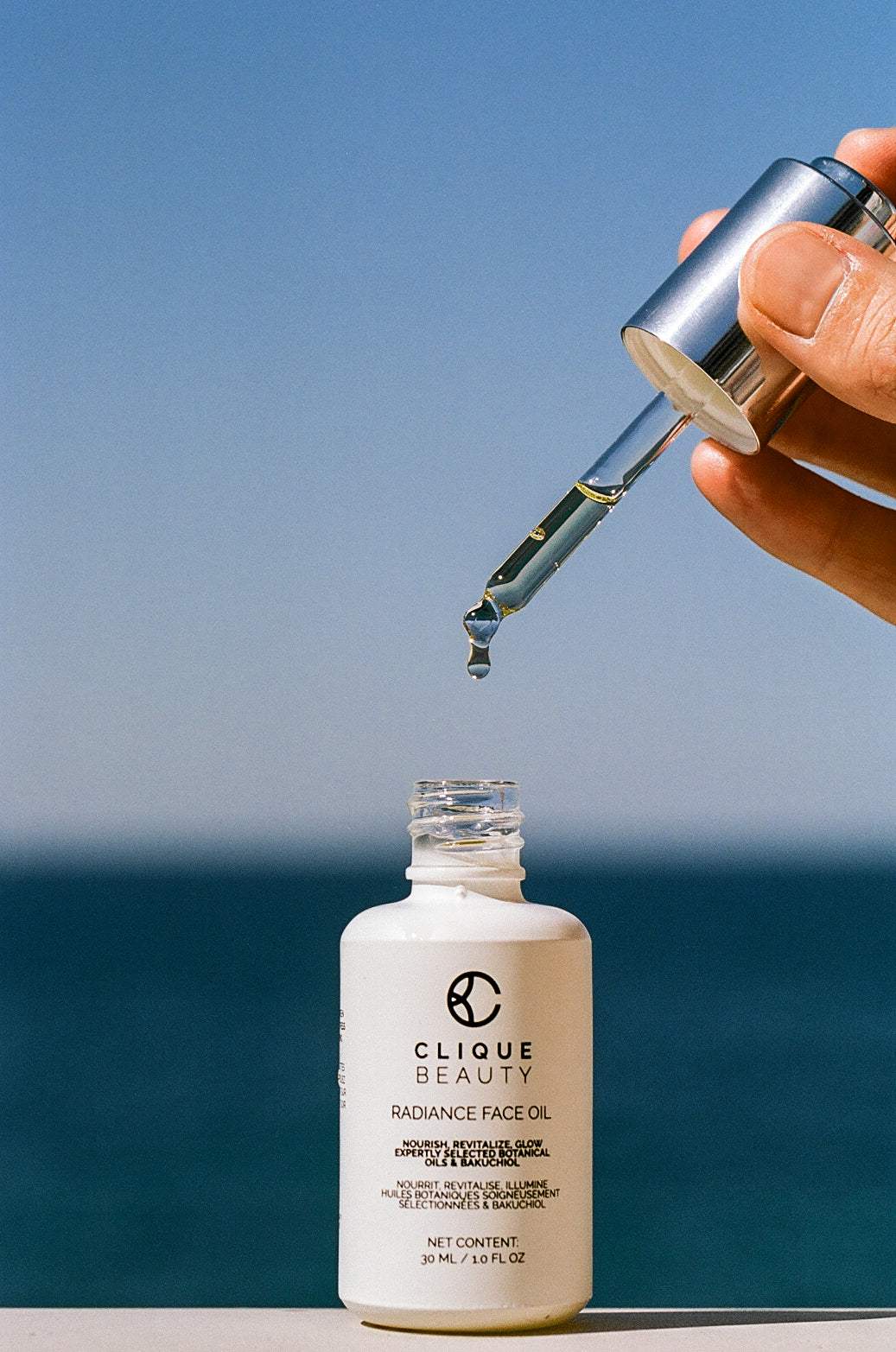
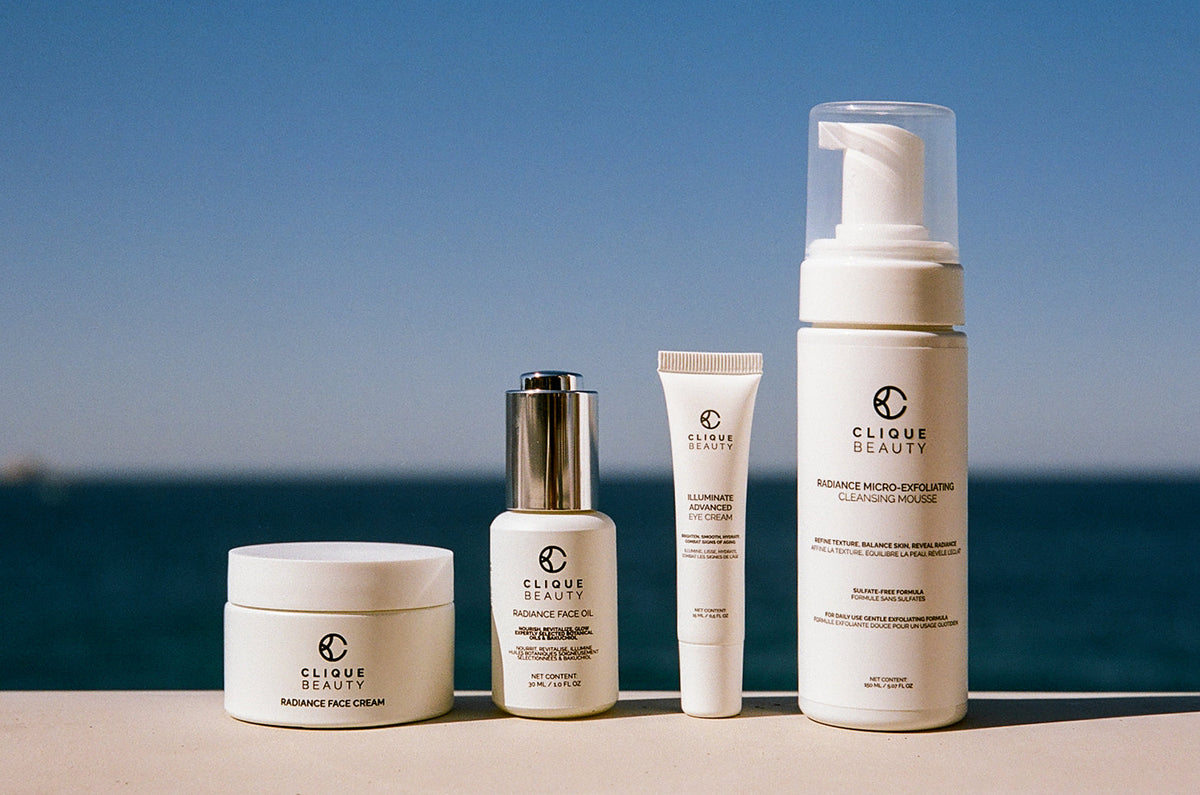
Our Radiance Face Oil carries bakuchiol in a base of thirteen botanical oils — among them sunflower, sesame, jojoba, grape seed, safflower, argan, hazelnut, nigella, evening primrose, plum, rosehip and Rosa Rubiginosa — with tocopherol (vitamin E) as an antioxidant and Prunus Cerasus (bitter cherry) flower extract, an unusually rare inclusion. Hazelnut oil gives the formula its dry-touch finish, so it absorbs quickly enough to use in the morning as well as at night.
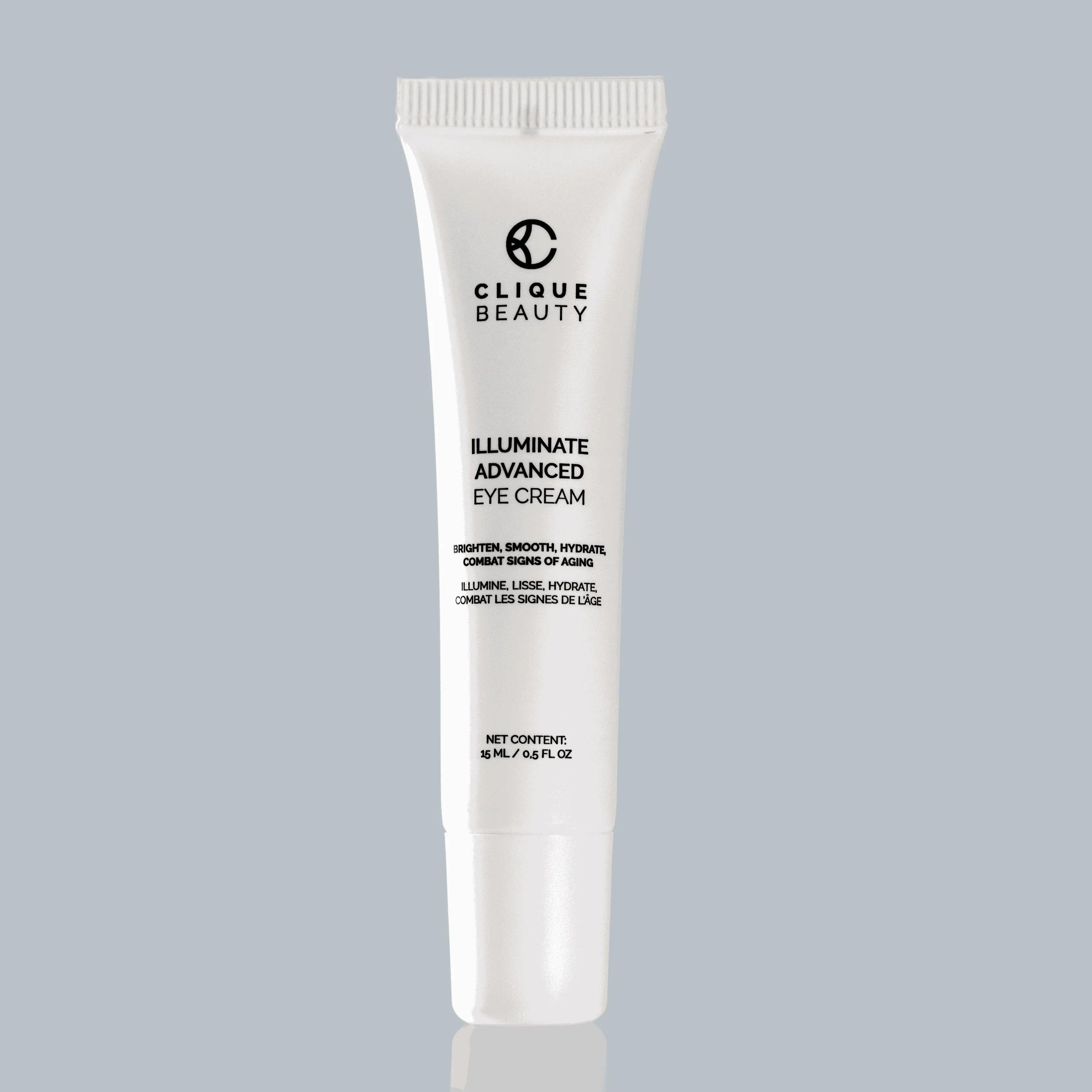
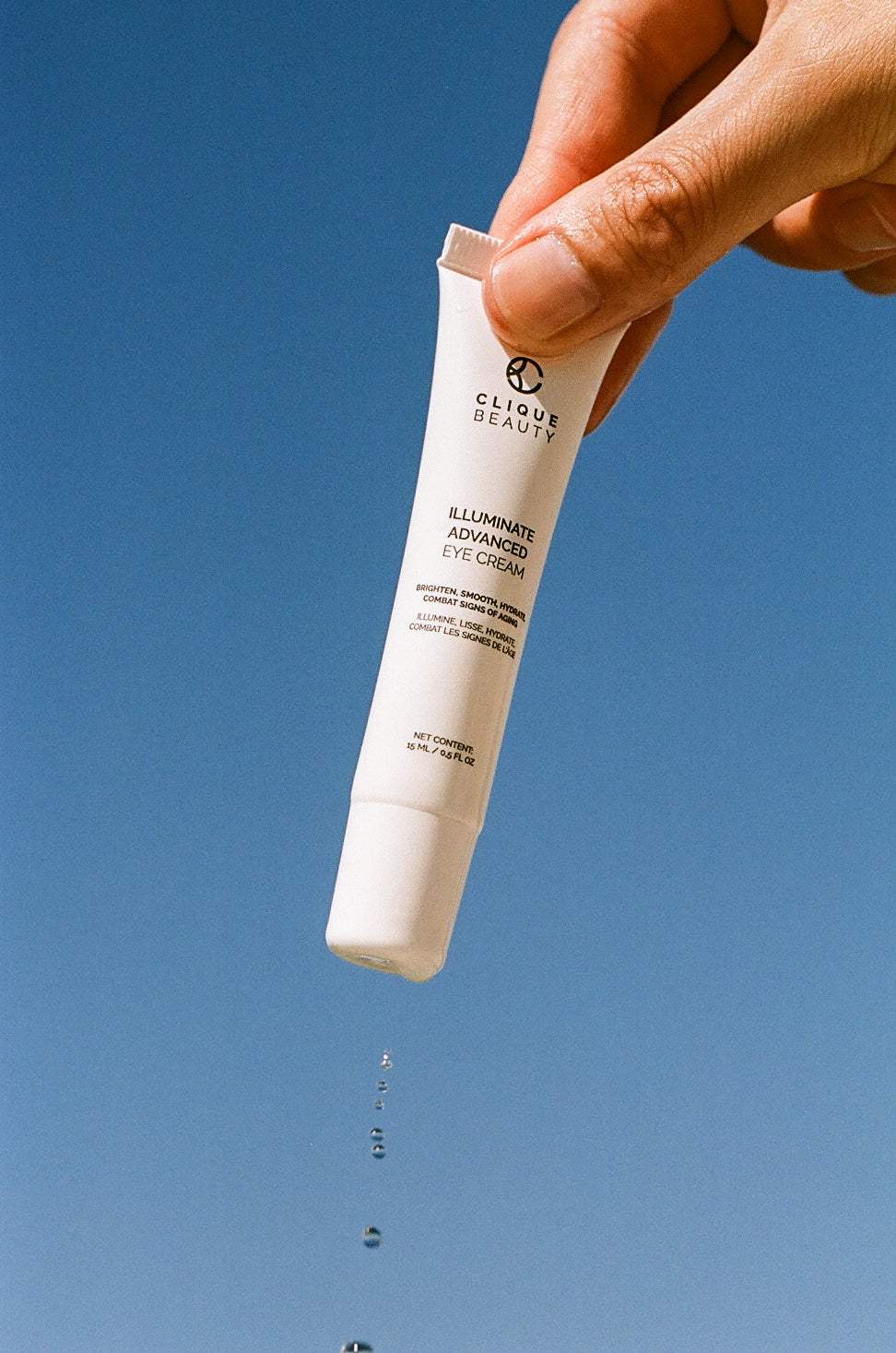
The oil is scented, and deliberately. France is the country of perfumery, and an evening step you look forward to is an evening step you repeat — which matters more here than any percentage, because a renewal active only produces anything through consistency. Around the eye we make the opposite call: the Illuminate Advanced Eye Cream is formulated without fragrance, because the eye contour is the first area of the face to react to anything at all.
Bakuchiol in an oil is a formulation decision, not a positioning one. Effective skincare does not have to be aggressive — the botanical oils support the lipid barrier while the active does the renewal work, which is what makes daily use realistic in the first place.
FAQ
Is bakuchiol as effective as retinol?
They are not interchangeable, and we would not claim equivalence. Research shows bakuchiol improving the appearance of fine lines and pigmentation with far less irritation, which for sensitive skin can make it the more usable of the two.
Can you use bakuchiol and retinol together?
There is no known conflict, but there is little reason to. If retinol already suits you, adding bakuchiol mostly adds cost and another variable to troubleshoot.
Is bakuchiol safe during pregnancy?
It contains no vitamin A derivatives, which is why it is frequently chosen when retinol is off the table. Confirm any product with your doctor or midwife before using it.
Comments