

Spring Skincare Routine: How to Transition Your Skin from Winter
In short: The winter-to-spring shift is mostly about lightening what sits on top of your skin, not adding more to it. Swap the heaviest occlusive layers for lighter ones, reintroduce actives one at a time instead of all at once, and put daily SPF back at the end of your morning routine. Leave your hydration step exactly where it is.
Why your skin behaves differently once winter ends
Skin responds to its environment before you consciously notice the change. Through winter, cold air and indoor heating keep humidity low, which accelerates transepidermal water loss — the rate at which water evaporates through the skin. Most people compensate with richer textures, more occlusive layers and fewer actives. For those conditions, that is the right answer.
Spring reverses the inputs. Humidity rises, the UV index climbs well before the temperature feels warm, and sebum production picks back up. The routine that carried you through January starts to sit on the surface instead of absorbing. Skin can feel congested and reactive at the same time — months of accumulated barrier stress meeting a warmer, brighter environment.
The correction is not to strip everything back and start over. It is to change the texture and the sequence of what you already own. The same logic runs in reverse at the other end of the year, which is what the September reset covers.
What to change first, and what to leave alone
Most spring routine mistakes come from adjusting the wrong step. This is the short version, worth keeping somewhere you can find it again.
| Step | What to do in spring |
|---|---|
| Heavy balm or rich night cream | Change it. Move to a lighter cream at the same frequency. |
| Your hydration step | Keep it. Warmer air does not mean skin needs less water. |
| Cleanser | Change only if skin feels congested. Choose mild daily exfoliation over an occasional scrub. |
| Actives (retinol, acids, vitamin C) | Reintroduce gradually, one at a time. |
| SPF | Back in the routine daily, from the first bright mornings. |
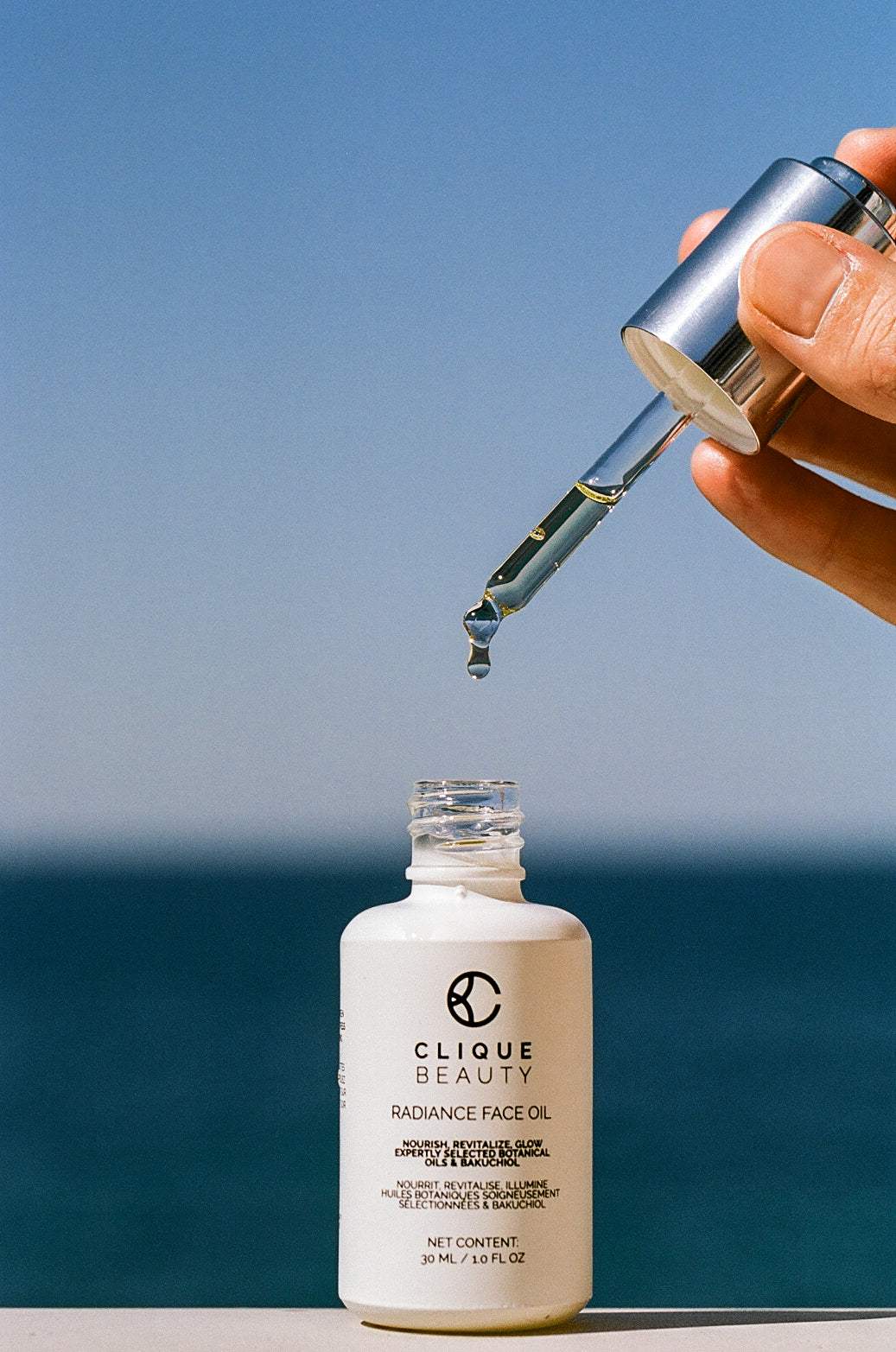
| Face oil | Keep it, but fewer drops — and at night only if skin runs oily. |
How to lighten your textures without losing hydration
Lighter is a texture decision, not a hydration decision. A moisturizer does three jobs at once: humectants pull water in, emollients soften and smooth, occlusives slow evaporation. Spring only changes how much of the third one you need. Cutting the whole step because the weather improved is the fastest way to end up with skin that looks oily on the surface and feels tight underneath.
In practice: keep the humectants — sodium hyaluronate, glycerin — exactly as they are. Reduce the heaviest occlusive layer, the balm or the thick night cream, and let a well-balanced daily cream carry the routine on its own. If your skin still feels tight by evening, the problem is barrier function rather than seasonal texture, and it is worth reading how to strengthen your skin barrier before changing anything else.
How to bring your actives back without a reaction
Winter tends to shrink a routine down to essentials. Spring is when people add everything back at once, which is why irritation is so common in the transition. Effective skincare does not have to be aggressive — it has to be sequenced.
- One active at a time. Add a single new product, use it consistently, and only then consider the next. If something reacts, you know exactly what caused it.
- Frequency before strength. A mild formula used regularly outperforms a strong one used erratically and abandoned after a flare.
- Exfoliate on a rhythm you can hold. A low-dose acid in a cleanser you use daily is gentler on the barrier than an occasional high-strength peel, and easier to calibrate.
- Do not skip the barrier step to make room. Actives work better on skin that is comfortable. Hydration and lipids are what buy you tolerance.
- Judge by stinging, not flaking. A little surface flaking during a texture change is common. Stinging, lingering redness or sudden sensitivity means you moved too fast — pause, do not push through.
- Keep going once skin is calm. The visible part of any active comes from consistency, not intensity.
Why SPF is the real spring adjustment
UV exposure rises long before spring feels warm, and it rises on overcast days too. Every exfoliating acid, every vitamin C, every retinol or bakuchiol step in your routine makes daily sun protection more necessary, not optional — both because skin is more photosensitive during a texture change and because unprotected UV undoes the tone work those ingredients are slowly doing.
We should be straightforward about this: we do not make an SPF. Use a dedicated broad-spectrum sunscreen as the final step of your morning routine, applied in the full amount the product indicates, rather than relying on a moisturizer with SPF added to it. If you are heading into the warmer months and wondering what else changes, the summer routine picks up where this leaves off.
How we approach this at Clique Beauty
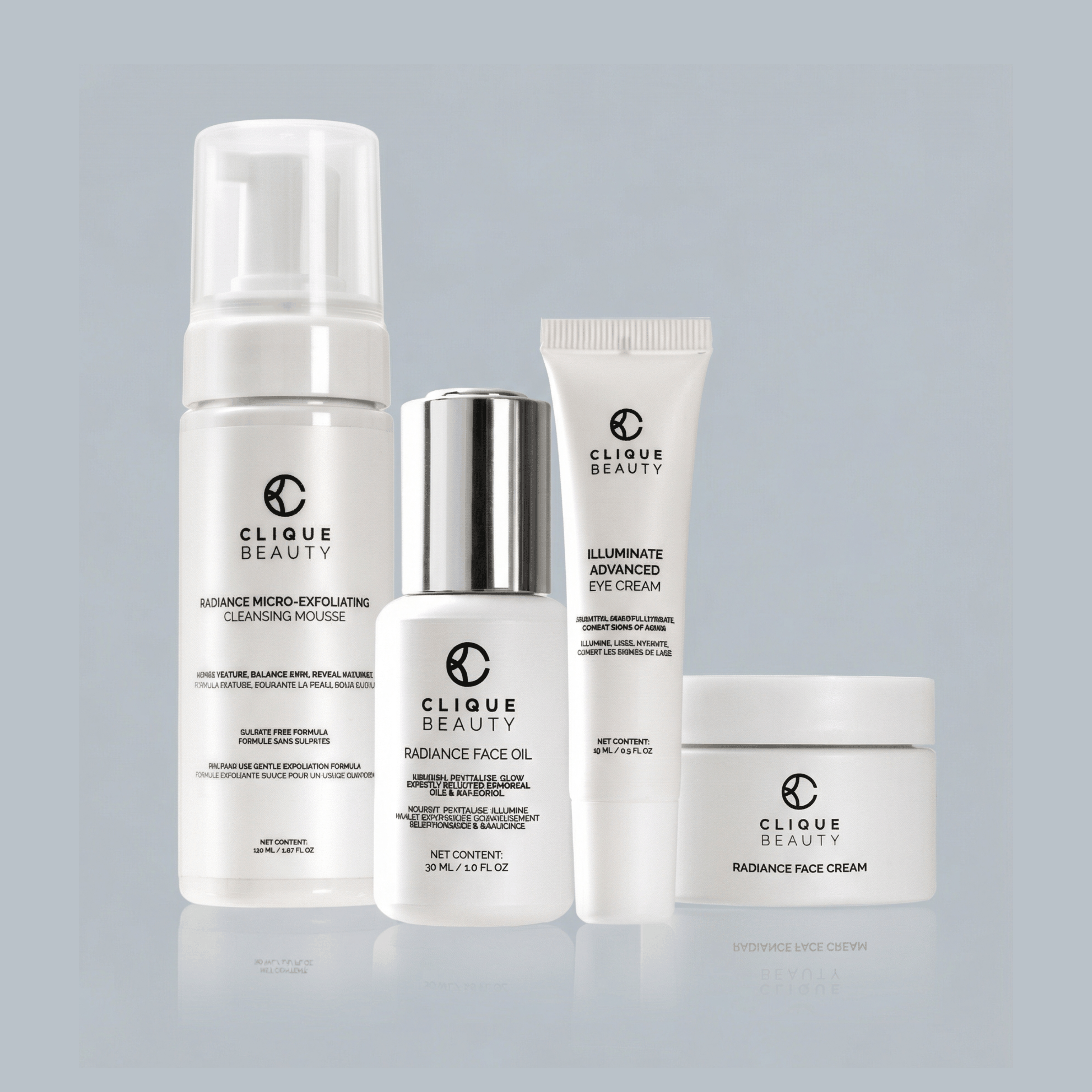
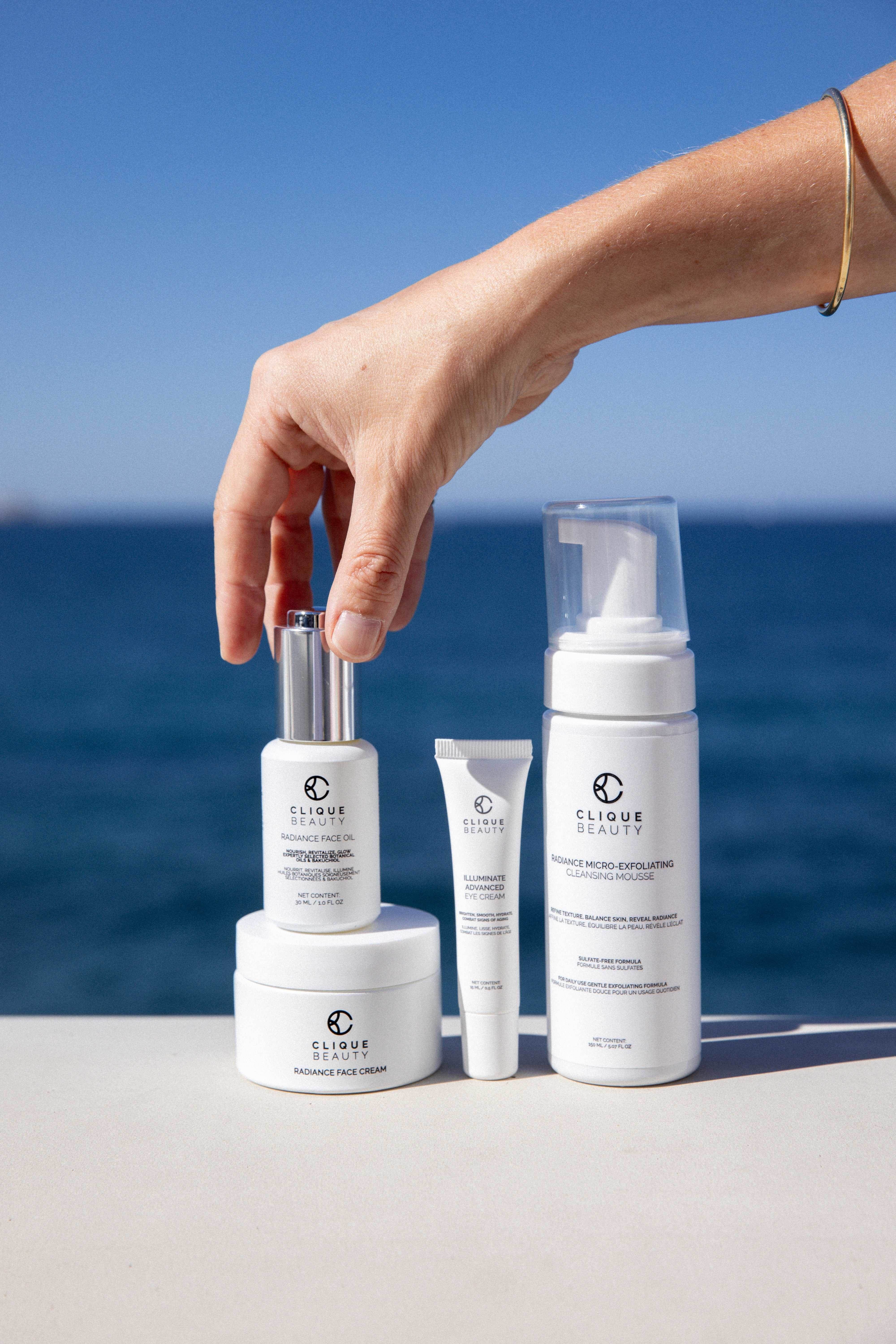
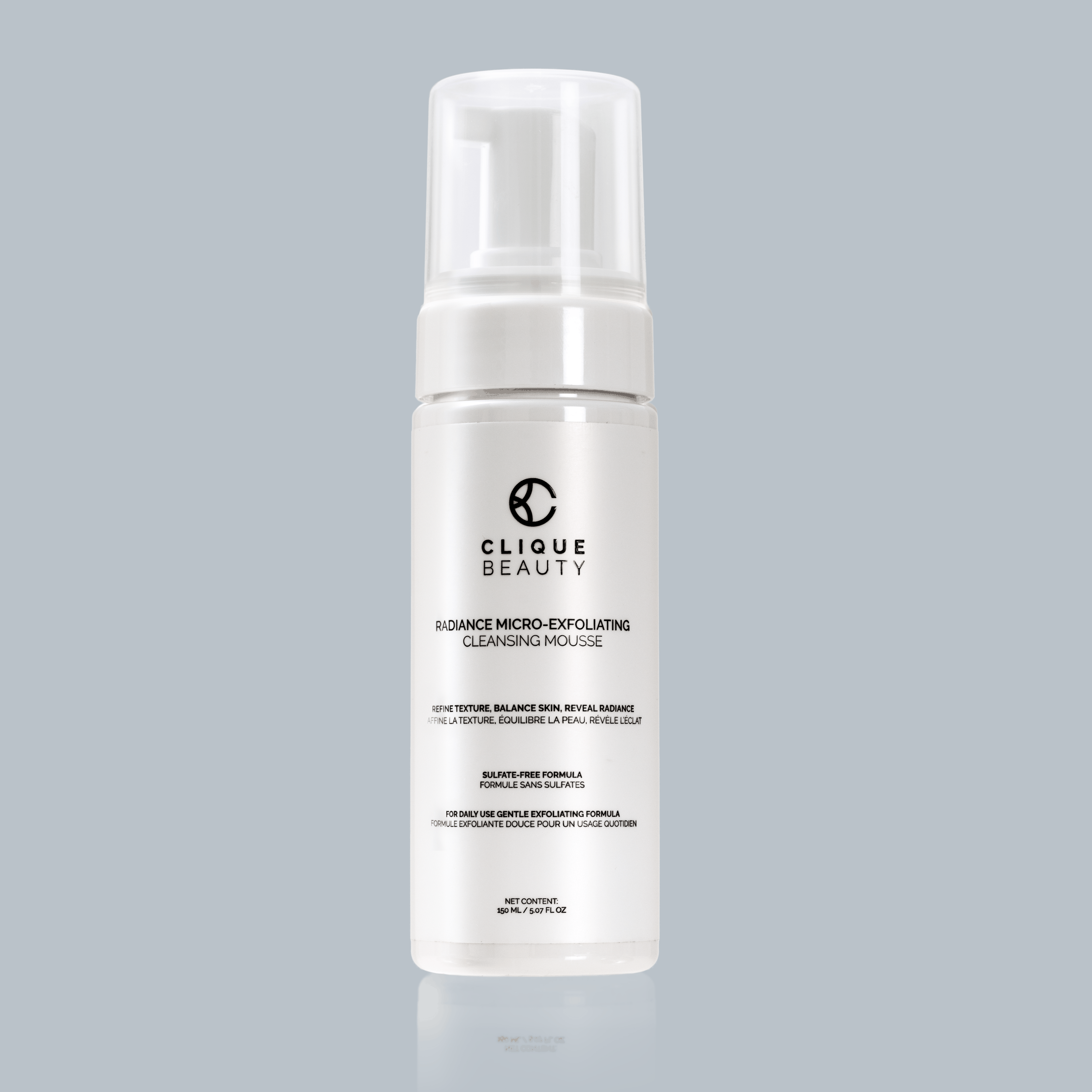
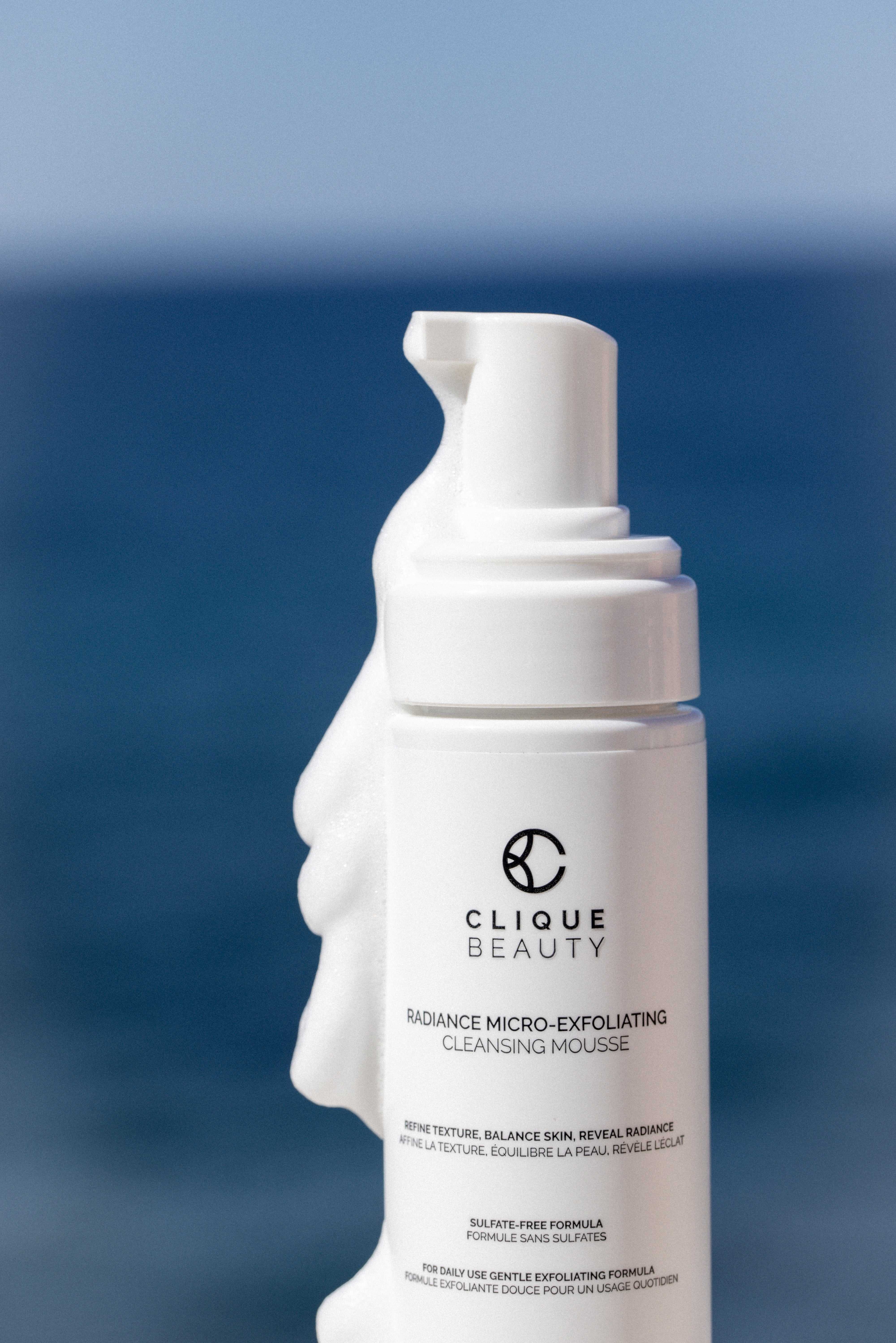
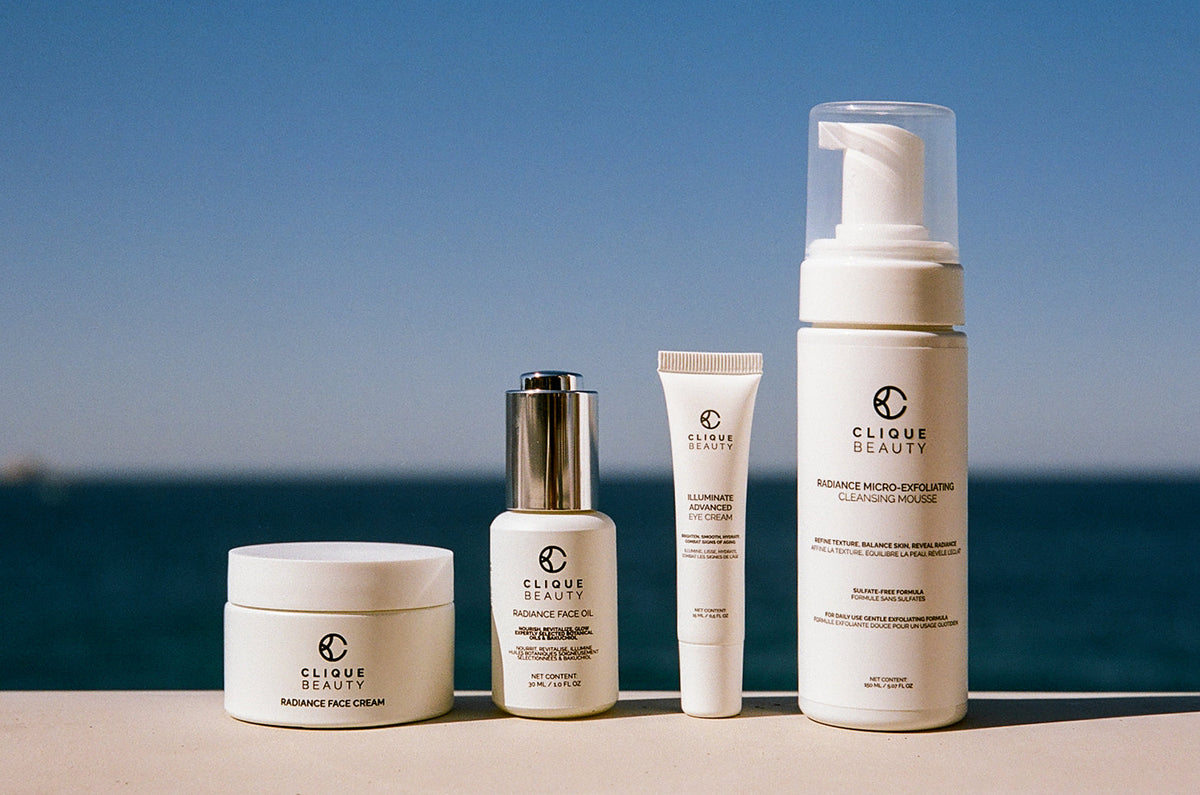
Our Radiance Micro-Exfoliating Cleansing Mousse is built for exactly this moment in the year. A triple AHA complex — glycolic, lactic and mandelic acids — works alongside an eight-fruit enzyme complex to clear the surface buildup winter leaves behind, with no grains and no mechanical scrubbing. Zinc PCA helps with the sebum shift, allantoin and calendula keep the formula comfortable, and the surfactants are sulfate-free. Because the acid dose is mild, you can run it morning and evening or once daily if your skin is more reactive.
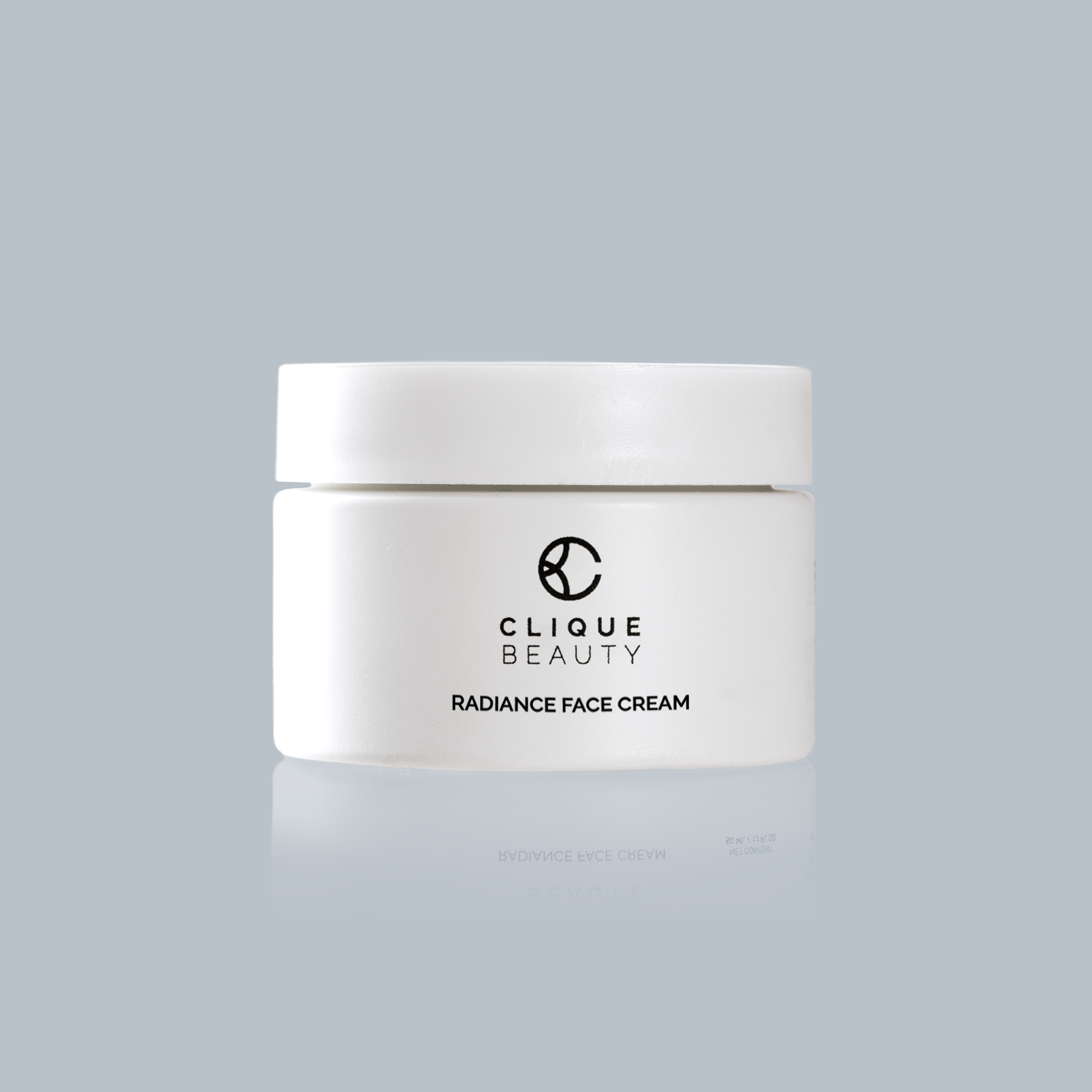
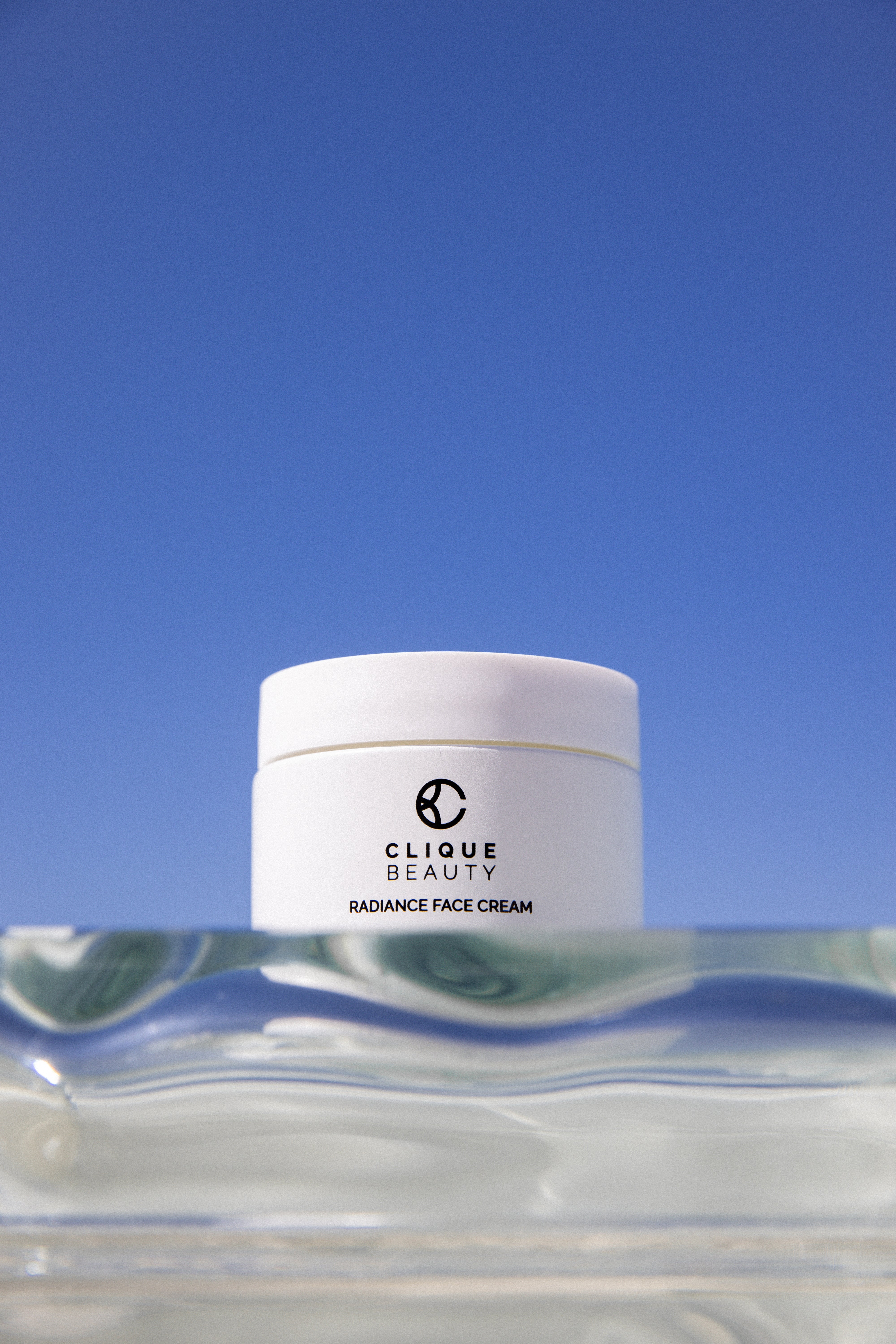
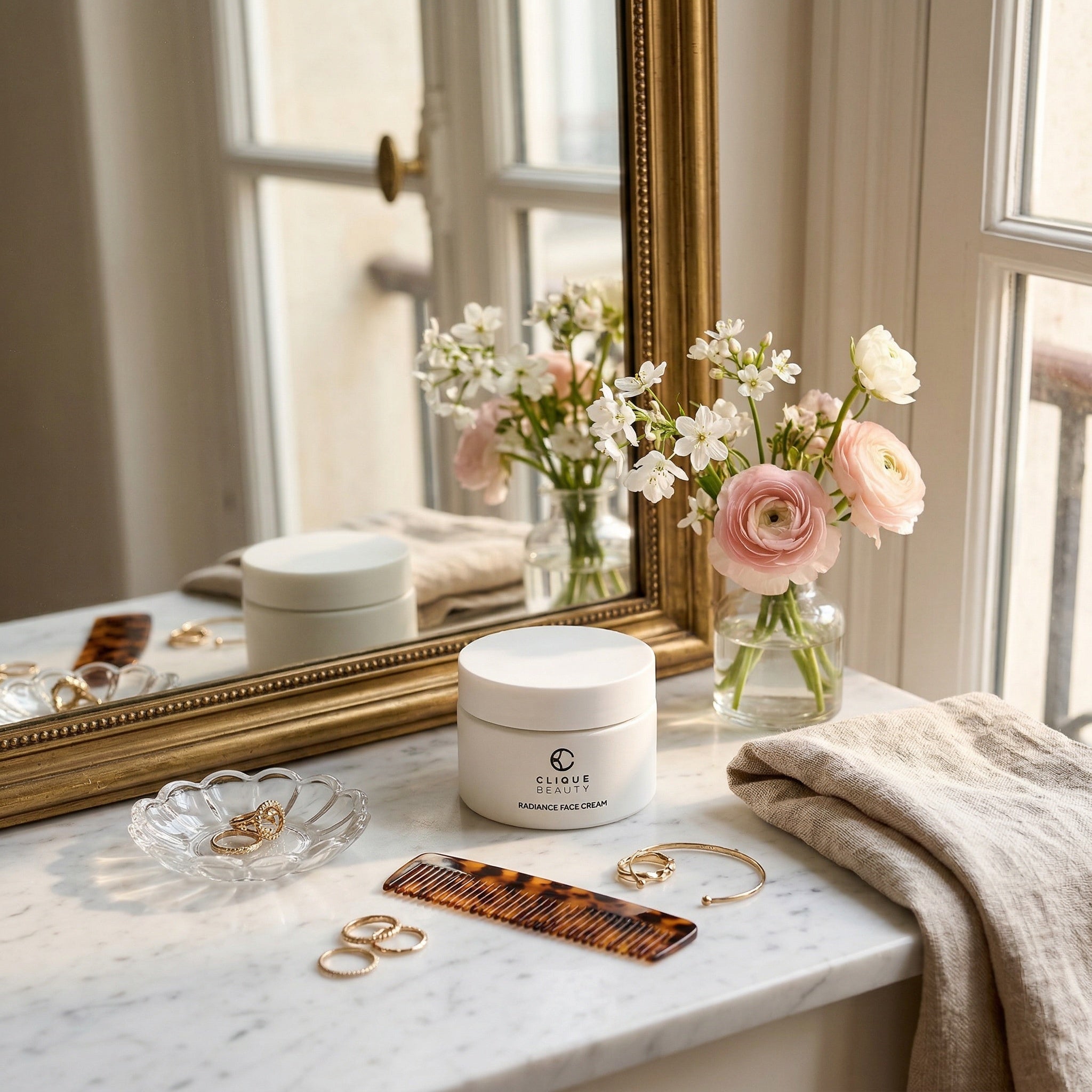
The Radiance Face Cream handles the hydration side without the weight of a winter balm. Niacinamide supports the barrier through the change, sodium hyaluronate holds water at the surface, and organic shea butter, organic jojoba and squalane supply lipids in a texture that absorbs. Stabilized vitamin C (ascorbyl glucoside) adds daily antioxidant support in a form gentle enough to use through a transition. It measured a +42% increase in hydration in clinical testing.*
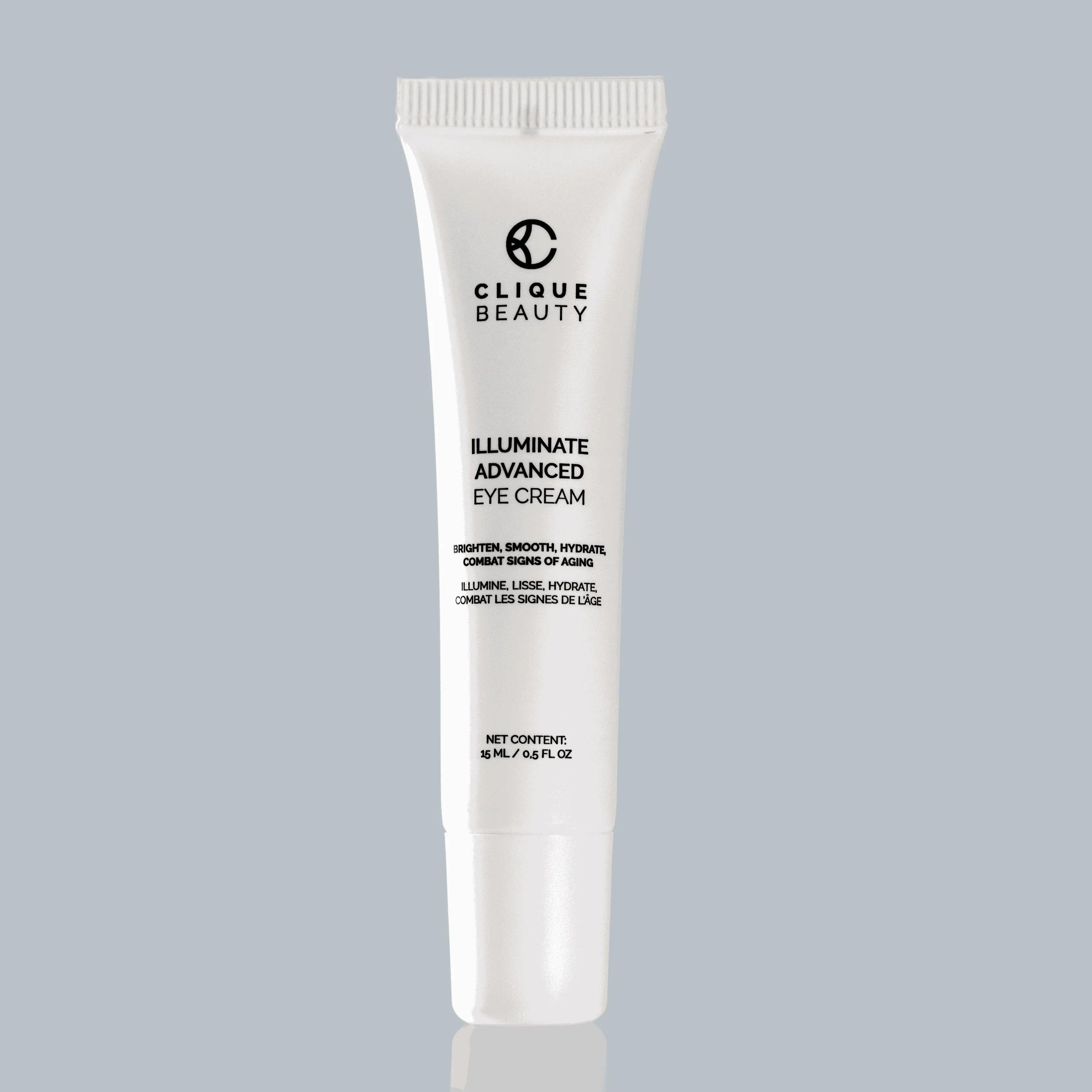
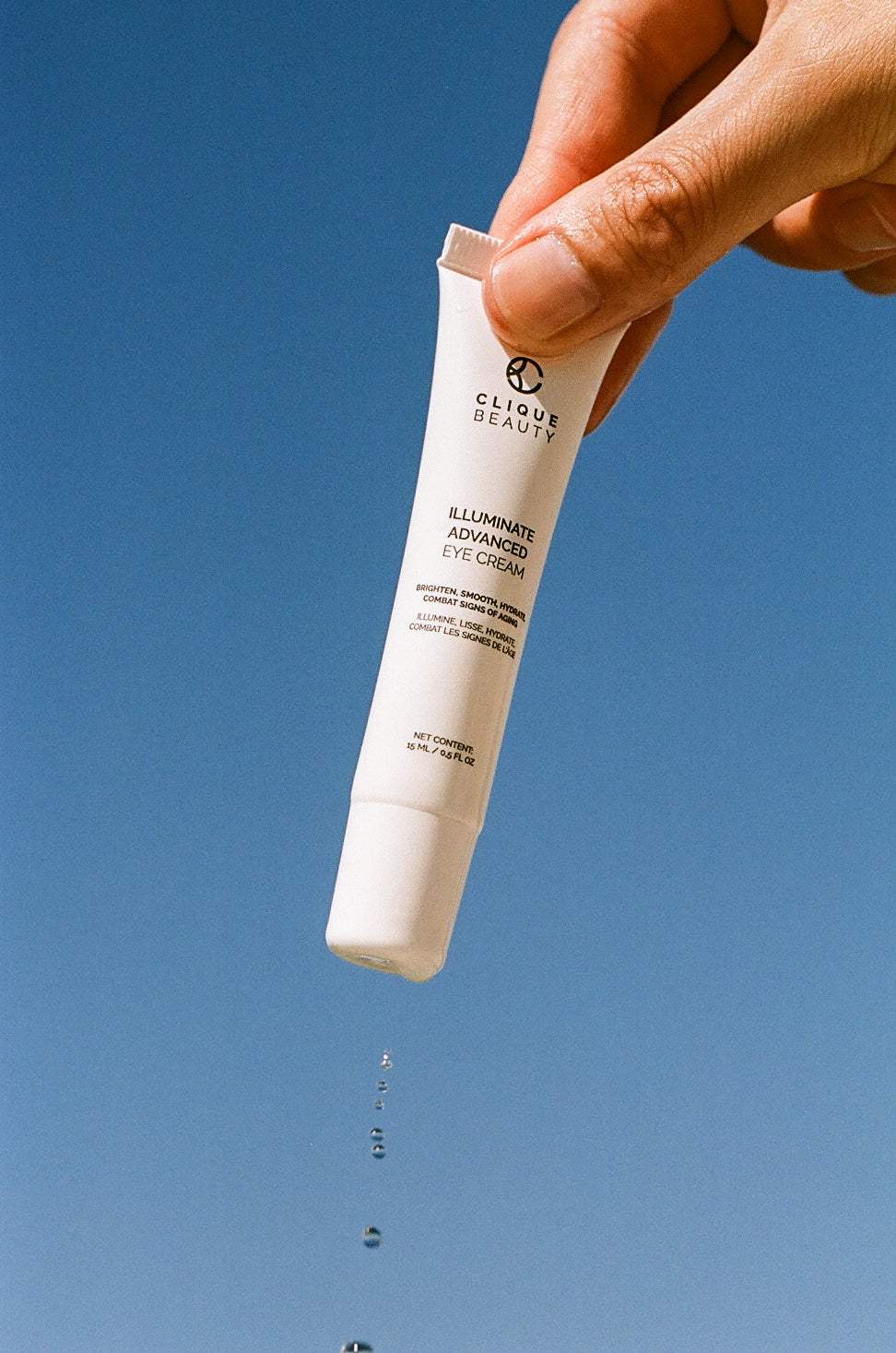
Both are formulated in France, texture and scent included. A seasonal change is only ever carried out by a routine you keep doing, and lighter, better-smelling steps are what make that switch feel like something other than a chore. The Illuminate Advanced Eye Cream is the one we formulate without fragrance, since the eye contour reacts to a change of season before the rest of the face does.
FAQ
Should I change my skincare routine for spring?
Yes, but modestly. Lighten the heaviest textures, reintroduce actives gradually and restart daily SPF. Keep your cleansing and hydration steps in place.
Do I need a lighter moisturizer in spring?
Usually a lighter texture, not less moisturizer. Skin still needs humectants and lipids in spring; what it needs less of is a thick occlusive layer.
When should I start wearing sunscreen again?
Daily, from the first bright mornings — UV rises before temperatures do, and it reaches skin on cloudy days as well.
*Clinically measured increase in skin hydration. Individual results vary.


Comments