

French-Made Skincare: What EU Regulation Actually Changes

In short: "Formulated in France" is not a style claim. It means a formula was developed under European cosmetic regulation, which prohibits far more substances than US rules and requires a documented safety assessment before anything can be sold. That raises the floor. It does not replace reading the ingredient list, which is still where you find out whether a formula was built with intent.
What does "formulated in France" actually change?
Skincare made in France is made under Regulation (EC) No 1223/2009, the European framework that governs every cosmetic sold in the EU. It is legislation, not a badge a brand opts into, and it sets requirements that products made for the US market are not automatically held to.
- A prohibited and restricted substance list. The European annexes ban well over a thousand substances outright and cap the permitted concentration of many more. The equivalent US list is a small fraction of that length.
- A safety assessment before launch. A qualified safety assessor reviews and signs off on the finished formula, not only on the raw materials that went into it.
- A product information file. Composition, manufacturing method, stability data and toxicological data have to exist on paper and stay available to regulators for years after the last unit is sold.
- Full INCI labeling. Every ingredient is declared, in descending order of weight down to 1%. Nothing disappears inside an undisclosed proprietary blend.
None of this makes a French formula automatically good. It makes it accountable, and accountability is a more useful claim than prestige.
Why does the ingredient list matter more than the origin?
Origin tells you which rules applied. The INCI list tells you what is actually in the bottle, and it is the one part of the packaging a marketing team cannot rewrite. Read it from the top: the first five or six ingredients make up most of the formula, and anything below the 1% threshold can be listed in whatever order the manufacturer prefers.
A short list is usually a sign of decisions being made. Every additional ingredient has to justify itself, because a longer formula means more possible interactions, more preservative load and more room for something to be there for the label rather than for the skin. Restraint is harder to formulate than abundance, which is why a lot of products go the other way and pad the list to look generous.
What should you check before you trust a label?
Most skincare claims are not false. They are just narrower than they sound. This is the translation table worth keeping.
| The claim on the front | What to verify on the back |
|---|---|
| Formulated in France | A French manufacturing address and a full INCI list. Origin without a readable ingredient list is a slogan. |
| With vitamin C | Which form. Pure ascorbic acid oxidizes quickly; ascorbyl glucoside is a stabilized form that survives the life of the jar. |
| Organic botanicals | Whether certification covers the ingredients that make up the formula, or one plant extract sitting below the 1% line. |
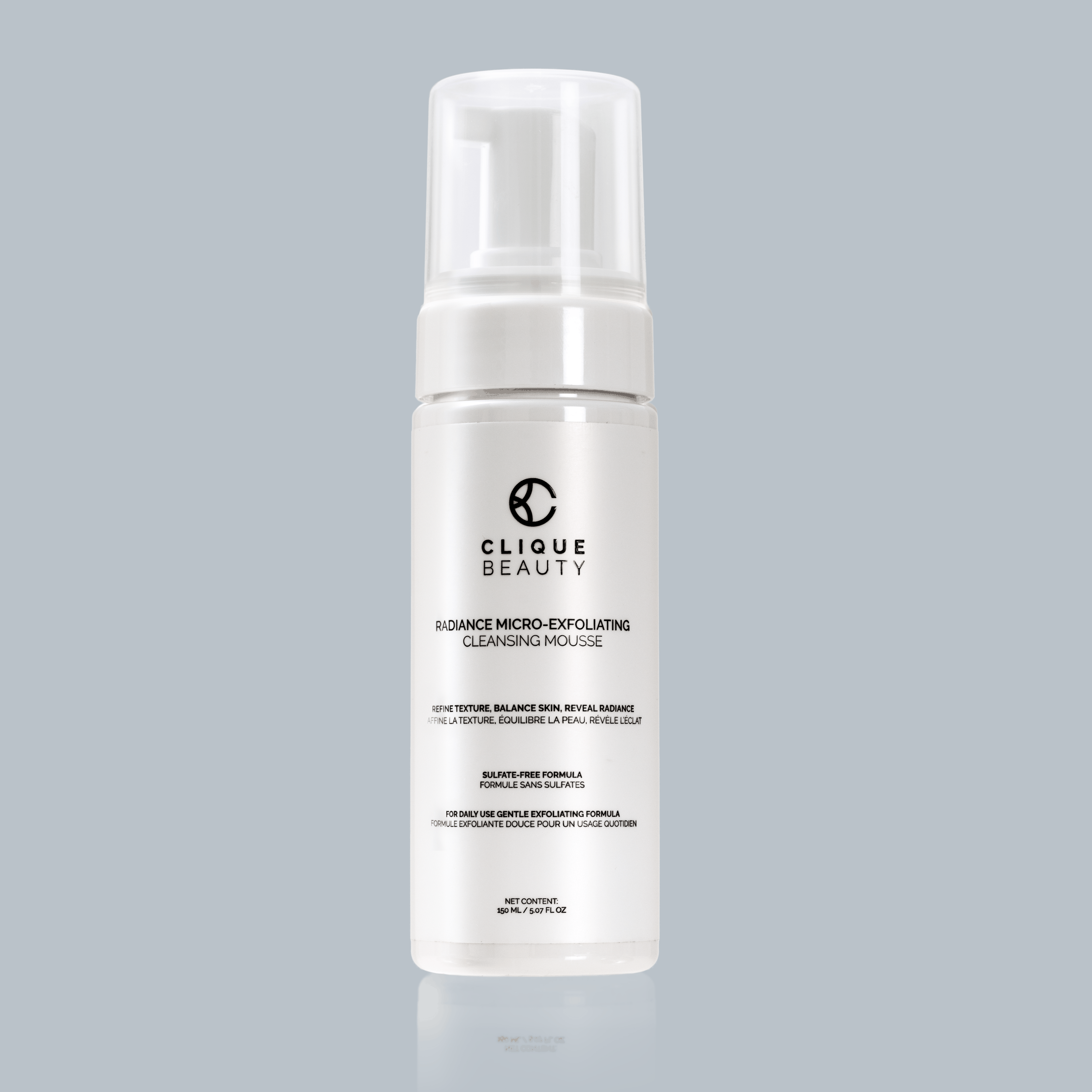
| Sulfate-free | The surfactants themselves. Names like disodium cocoyl glutamate and sodium cocoamphoacetate cleanse without stripping; SLS and SLES do not belong on a sensitive-skin cleanser. |
| Fragrance-free | Whether Parfum appears on the INCI at all. Unscented and fragrance-free are not the same thing, and most formulas that feel unscented still contain it. European labeling also goes further than the word itself — see which fragrance components are declared and why. |
| Dermatologist tested | That a tolerance test was run. It documents how skin reacted, not that a specific result was proven. |
Does a shorter formula work harder?
Not by itself, but it is easier to hold to account. When a formula contains twelve ingredients instead of sixty, you can tell what each one is doing and whether it is present at a level that matters. That transparency is the actual argument for the French approach: purposeful actives, chosen for how they behave together, rather than a list assembled to impress at a glance.
It also changes how a routine behaves. Formulas built this way tend to layer without pilling, conflict less with each other, and let you use fewer steps to get the same result. That principle runs through everything we make, and it is the subject of our piece on the French approach to a routine.
How we approach this at Clique Beauty
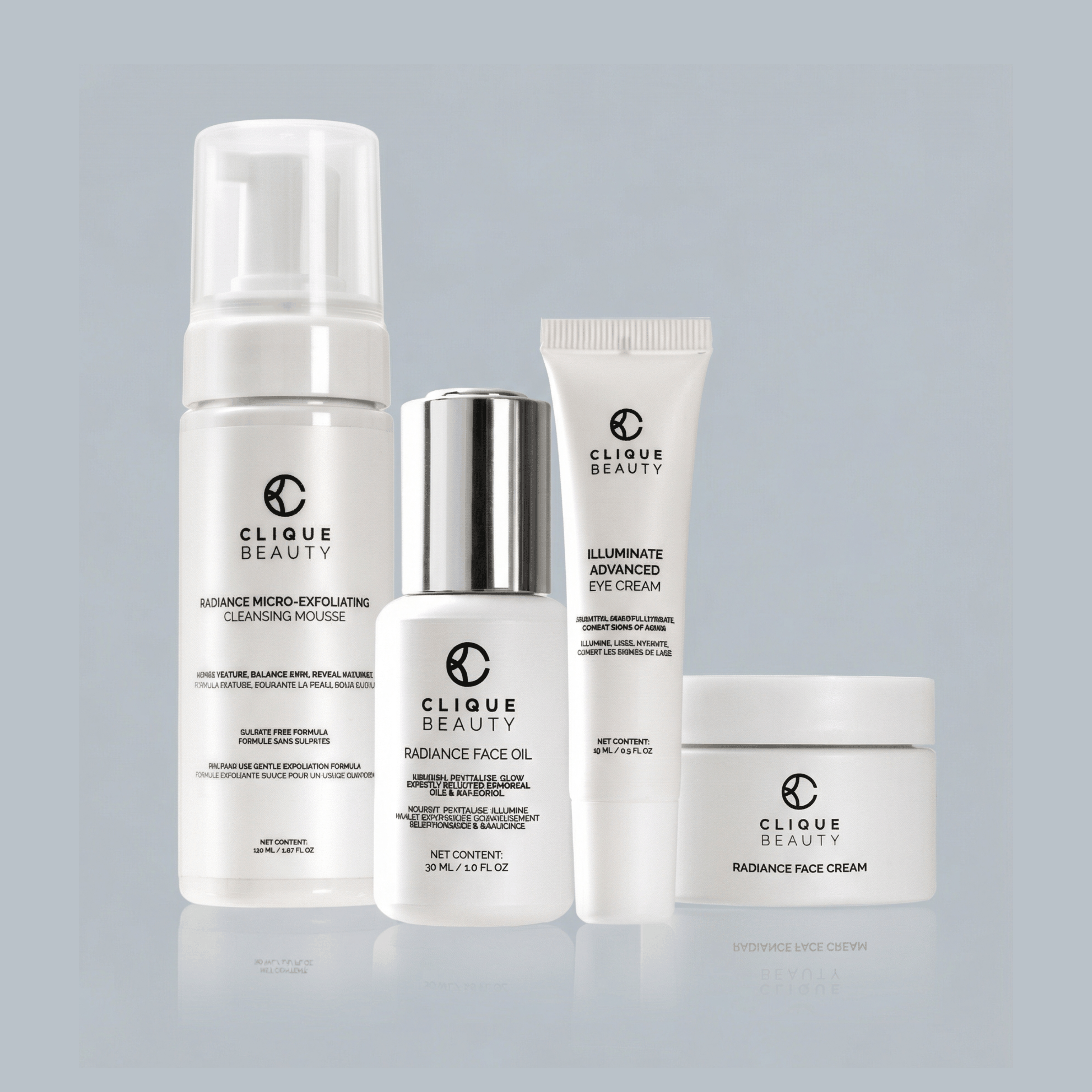
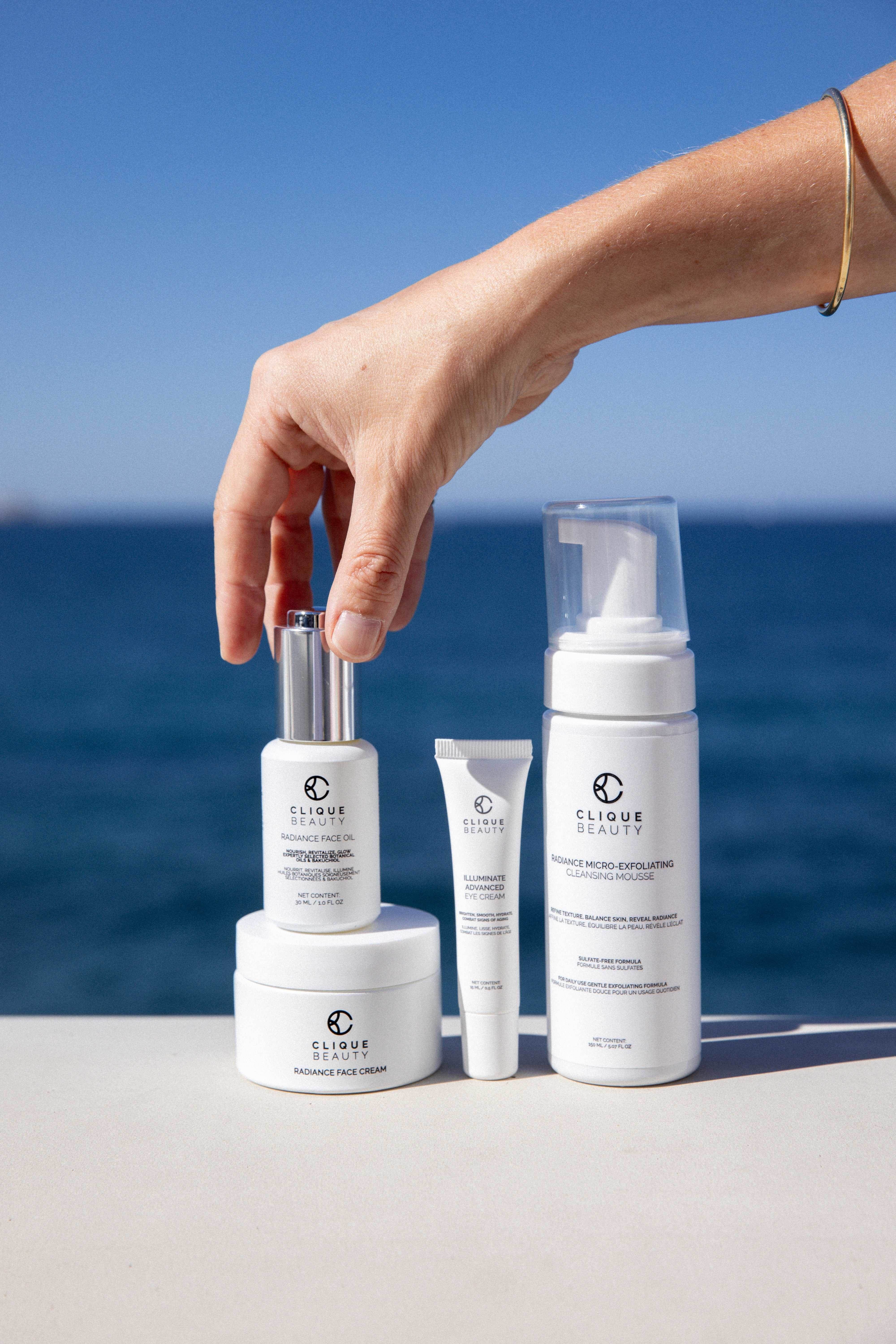
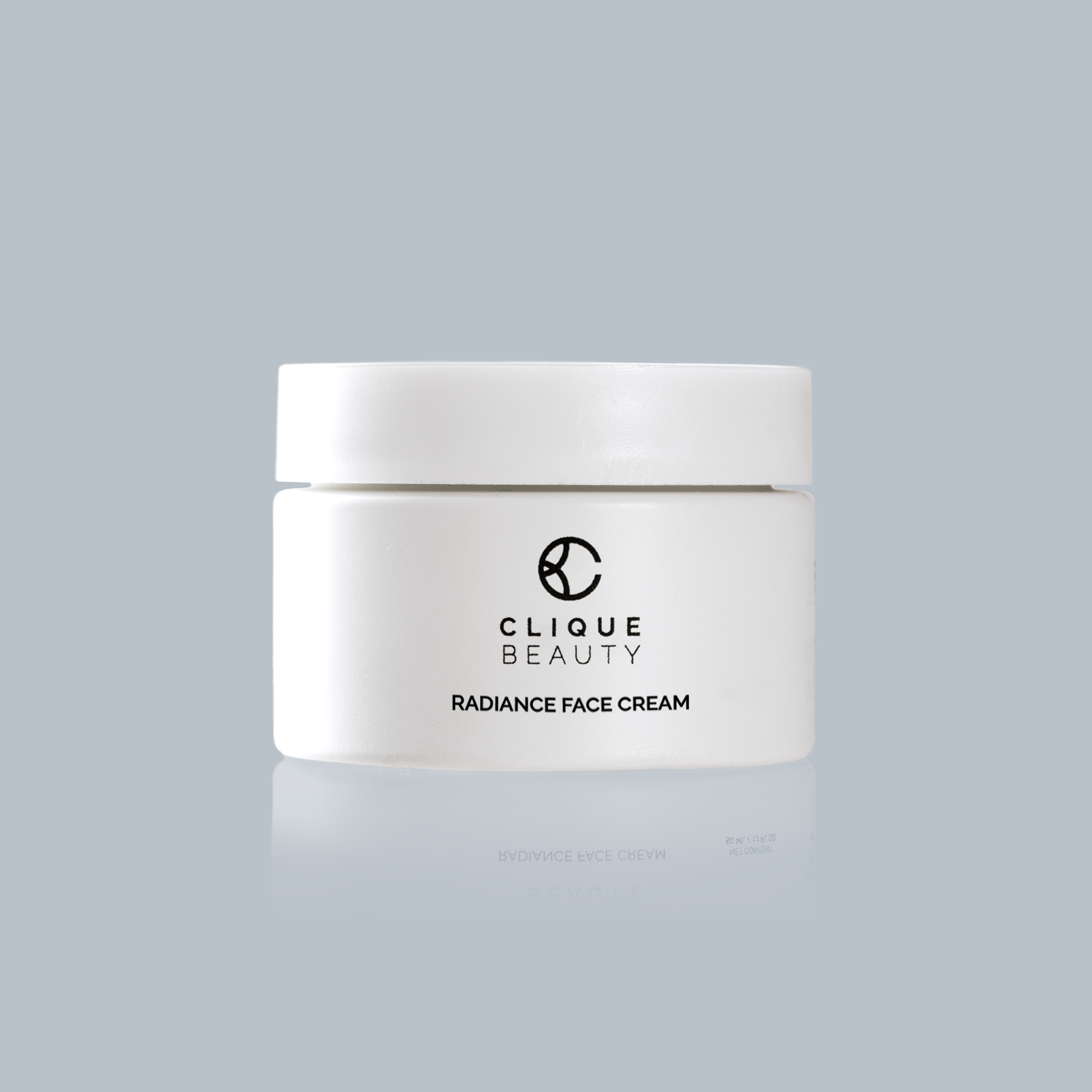
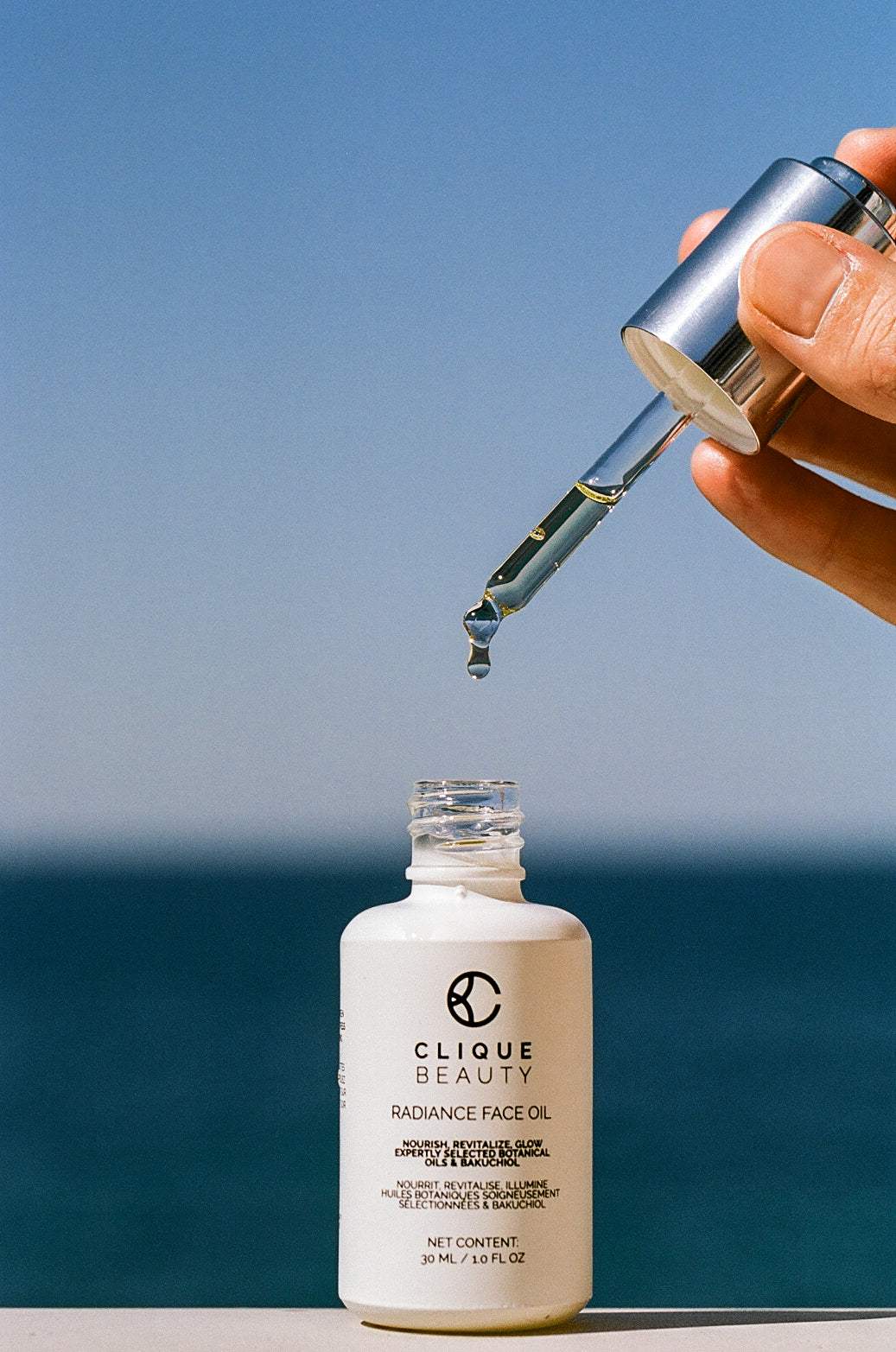
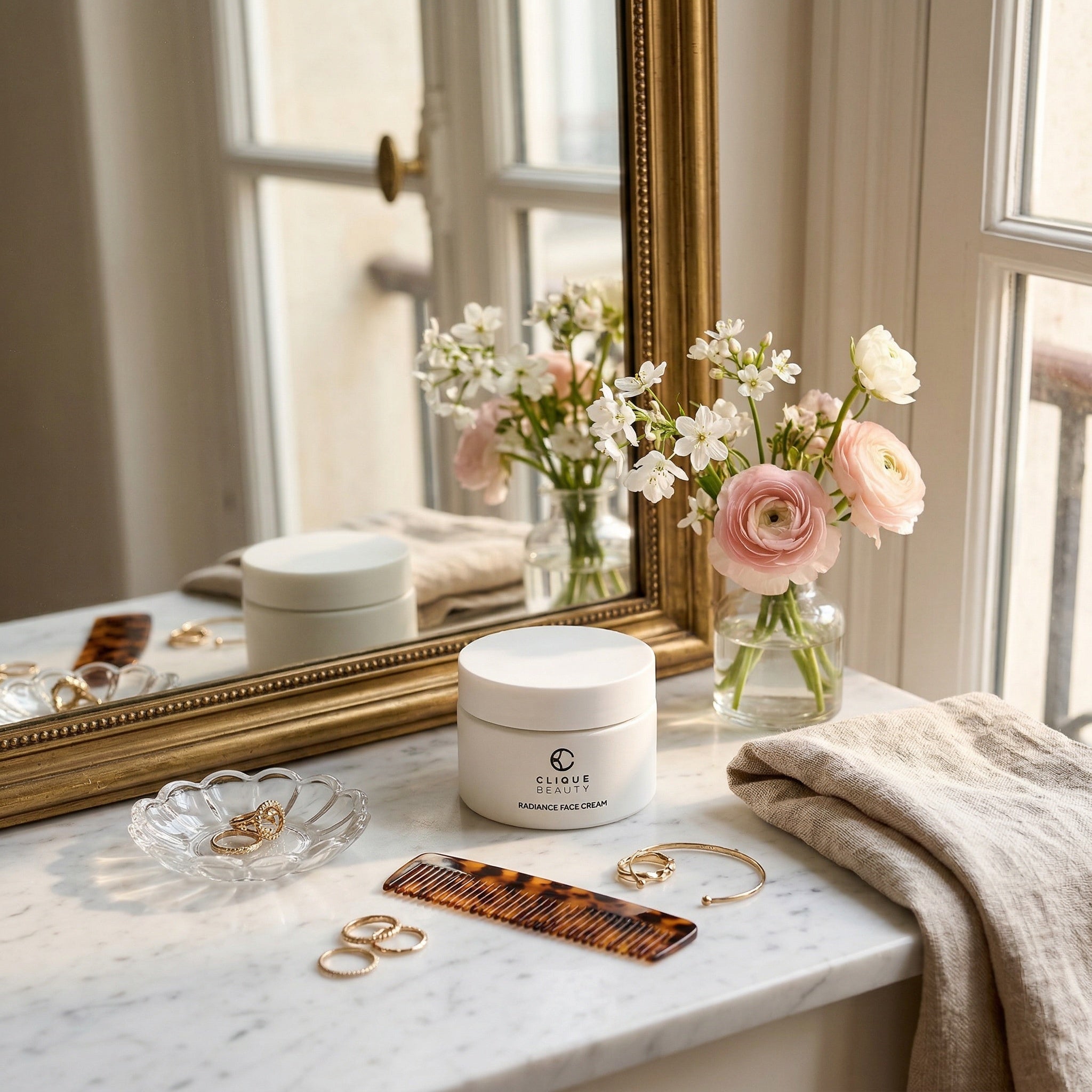
We formulate and manufacture in France, so European cosmetic rules are the baseline our formulas are designed against rather than a standard we retrofit. Our Radiance Face Cream is built on stabilized vitamin C as ascorbyl glucoside, niacinamide, sodium hyaluronate and a lipid base of organic shea butter, organic jojoba and squalane, with seven alpine botanicals for the irritation side of the equation. It measured a +42% increase in hydration in clinical testing.*
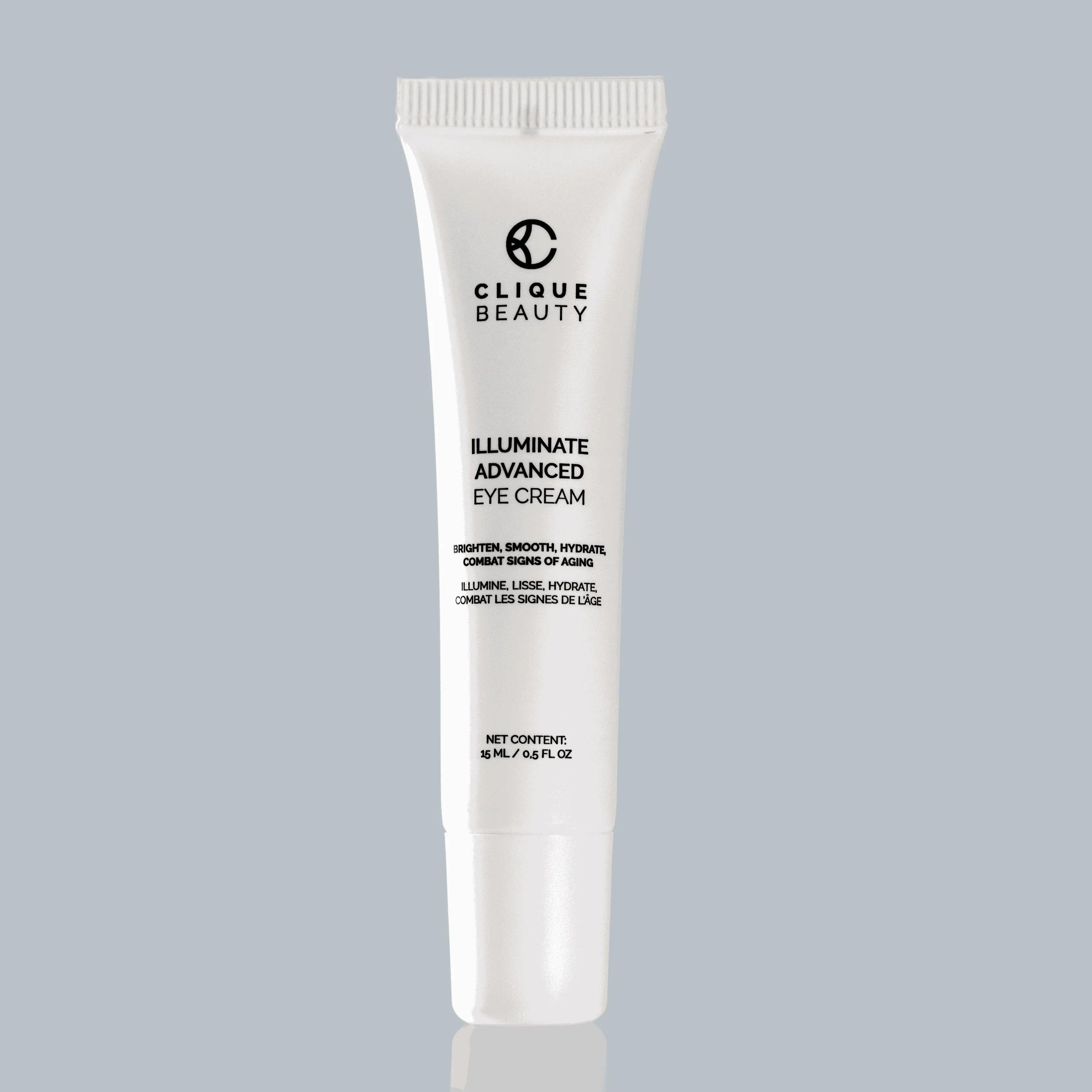
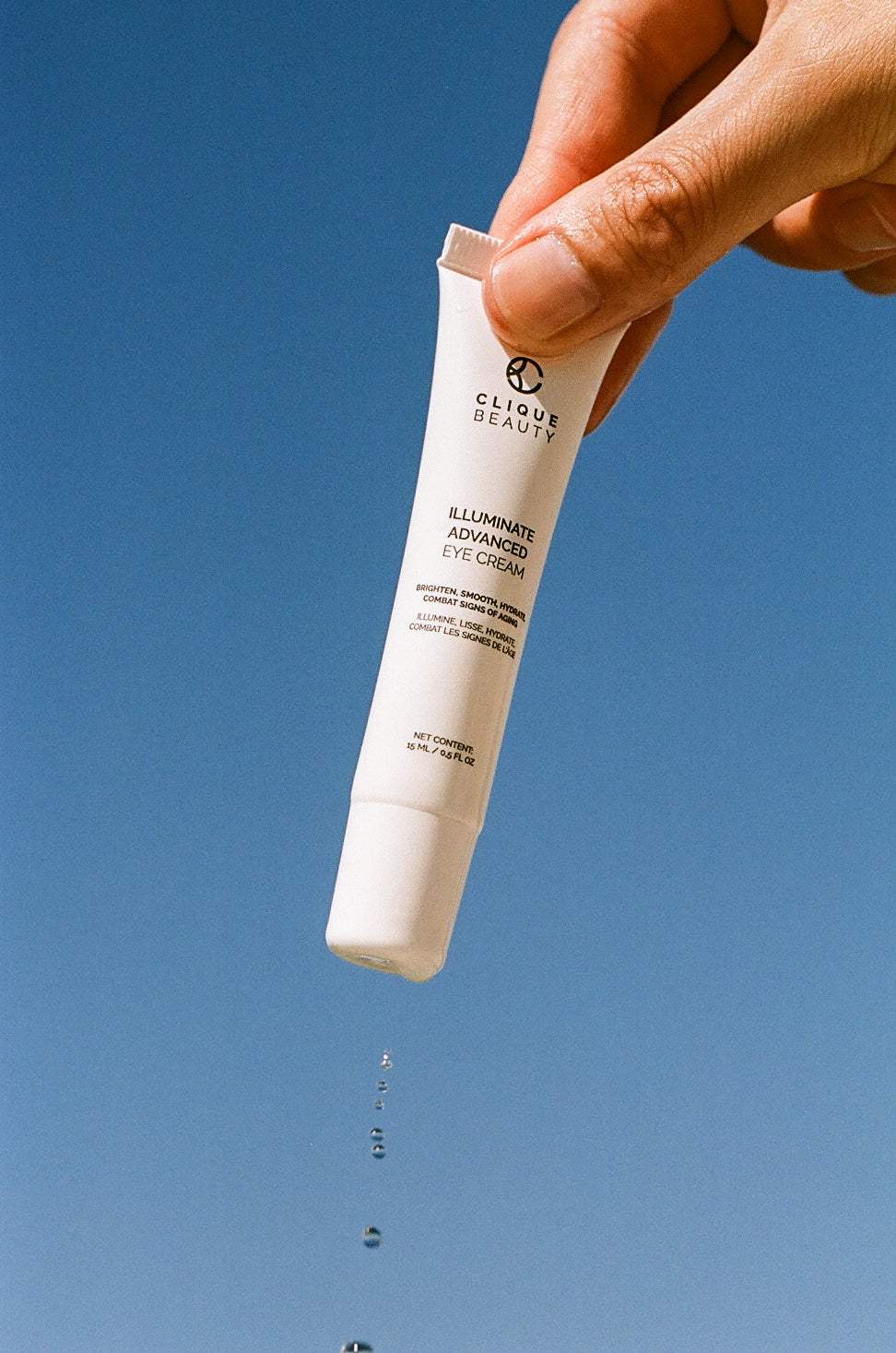
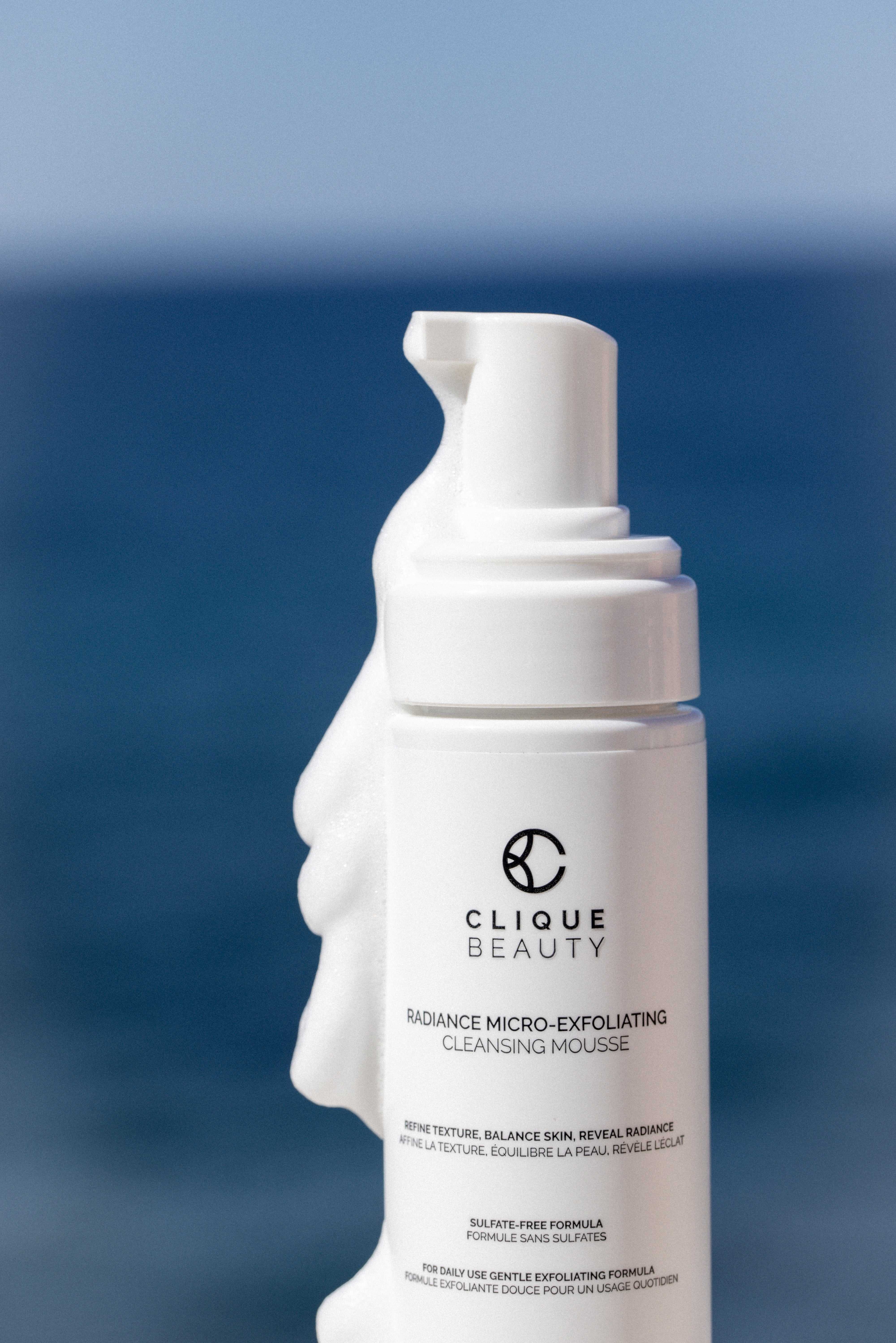
The mousse, the cream and the oil are perfumed, and in a French formulation culture that is a discipline of its own: the country that writes the strictest cosmetic rules in the world is also the country that invented modern perfumery, and the two competences sit in the same laboratories. A formula you enjoy applying is a formula you apply, which is the part of a result no ingredient list can supply. Our Illuminate Advanced Eye Cream carries caffeine at 1% and niacinamide at 5% with no Parfum on the INCI — a targeted call for the one zone of the face that reacts before any other.
Our signature is Formulated in France, Shaped in the USA: the formulation standards are European, the products themselves were shaped by what our customers here actually asked for.
What French formulation does not mean
It is not an aesthetic, and it is not an inherited secret. It is a regulatory environment plus a training culture that treats balance as the goal, where a formula is considered finished when nothing more can be removed without weakening it. Where that came from, and how a formula developed in France ends up in a parcel in Ohio, is the story we tell in the travel diary.
FAQ
Is French skincare actually better regulated than American skincare?
On ingredients, yes. The EU prohibits or restricts far more substances and requires a documented safety assessment before a product can be sold. It sets a higher floor, not a guarantee of results.
What does INCI mean on a skincare label?
It is the standardized naming system used for cosmetic ingredients. Ingredients appear in descending order by weight down to 1%, so the first several names tell you what the formula mostly is.
Does made in France mean the ingredients come from France?
No. It means the formula was developed and produced there under European rules. Botanical ingredients are sourced wherever the quality is best, which is why certification on the individual ingredient matters more than the country on the box.
*Clinically measured increase in skin hydration. Individual results vary.

Comments