

How to Improve Skin Texture: What Actually Works on Rough Skin

In short: rough, bumpy or uneven texture responds to gentle, consistent exfoliation paired with real hydration — not to scrubs or high-dose acids, which make it worse. Calm the barrier first, introduce a low-dose acid in your cleanser, then support turnover with bakuchiol. Texture is one of the most responsive concerns in skincare when you stop attacking it.
What "skin texture" actually means
The word covers four distinct issues, and the right approach depends on which one you are looking at. Most people have two or three at once.
| What you see | What it is | What moves it |
|---|---|---|
| Surface roughness, skin that catches on cotton | Accumulated dead cells and minor congestion | Low-dose acids, consistently. The easiest to resolve. |
| Small flesh-colored bumps under the surface | Closed comedones, often on forehead and jaw | Gentle exfoliation plus oil-balancing care |
| Fine lines and a crepey surface | Age, dehydration or accumulated sun damage | Hydration and bakuchiol. Slowest to shift. |
| Uneven tone that reads as roughness | Pigment, not texture — but the eye reads them together | Barrier work, hydration and antioxidants |
| Skin that looks flat and does not reflect light | Usually dehydration alone | Humectants and lipids, no exfoliation needed |
Why scrubs and strong acids make texture worse
The instinct when facing rough skin is to scrub harder. The instinct is wrong, and it is the single most common reason texture routines fail.
Mechanical scrubs. Sugar, crushed shells, scrub mitts. They create microscopic tears in the surface. Inflammation follows, congestion accelerates, and the satisfying first few uses are paid for afterward.
Daily high-dose acids. Glycolic at 10%, salicylic every night, frequent peels. The barrier breaks down, skin turns reactive and dehydrated, and paradoxically more textured. If that already describes you, start with how to strengthen your skin barrier before anything else.
Skipping hydration. Dehydrated skin reads as textured even when the surface underneath is smooth. Dryness exaggerates every fine line and bump. Hydration is half the work in any texture routine, and the half most people skip.
The method that works, in order
This is the part worth keeping. It is sequential — each stage depends on the one before it, and moving ahead early is what undoes the work.
- First, subtract. Stop everything aggressive: scrubs, peels, high-dose acids, retinol. Cleanse gently, moisturize generously. The goal is to bring skin back to a calm baseline before asking it to do anything.
- Next, exfoliate low and slow. Once skin feels comfortable rather than reactive, introduce a low-dose AHA cleanser — glycolic, lactic and mandelic in measured concentrations. Once a day. The action is subtle and cumulative by design.
- Then, hold hydration in place. A moisturizer with niacinamide, stabilized vitamin C and hyaluronic acid, morning and night. Exfoliated skin without hydration looks flat, not smooth.
- Then, add turnover support if you need it. Bakuchiol in the evening, for closed comedones and fine lines that exfoliation alone will not move. Add it last, never at the same time as a new acid.
- Keep sunscreen every morning. UV drives both pigment and the collagen loss that shows up as crepiness. Skipping it undoes everything above.
- Ease off as it improves. The counterintuitive part: the smoother your skin gets, the gentler your exfoliation should become. Most people escalate the moment they see progress, and lose it.
How we approach this at Clique Beauty
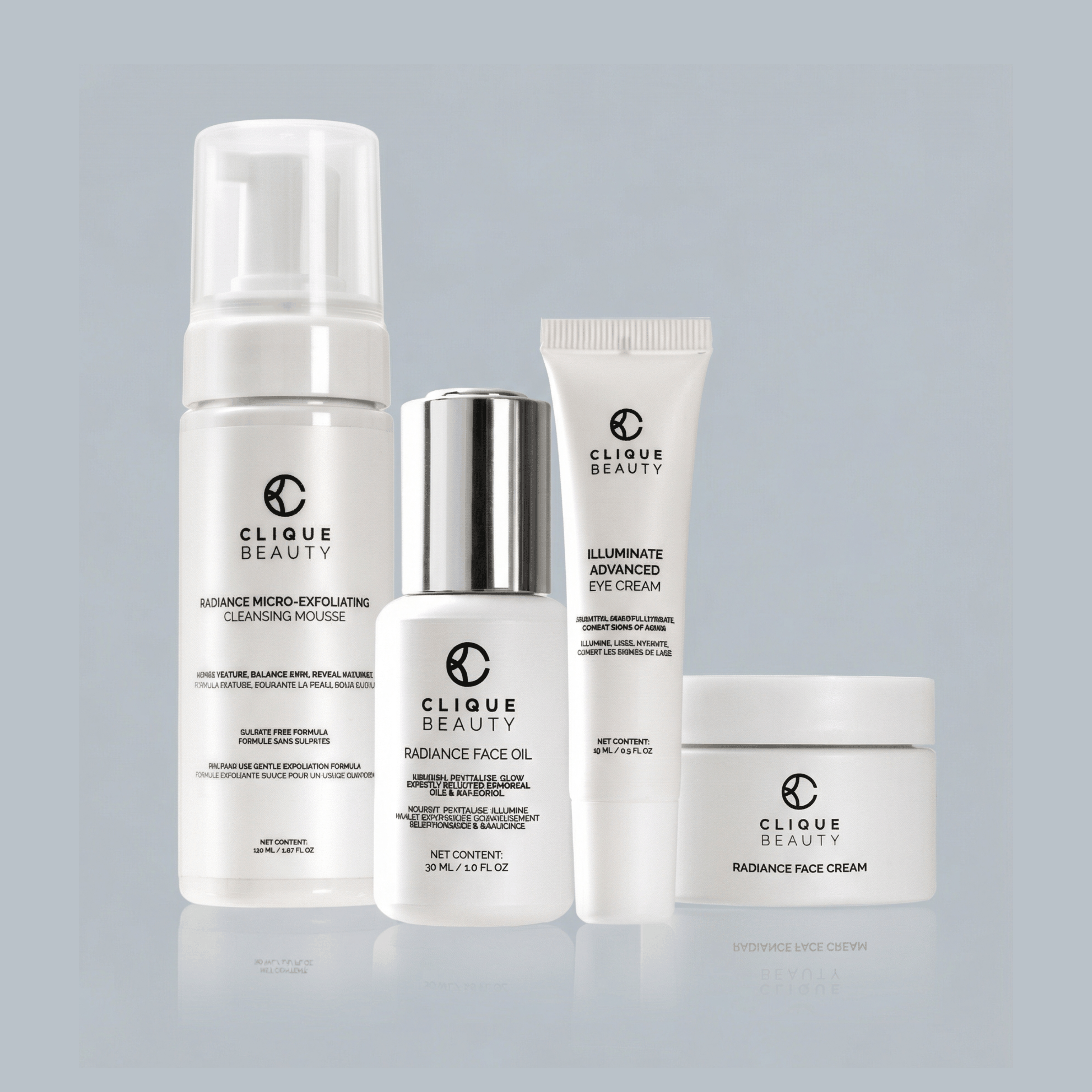
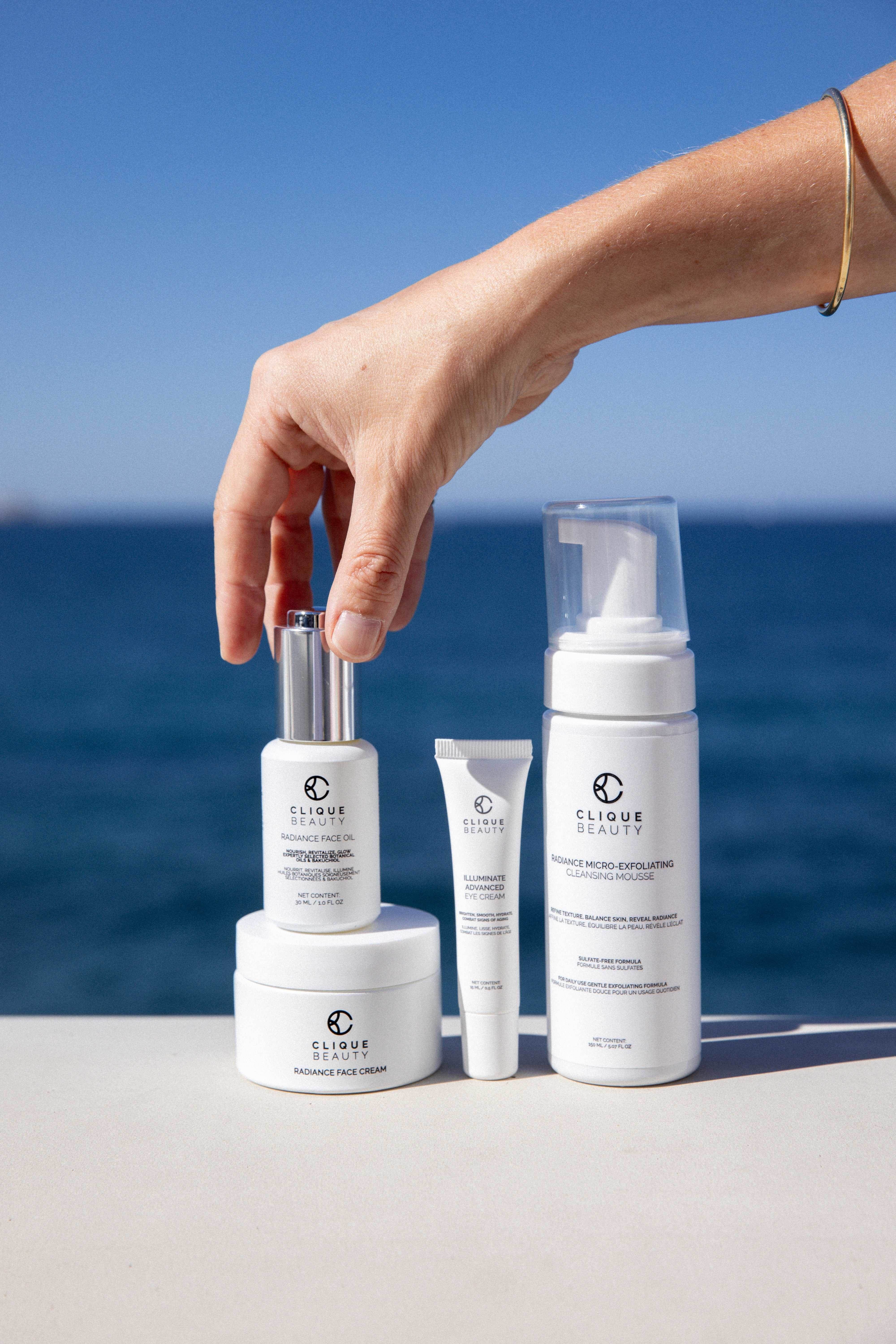
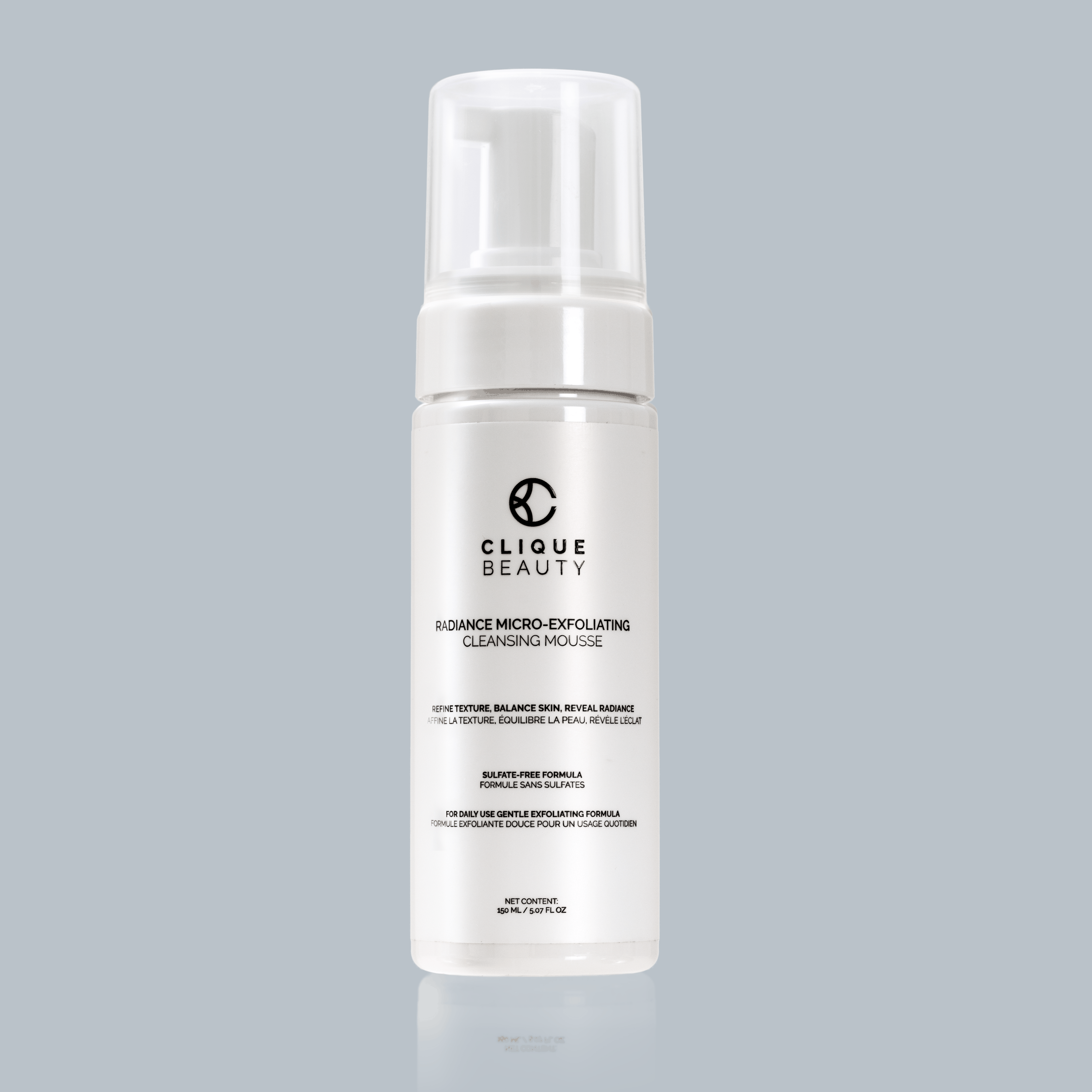
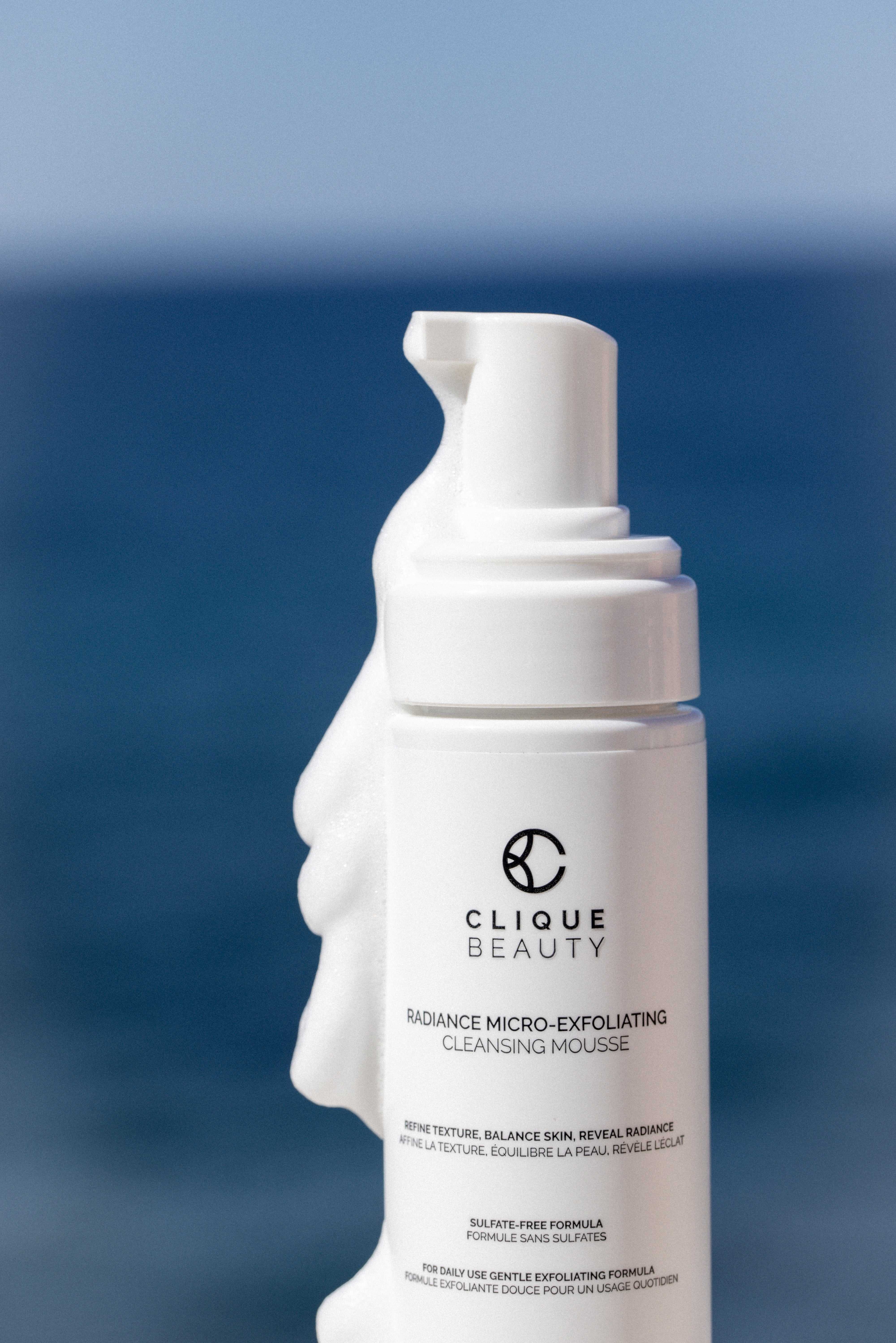
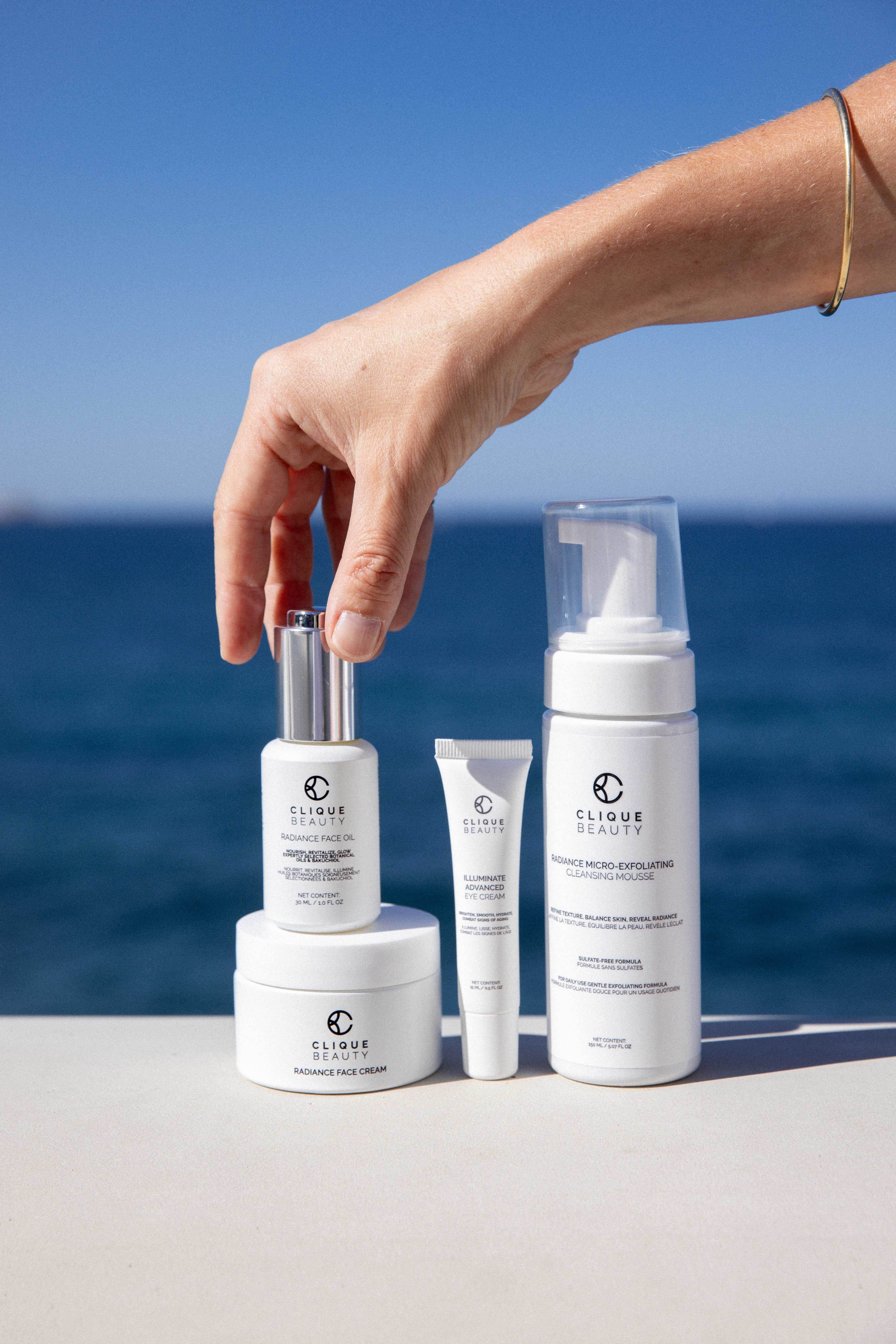
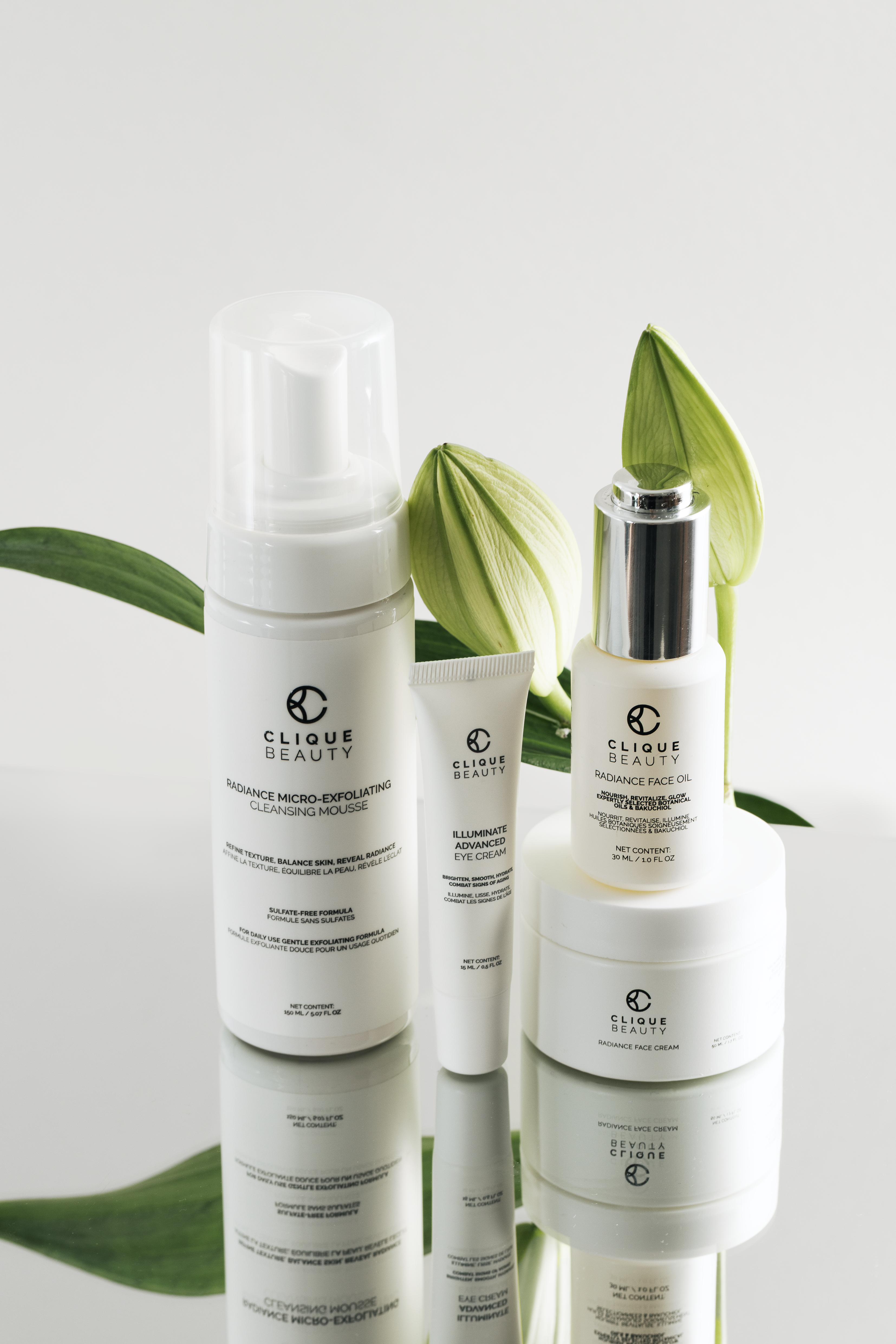
Two products do most of the texture work. Our Radiance Micro-Exfoliating Cleansing Mousse is a sulfate-free cleanser built on a triple AHA complex — glycolic for surface renewal, lactic for hydration, mandelic for tolerance — supported by an eight-fruit enzyme complex, zinc PCA, allantoin and calendula. There are no grains in it. Contact time is short and rinsed, which is precisely why acids belong in a cleanser for most skin types. More on that trade-off in what an AHA cleanser actually does.
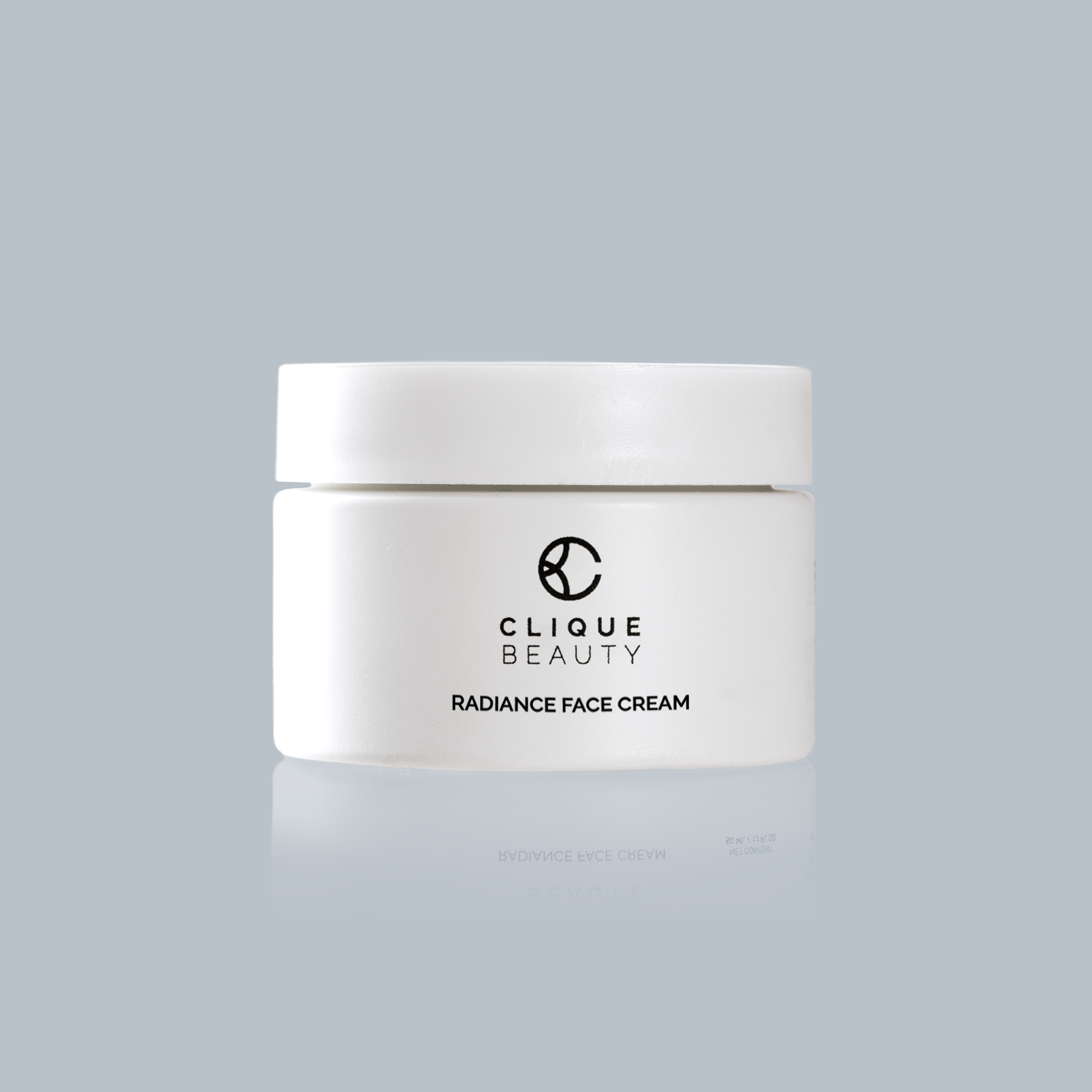
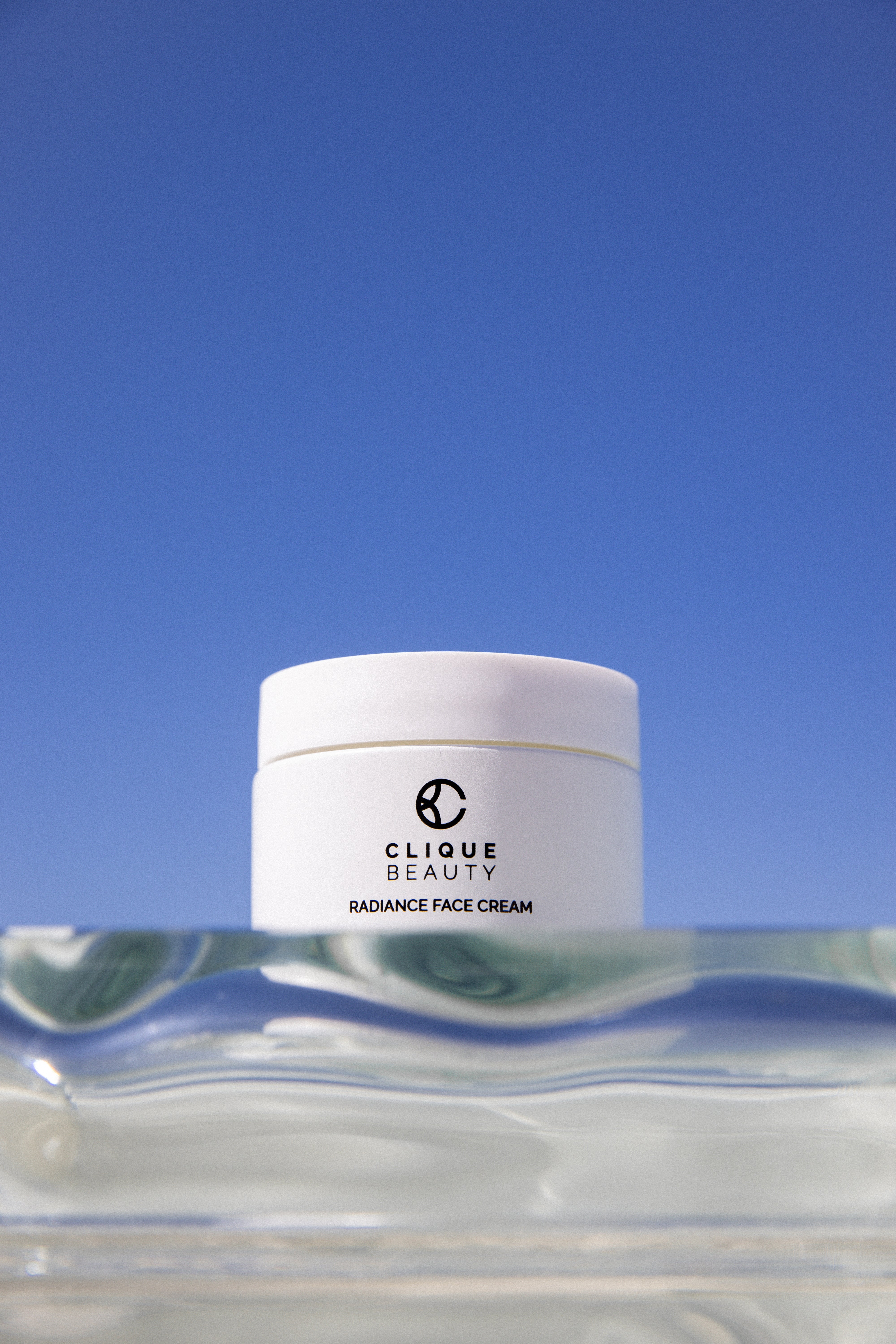
Our Radiance Face Cream covers the hydration half: niacinamide, ascorbyl glucoside as stabilized vitamin C, sodium hyaluronate, and a lipid base of organic shea butter, organic jojoba and squalane, with seven alpine botanicals for comfort. It measured a +42% increase in hydration in clinical testing.*
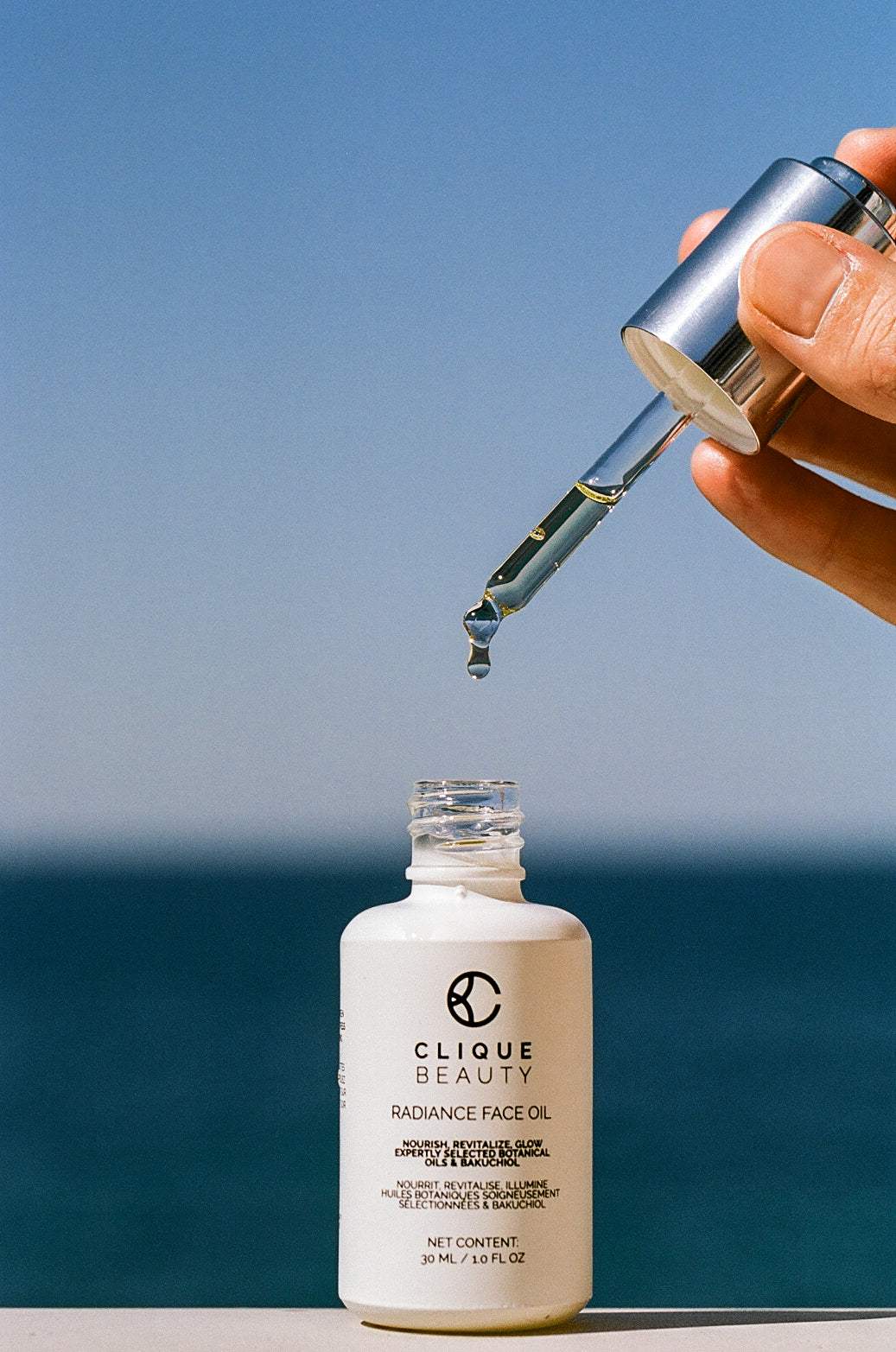
For texture that persists, our Radiance Face Oil layers bakuchiol at night — the plant-derived alternative to retinol, in a dry-touch base of thirteen botanical oils. The comparison with retinol is in bakuchiol vs retinol.
A French perspective on exfoliation
French formulators treat exfoliation as a precision discipline rather than a contest of strength. Three principles follow from that.
Daily low-dose exfoliation outperforms occasional high-dose treatment, because cell renewal is a continuous process and gentle, regular action works with it rather than against it. Acids belong in cleansers more than in leave-on serums for most skin types, since a rinse-off format controls contact time for you. And texture is a hydration problem as much as a renewal problem, which is why moisture and acids are prescribed together, never one without the other.
The result is a quieter approach that produces durable smoothness instead of the familiar cycle of over-exfoliation followed by repair.
How to tell it is working
Progress is sequential, and it rarely announces itself. Roughness eases first — skin stops catching on a cotton pad. Closed comedones soften next and become less visible under raking light. Even light reflection comes last, because it depends on both a smooth surface and a hydrated one.
If skin becomes tight, red or stingy at any point, you have gone too fast. Drop back to gentle cleansing and moisturizer until it is calm, then restart from the exfoliation stage rather than from the beginning.
FAQ
How do I get rid of tiny bumps on my forehead?
Those are usually closed comedones. Stop scrubbing them, use a low-dose AHA cleanser once a day, keep the skin well hydrated, and add bakuchiol at night if they persist. Physical exfoliation inflames them and makes them last longer.
Can exfoliating too much cause bad skin texture?
Yes, and it is the most common cause. Over-exfoliation damages the barrier, which leads to dehydration, reactivity and a rougher surface — the exact problem you were trying to fix.
Do I need both an exfoliant and a moisturizer for skin texture?
Yes. Exfoliation removes what dulls the surface; hydration is what makes the smooth surface underneath actually look smooth. Either one alone gives a partial result.
*Clinically measured increase in skin hydration. Individual results vary.

Comments