

Is Fragrance in Skincare Bad for Your Skin?
In short: Fragrance is not an irritant by default. Genuine fragrance allergy exists and is worth taking seriously, but most skin that seems to react to everything is reacting to a compromised barrier rather than to perfume. What matters on a label is not whether fragrance is present — it is whether the components are declared, so you can avoid the specific ones you react to.
What does Parfum on a label actually mean?
Parfum, or Fragrance, is a single INCI name standing in for a blend of aroma materials. A blend can contain dozens of them, and the composition is generally protected as a trade formula, which is why one word covers so much ground.
This is where the suspicion comes from, and half of it is fair: the blend itself is not itemized. The other half is not. A fragrance blend is not an undeclared black box, because the components most likely to cause a reaction have to be named separately.
Why some ingredients appear after Parfum on the list
European cosmetic labeling requires a defined group of fragrance components to be listed individually when they are present above a set threshold — precisely because these are the materials most often implicated in contact allergy. They are the odd-looking names that trail the end of an ingredient list. More on how that framework works in what EU regulation actually changes.
The practical consequence is the useful part: a declared component is a component you can avoid.
| Name you may see on a label | What it is |
|---|---|
| Linalool | Naturally abundant in lavender, bergamot and many botanical oils |
| Limonene | The dominant component of citrus peel oils |
| Geraniol, Citronellol | Rose-type notes, naturally occurring and also made synthetically |
| Eugenol | Clove-type note, present in several spice oils |
| Coumarin | Hay-and-almond note, naturally present in tonka and sweet clover |
| Alpha-Isomethyl Ionone | Violet-type note, used to round out a composition |
Read that list again and notice what it tells you: most of the frequently declared components occur naturally. Natural against synthetic is not the axis that decides whether something will suit your skin.
Who actually reacts to fragrance?
Fragrance contact allergy is real, and it is specific. Someone who has it reacts to a named material, not to the abstract category — and the way to know which one is patch testing with a dermatologist, not guesswork in front of a shelf.
Much more common is a barrier that has stopped doing its job. When the barrier is down, skin reacts to things it tolerated for years: actives, surfactants, wool, water temperature. Fragrance takes the blame because it is the easiest word on the label to point at. Treating the barrier usually resolves the reactivity that was blamed on perfume — the method is in how to strengthen your skin barrier.
How to tell whether fragrance is your problem
- Repair before you investigate. On a compromised barrier everything stings, so no test you run means anything yet. Simplify the routine, rebuild, then look again.
- Separate a sting from an allergy. A brief sting on application, fading within minutes, points to a barrier problem. Allergic contact dermatitis appears hours later as itch, redness or small bumps, and it comes back every time.
- Change one variable. Remove one product, keep everything else identical. Two changes at once tell you nothing.
- Watch where it happens. Reactions that cluster around the eyes and the neck behave differently from reactions on the cheeks — that skin is thinner and responds sooner.
- Get patch tested if it keeps recurring. It converts a vague avoidance of all scented products into a short list of names you can scan for. That is a far more useful position to shop from.
So why put fragrance in a formula at all?
Two reasons, and the first one is not cosmetic.
Results in skincare come from repetition. A cream you look forward to applying is a cream you actually apply, morning and evening, without negotiating with yourself. Texture and scent are what make that repetition effortless, and a routine abandoned in a drawer delivers nothing at all. Treating the sensory part of a formula as frivolous misunderstands what makes skincare work.
The second is more prosaic. Raw materials have their own smells, and botanical oils in particular are assertive — cold-pressed nigella and evening primrose do not smell like nothing. Composing around them is part of making a formula usable.
There is also a reason this comes naturally to a French laboratory. Perfumery and cosmetic formulation grew up in the same places, with the same training and often the same suppliers. Fragrance is not bolted onto a French formula at the end; it is part of how the formula is designed.
Where we leave it out, and why
The eye contour is the thinnest skin on the face and the closest to a mucous membrane. It is the first area to register anything at all, which makes it the one place where removing a variable is worth more than the sensory benefit of keeping it.
So that is where we take fragrance out. It is a decision about one zone, made on the physiology of that zone. Why that skin behaves differently is covered in eye area skincare.
How we approach this at Clique Beauty
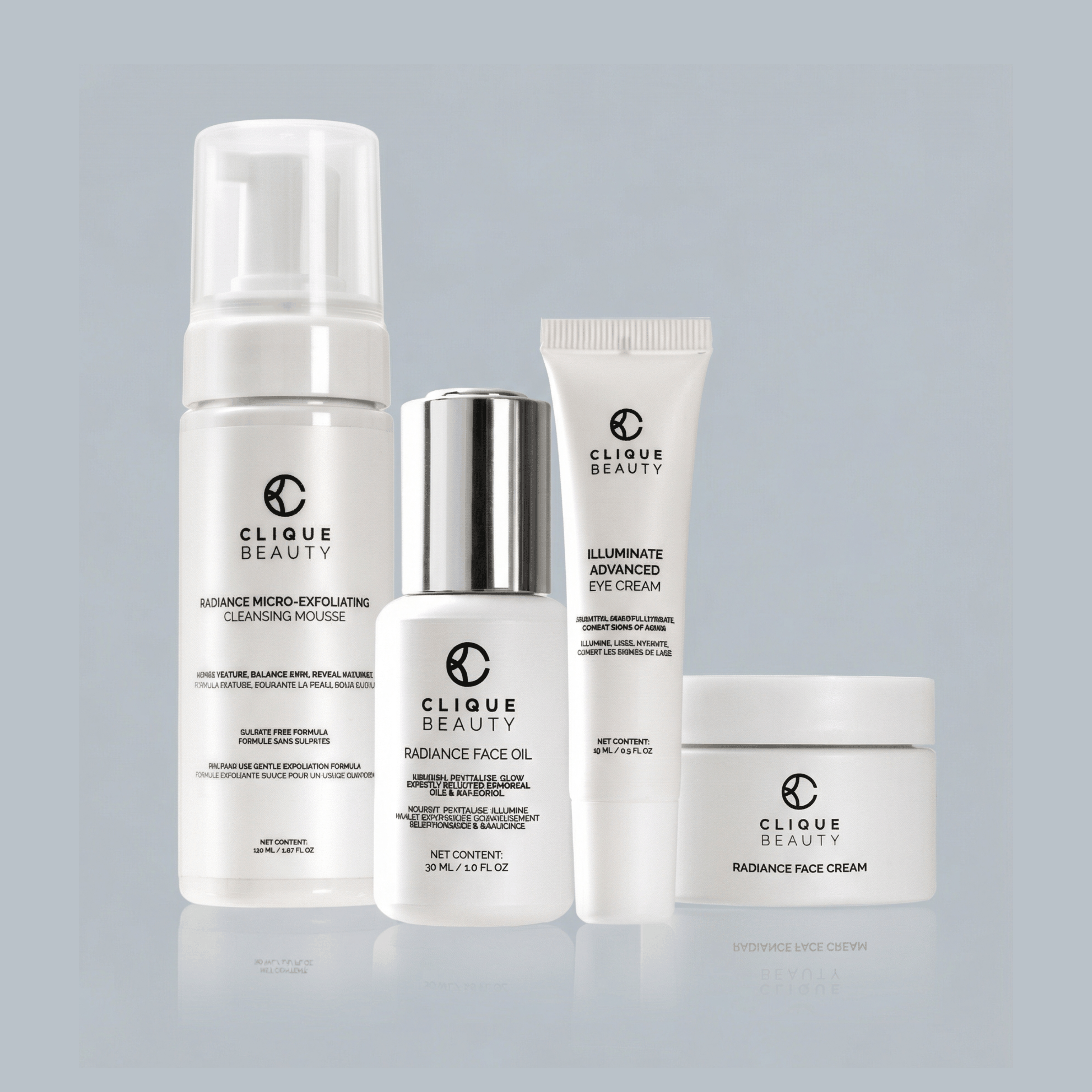
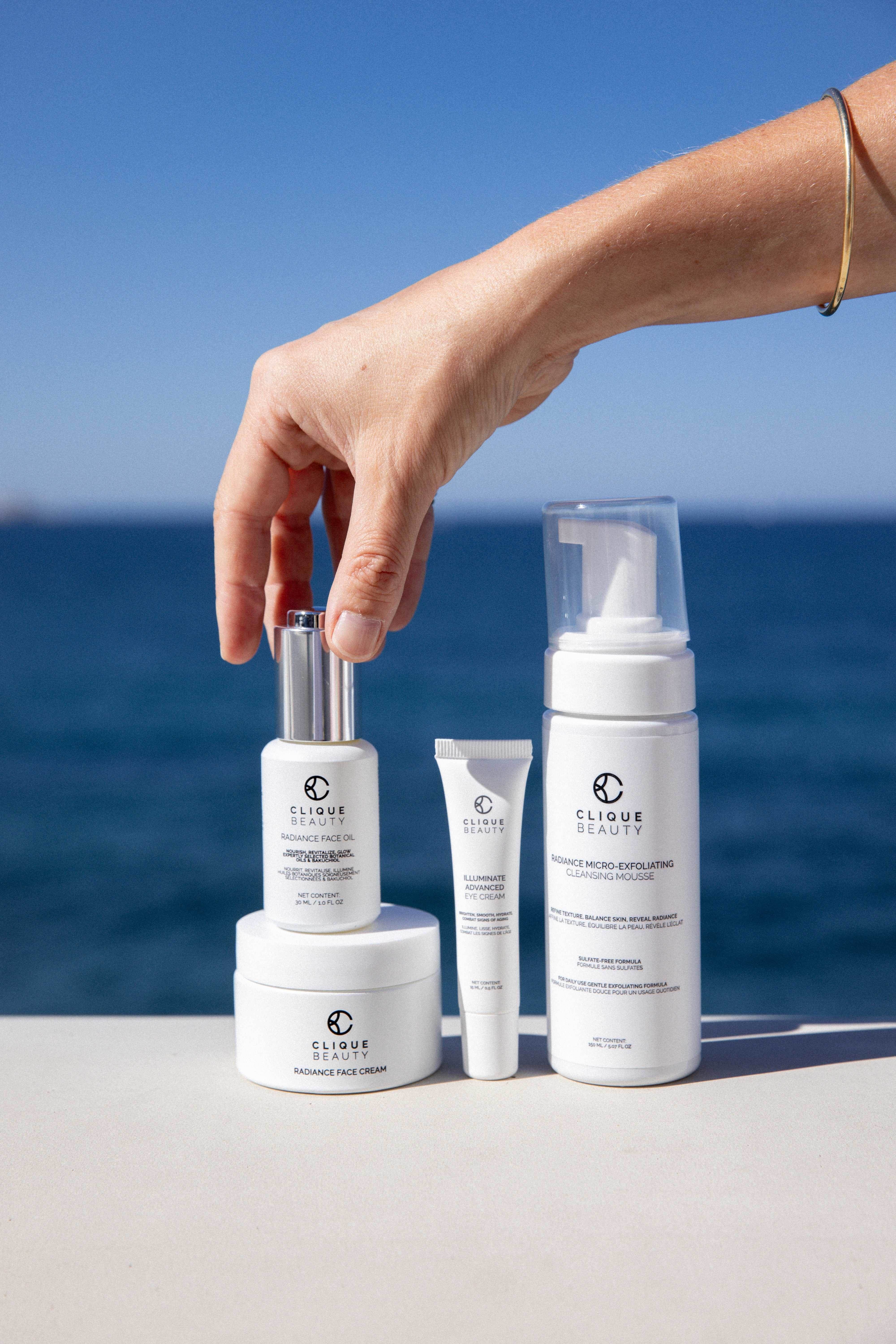
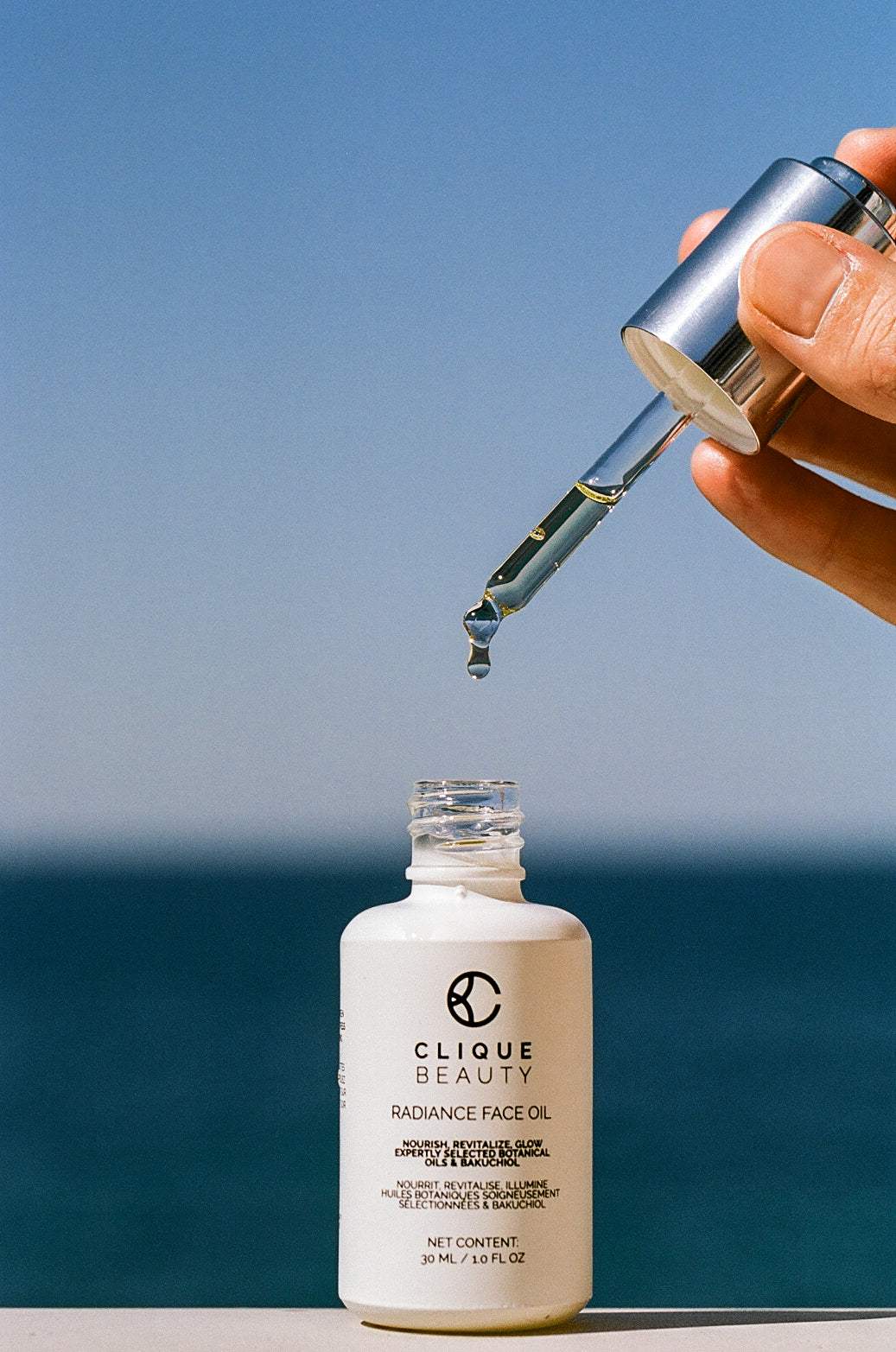
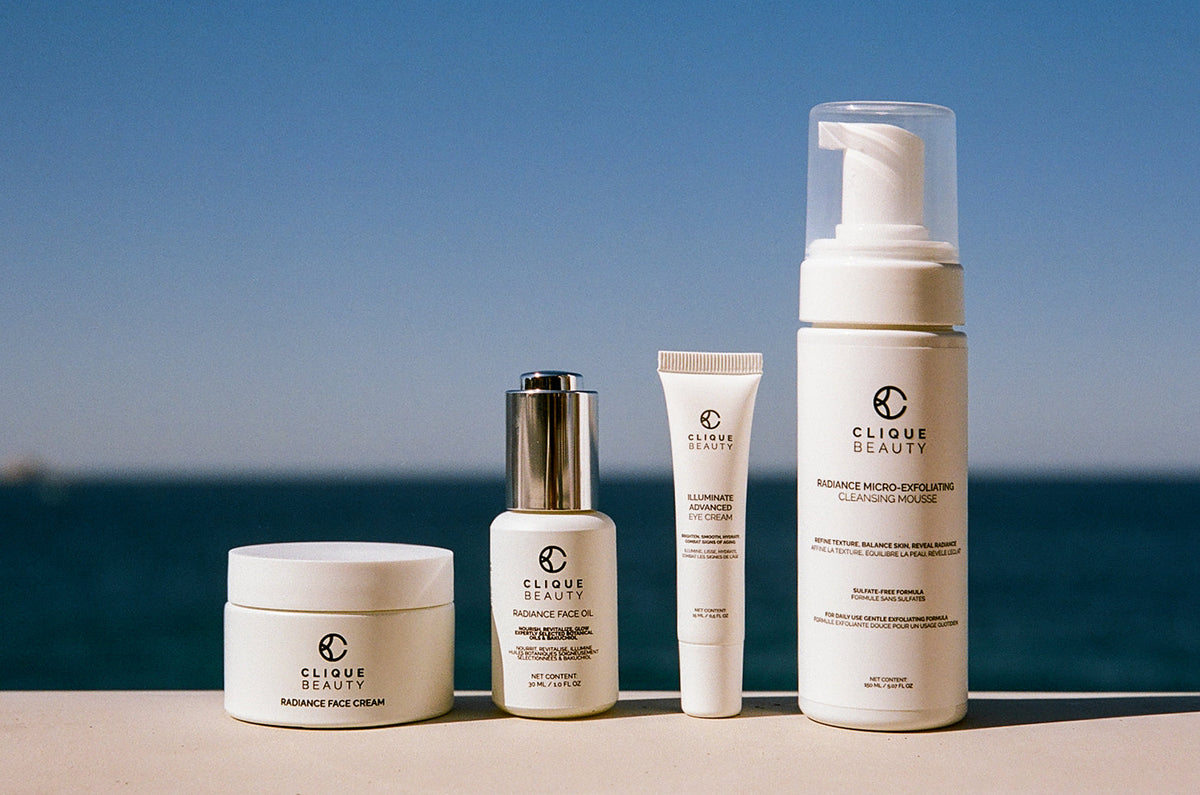
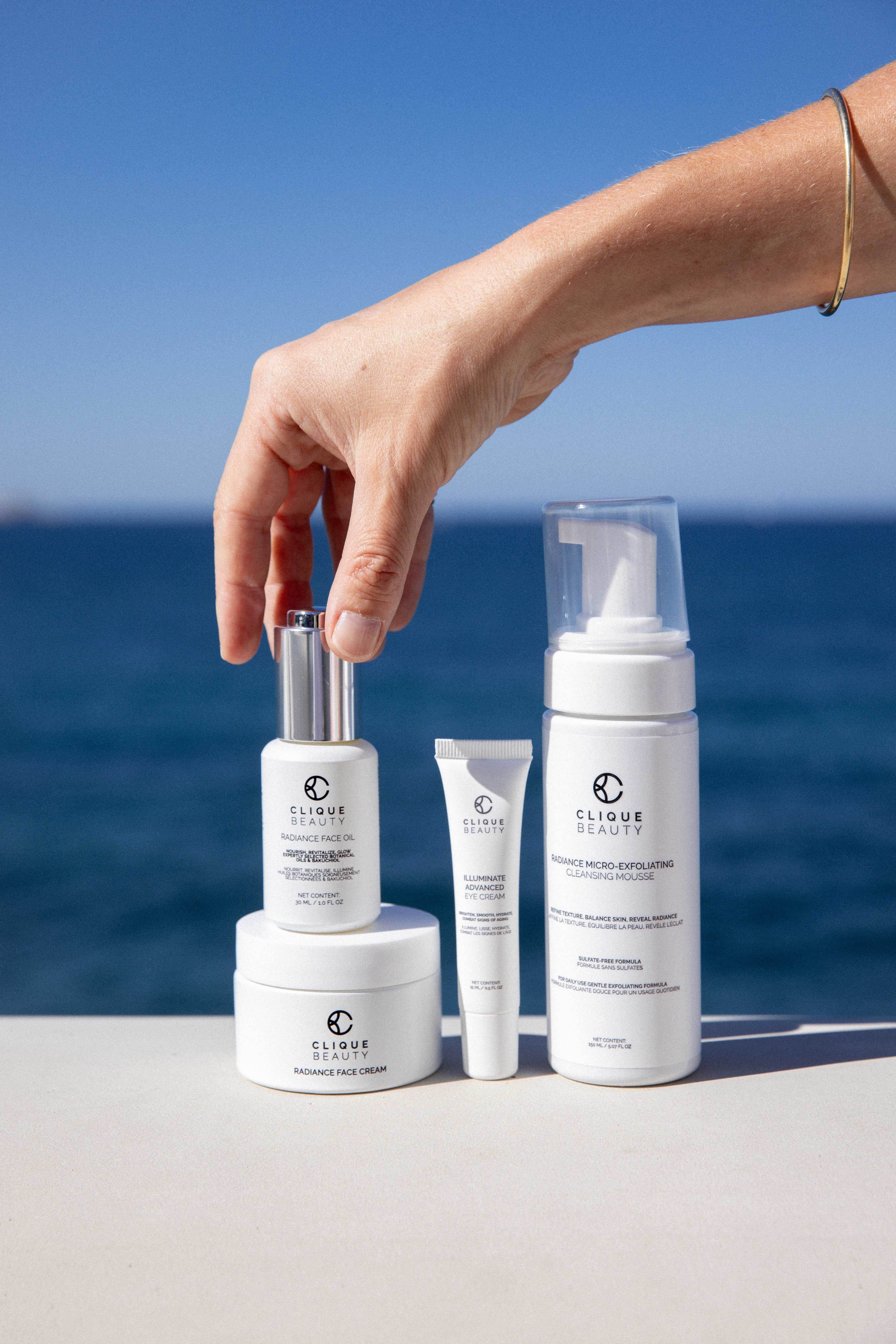
Three of our four formulas are scented, and we are specific about what is in them. The Radiance Face Oil names alpha-isomethyl ionone and geraniol on its own ingredient list; the Radiance Face Cream names the declared component in its blend. If you have been patch tested, you can read our lists and decide for yourself rather than taking a category claim on trust.
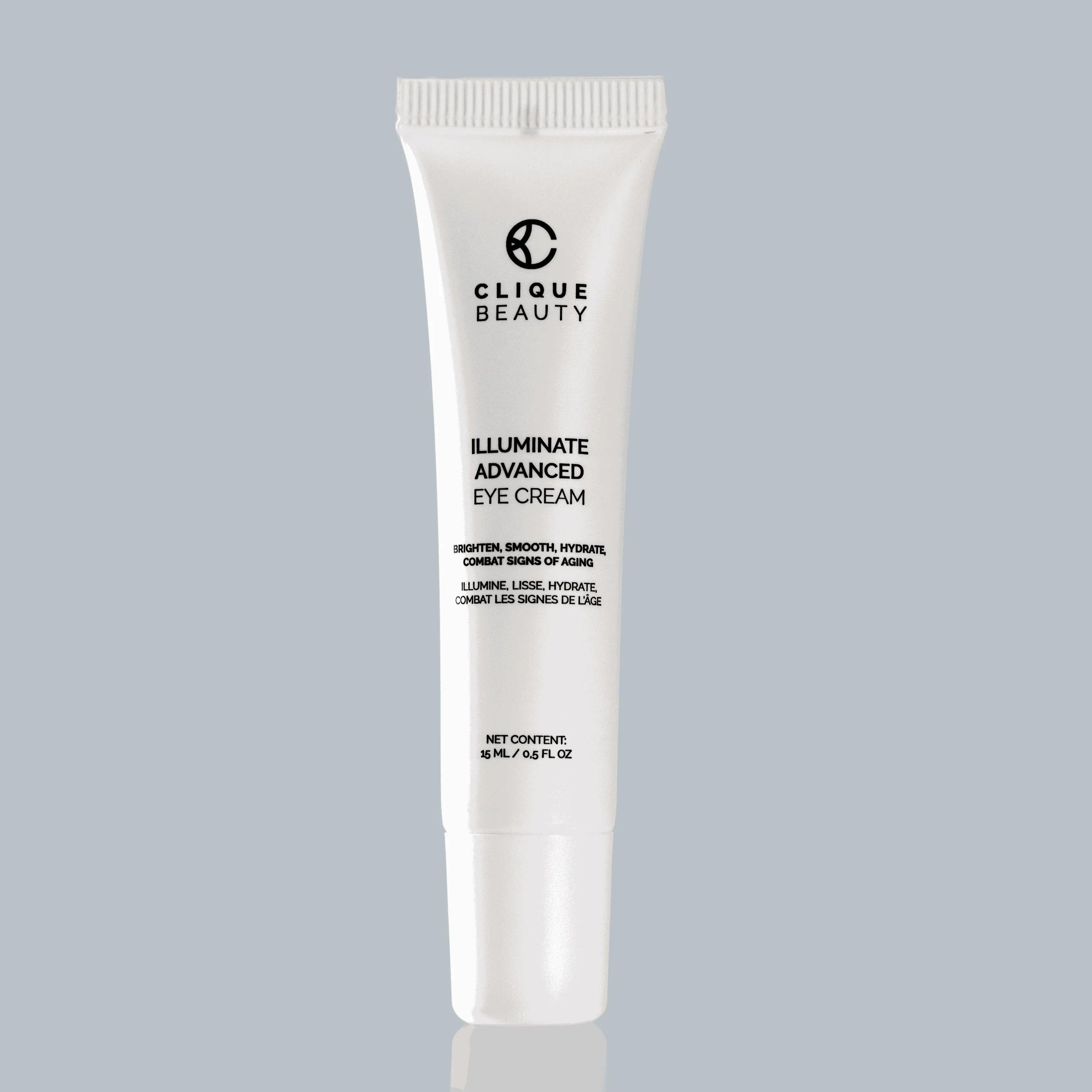
The Illuminate Advanced Eye Cream has no Parfum on its ingredient list at all, with niacinamide at 5%, caffeine at 1%, squalane, sodium hyaluronate and chamomile flower water. One zone, one decision.
FAQ
Does fragrance-free mean better for sensitive skin?
Not automatically. It removes one possible trigger, which is genuinely useful around the eyes or on skin that has been patch tested. On skin whose real problem is a weakened barrier, an unscented product that is still too stripping will not help.
Is natural fragrance gentler than synthetic?
No. Several of the most frequently declared fragrance allergens — linalool, limonene, geraniol, eugenol — occur naturally in essential oils. Origin is not what determines tolerance.
Can fragrance cause breakouts?
Fragrance sensitivity presents as dermatitis — itch, redness, small bumps — rather than as acne. Persistent congestion usually has another cause, which is covered in why you break out more in summer.
Comments